
Guest post
Utah poured more than a billion taxpayer dollars into a “next generation” prison. Yet, Utahns are now watching violence burst out of that system and into their churches, streets, and politics. Instead of increased safety and rehabilitation, the state has an overcrowded, understaffed, drug‑saturated facility, a governor who ducks accountability, and a celebrity sheriff who treats incarceration like entertainment.
Utah’s new billion‑dollar Utah State Correctional Facility, sold as a model of reform, is now a case study in failed design, with front‑line officers warning it is “only a matter of time before an officer is seriously injured or killed,” and describing how they go to work wondering if their families would even know where they were if they did not make it out alive. The “direct supervision” layout drops officers into open dorms and cubicles among inmates instead of secure control booths, forcing constant movement and contact in units where gangs already hold sway.
Inside that billion‑dollar complex, drugs have become a “huge problem” by the department’s own admission, to the point that officials concede it “defeats the purpose” of prison‑based drug treatment because many people leave custody still addicted. Methamphetamine, fentanyl, Suboxone and other narcotics flow in through soaked paper in the mail, visitors, food and industrial shipments, and even auto‑parts deliveries, creating what investigators describe as a “lucrative business” where the same drug can sell for five to ten times its street value once it is behind bars. Internal records show repeated seizures of cell phones, drugs, and paraphernalia, and intelligence officers tracing inmates coordinating inside‑the‑walls dealing over recorded calls, with gangs across racial lines described as “all active in the drug trade.” In practice, Utah is funding a fortified marketplace that strengthens the very criminal networks now settling scores in the community.
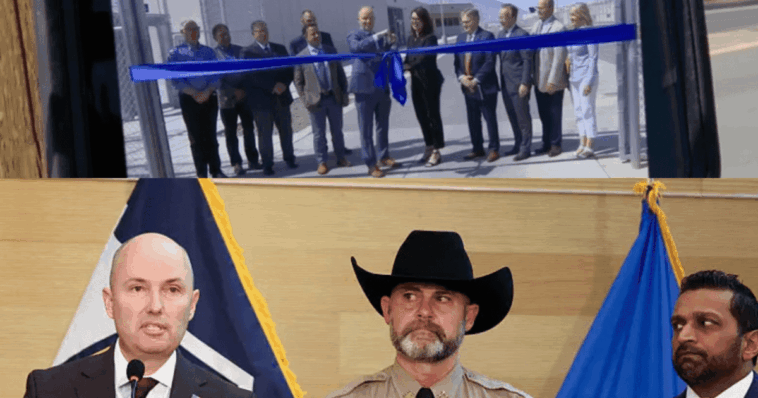
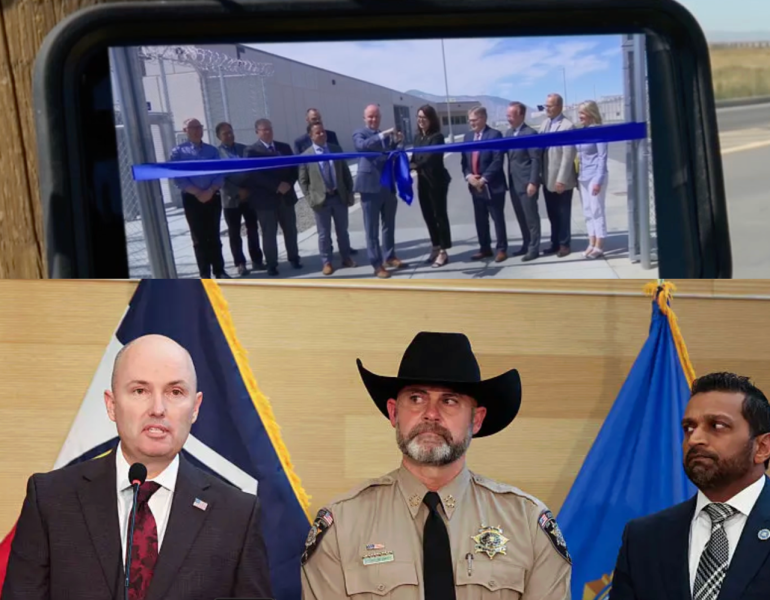
The leadership vacuum is on full display in how Gov. Spencer Cox and Utah County Sheriff Mike Smith have handled the assassination of Charlie Kirk and its aftermath. Smith, a sheriff who turned incarceration into reality television through A&E’s “60 Days In,” now fronts a politically explosive homicide case while still trading on his law‑enforcement celebrity. Cox and Smith publicly praised the “capture” of suspect Tyler Robinson, offering a polished story built around strange text messages and a choreographed “surrender,” even as deeper questions about security, radicalization, and institutional failure went unanswered. At the same time, Cox has leaned heavily on a psychiatric‑framed narrative that pathologizes anger and dissent, using the language of mental health and “civility” to police speech rather than confront how state systems, including his billion‑dollar prison, are driving violence.
In the same state where a sheriff opened his jail to cameras and civilian “participants” for ratings, Utahns are now watching real‑life violence unfold far from any scripted set: a church parking lot turned into a crime scene, families running for cover, and investigators calling in gang units as they try to trace how many of these conflicts lead back to state‑built power structures. Cox spoke eloquently about turning away from political violence after Kirk was killed, but there has been no matching resolve to dismantle the policies, prison design, and speech‑policing framework that are incubating the chaos. Utah did not buy safety with that billion‑dollar prison; it bought a fragile, dangerous system that empowers gangs, profits off addiction, exposes officers, and fails to protect the public, under a governor more interested in managing emotion and expression than in fixing the institutions that are getting people killed.