
They’re the quarter-trillion dollar questions.
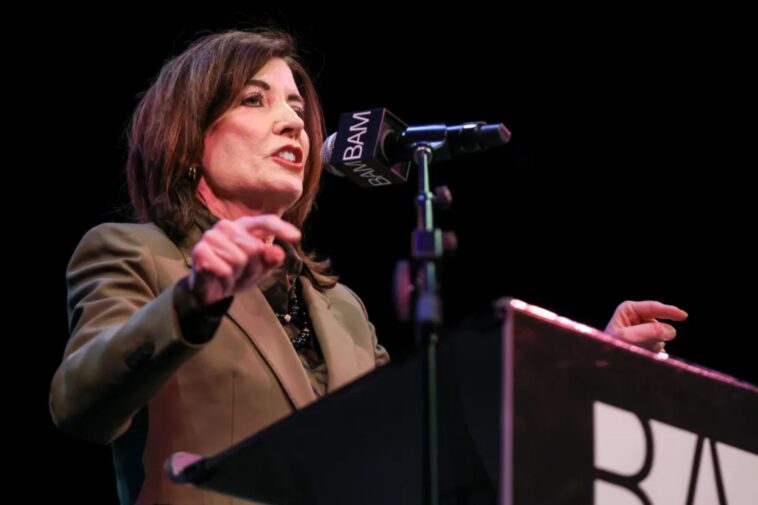
Gov. Kathy Hochul revealed Tuesday how she plans to pay for her record $260 billion proposed New York budget without raising taxes — by leaning on better-than-expected Wall Street bonuses.
The 2027 fiscal year budget book — which was released alongside Hochul’s speech in Albany detailing her spending plan — makes the case that revenues from the blockbuster bonuses for fat cat execs and an AI-driven stock market boom will keep the Empire State’s coffers extra flush.
But even as Hochul sets lofty spending expectations by taking a $4.5 billion step toward universal childcare across the state, she and her budget gurus also warned of slowing job growth and threats from Washington.

“The economic outlook has been updated to reflect stronger wage and bonus growth, continued stock market strength fueled by expected growth in the technology sector, and slower than expected impacts from the tariffs,” her office wrote in the budget book.
The proposed budget signifies the difficult fiscal tightrope that Hochul has chosen to walk since allying herself with Democratic socialist New York City Mayor Zohran Mamdani.
Hochul has promised deliver at least part of Mamdani’s sweeping socialist agenda with her moves toward universal childcare, but resisted his call to pay for it by raising taxes on the rich.
While Hochul loathes to raise taxes on the rich, the budget shows she has no such qualms on taxing increasingly popular nicotine products such as Zyn.
The budget proposal calls to bring “alternative nicotine products” under New York’s existing 75% wholesale tax on tobacco products.
The governor also isn’t rolling back taxes on the wealthy.
The budget proposes to extend a 7.25% top corporate tax rate for three more years, in order to provide more revenue for the state and the eternally cash-strapped MTA.
“Despite the positive fiscal outlook, the State continues to face ongoing economic risks and fiscal challenges in part stemming from Federal legislation and policies, including the recent attempt to freeze funding for child care and social services, as well as uncertainty and volatility caused by another potential Federal government shutdown,” Hochul’s plan noted.