Warsh War One: The Battle Over QE
Editor’s Note: This is the first in a three-part series examining Kevin Warsh’s nomination to chair the Federal Reserve.
The nomination of Kevin Warsh to chair the Federal Reserve has prompted concerns from friends and foes of President Trump’s economic agenda.
The enemies of the Trump administration have been quick to build a kind of preemptive conspiracy theory in which Warsh has been appointed simply to carry out the Trump agenda. Most of this can be dismissed as just the latest iteration of Trump Derangement Syndrome. Instead of Russia, Russia, Russia it’s now teeth gnashing about central bank independence.
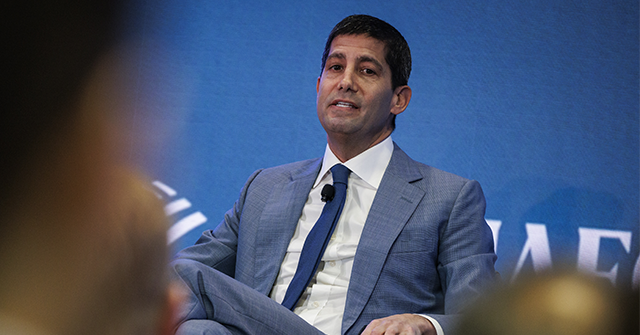
Former Federal Reserve Governor Kevin Warsh speaks during The Semafor World Economy Summit in Washington, DC, on April 18, 2024. (Samuel Corum/Bloomberg via Getty Images)
Some friends of the president’s agenda are also worried about the Warsh nomination, concerned he may be too conventional a pick for such a transformative president. Neil Dutta of Renaissance Macro captured this well in a recent podcast, calling Warsh the “antithesis of the populist movement that swept the president into office.” And certainly, it is a bit jarring to see the nomination garner the endorsement of former Fed Chairman Ben “QE” Bernanke and China’s Canadian Prime Minister Mark Carney.
In our view, analysts categorizing Warsh as either a “hawk” or a “dove” and then predicting how this will play out under President Trump are likely misunderstanding Warsh’s actual record and how it fits with sound monetary policy.
Warsh Isn’t an Uber Hawk
Bloomberg Opinion columnist Jonathan Levin offers a textbook example of this confused thinking. He argues that Warsh is “rigidly hawkish” based primarily on his opposition to QE2 in 2010, when unemployment stood at 9.8 percent. Levin claims “many observers of the ‘jobless recovery’ of the 2010s now wish that we’d done more to support the economy, not less,” treating Warsh’s skepticism as evidence he didn’t care about the unemployed.
This completely misreads what Warsh was arguing. He wasn’t advocating doing less for the economy. He was arguing that additional quantitative easing wouldn’t solve the structural problems causing the slow recovery. (This is a point that Breitbart Business Digest co-author John Carney made back in 2013.) As Warsh put it in Congressional testimony after leaving the Fed, regulatory burdens and fiscal uncertainty were “holding back investment,” and the solution required “measures to improve productivity and labor force participation.” Those, of course, are reforms outside the Fed’s mandate.
Warsh’s concern wasn’t that QE2 would do too much. It was that it wouldn’t do much at all for the jobless recovery, while creating mounting risks through distorted markets and future inflation. The sluggish labor market recovery of the 2010s, combined with the asset bubbles and market dependence on Fed support that developed, suggests Warsh correctly understood QE’s limitations.
Prosperity Isn’t a Threat to Price Stability
And contrary to some of Warsh’s populist critics, Warsh’s worldview was never about opposing growth. In fact, he’s spent much of the last decade making the case that central banks have misunderstood prosperity as a threat. The culprit? A broken model—the Phillips Curve—that treats strong employment as the first step toward spiraling inflation.
“The central bank’s models presume a tighter labor market must yield faster inflation,” Warsh said in 2017. “But those relationships appear tenuous at best.”
His point is straightforward: the Fed has spent years raising rates or holding back support every time the economy gains strength, convinced that too many jobs or too much wage growth will unleash inflation. It’s a model that has repeatedly failed, but one the Fed establishment clings to. That’s the view Warsh rejects. He doesn’t think the Fed should jam the brakes on a growing economy. He believes that productivity gains and labor market expansion can coexist with price stability.
And then, when the Biden administration was pouring stimulus onto a recovering economy while falsely claiming Trump had left a wreckage, the Fed lost its nerve to defend its independence. It “accommodated” Biden’s budget-busting initiatives all the way to the worst inflationary episode in four decades.
The real vindication of Warsh’s framework came in December 2021, when he wrote in the Wall Street Journal that “if price stability is squandered, financial stability is put at risk,” and warned that “extraordinary excesses in monetary and fiscal policy” had awakened the “inflation dragon” after decades of dormancy. At that point, the Fed was still insisting that inflation was “transitory,” and Chair Jerome Powell had just retired that term under pressure.
He was right. The subsequent inflation surge forced the most aggressive Fed tightening in four decades, validating Warsh’s warning that extended accommodation carried serious risks. Yet Levin’s analysis doesn’t mention this episode at all, even though it represents the biggest Fed policy error in a generation, and Warsh called it correctly while the consensus got it wrong.
This gets at what the hawk-dove framework misses: Warsh has a consistent analytical approach that leads him to different policy prescriptions at different times. As John Authers correctly notes in Bloomberg, these categories “aren’t immutable.”
“An economist can be hawkish at some points and dovish at others while still being consistent. The appropriate level of interest rates will change over time,” Authers points out.
Warsh opposed QE2 in 2010 because he thought its benefits were diminishing while risks mounted. He criticized the Fed’s extended accommodation in 2021 because inflation was accelerating. He could support rate cuts now that inflation has come down and non-inflationary growth has revived—without abandoning any principles.
The question isn’t whether he’s a hawk or dove, but whether his analytical framework leads to sound judgments.
Tomorrow: Warsh’s vision for shrinking the Fed’s balance sheet and what it means for financial markets.