
ID del elemento: 2286085071
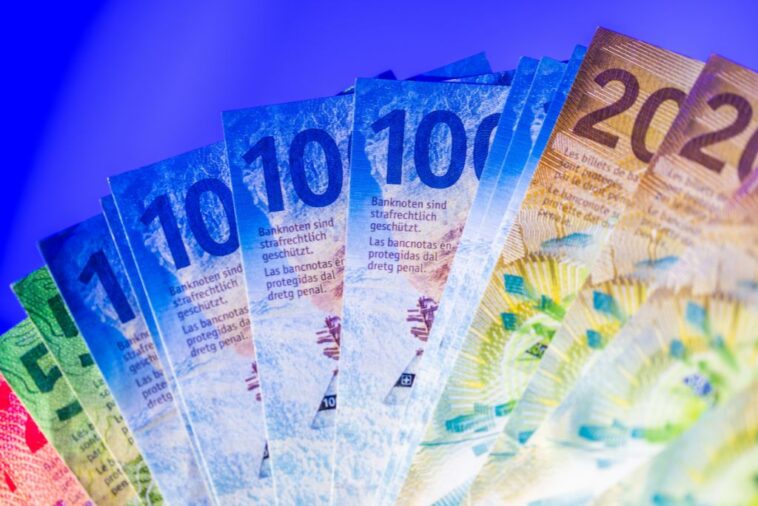
The Swiss Ministry of Foreign Affairs confirmed this February 23 that the financial assets reported by banking intermediaries linked to Nicolás Maduro, his wife Cilia Flores and his closest circle amount to 687 million Swiss francs, about 880 million dollars (figures that vary slightly according to the source up to 887 million).
The measure, adopted by the Swiss Federal Council, seeks to prevent the flight of funds of presumed illicit origin and preserve their possible return to the Venezuelan people.
The freezing order entered into force on January 5, 2026, just two days after United States forces captured Maduro and Cilia Flores in Caracas during the military operation that put an end to his regime.
According to the official data reproduced by the ATS agency and confirmed by the Swiss Ministry to AFP, approximately one third of these assets (about 239 million francs or 308-309 million dollars) were frozen precisely from that date.
The remaining two thirds were already immobilized within the framework of previous criminal proceedings opened in Switzerland against people from the Chavista entourage.
The legal basis is clear and compelling: the Federal Law on the Freezing and Restitution of Illicit Assets in the Possession of Politically Exposed Persons Abroad (FIAA).
This regulation allows the blocking of assets of foreigners “politically exposed” when there are well-founded indications that they were acquired through corruption, drug trafficking or other serious crimes.
The measure affects 21 of the 37 people included in the Swiss ordinance on Venezuela, among them Maduro, Flores and high officials of his administration. Important: it does not reach members of the current interim government headed by Delcy Rodríguez.
This action adds to the sanctions that Switzerland was already applying since 2018, when it aligned with the measures of the European Union against high-ranking Chavismo officials. The funds will remain frozen for up to four years, extendable, while the investigations advance and possible requests for mutual legal assistance.
If the competent courts demonstrate the illicit origin, the assets may be restituted to the legitimate Venezuelan authorities, that is, to the people who for years saw how their wealth was plundered by the narcodictatorial leadership.
The revelation comes at a key moment: just a month and a half after the historic capture of January 3, which allowed the United States to bring Maduro and his wife before the federal justice of New York on charges of narcoterrorism and corruption.
The preventive freezing in Switzerland —one of the most important financial centers in the world— demonstrates that the international community is not willing to allow the fruits of the Chavista plunder to continue circulating or disappearing.
For the Venezuelan people, who have suffered the systematic destruction of their economy under 21st-century socialism, this news represents a concrete step toward the recovery of resources that should never have left the country.
It is not charity: it is minimum justice against a gang that turned Venezuela into one of the largest cases of state corruption in modern history.
About The Author
Joana Campos
Joana Campos es abogada y editora con más de 10 años de experiencia en la gestión de proyectos de desarrollo internacional, enfocada en la sostenibilidad y el impacto social positivo. Anteriormente, trabajó como abogada corporativa. Egresada de la Universidad de Guadalajara.