
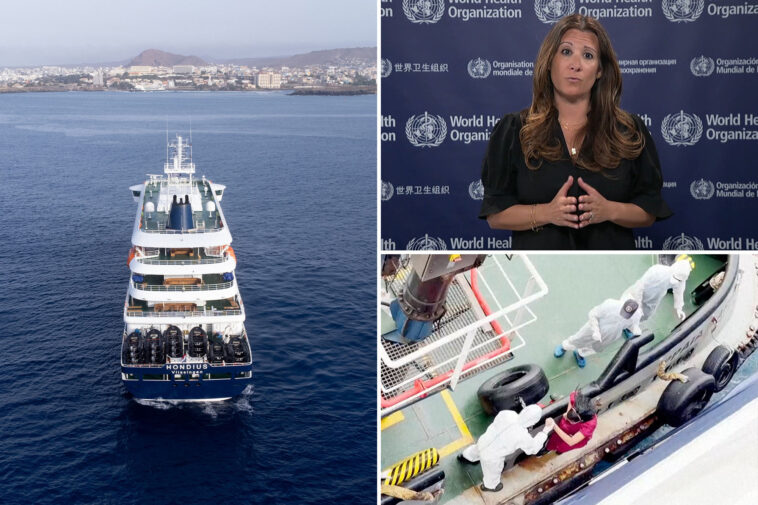
The marooned luxury MV Hondius cruise ship at the center of a deadly suspected hantavirus outbreak is now planning to dock in Spain, the World Health Organization revealed Tuesday.
The cruise ship carrying 150 people is currently stranded in the Atlantic Ocean off the African coast after the island nation of Cape Verde refused to let passengers ashore amid health concerns.
The MV Hondius, which was on a weekslong polar cruise from Argentina to Antarctica when passengers started falling ill, will start heading to Spain’s Canary Island, WHO said.


“We’re working with Spanish authorities, who will welcome the ship,” Dr Maria Van Kerkhove, WHO’s director of epidemic and pandemic preparedness, told reporters.
Spanish authorities, meanwhile, haven’t yet confirmed if they will allow the ship to dock but said they were monitoring the situation.
As the ship awaits help, distraught passengers have been confined to their cabins amid the ongoing health scare tied to the rodent-borne illness.
A Dutch couple and a German national have died in recent weeks following the suspected hantavirus outbreak, while a British national was evacuated from the ship and is in intensive care in South Africa.
Three more people with suspected cases are still on board the ship.
Medics have been trying to evacuate at least two people with symptoms of the deadly virus in recent days. The third suspected case still on board only reported a mild fever at some point, according to officials.

Authorities in Cape Verde sent teams of doctors, surgeons, nurses and laboratory specialists to provide the vessel with medical support, officials said.
At least five people with full protective gear, white overalls, boots, and face masks, were seen disembarking from the ship into a small vessel on Monday.
It wasn’t immediately clear when the sick people on board would be evacuated.
WHO officials believe the illness may have begun spreading after rare human-to-human transmission occurred between very close contacts aboard the ship.

“We do believe that there may be some human-to-human transmission that’s happening among the really close contacts, the husband and wife, people who have shared cabins,” Dr Van Kerkhove said.
“Some people on the ship were couples, they were sharing rooms so that’s quite intimate contact.”
With Post wires