
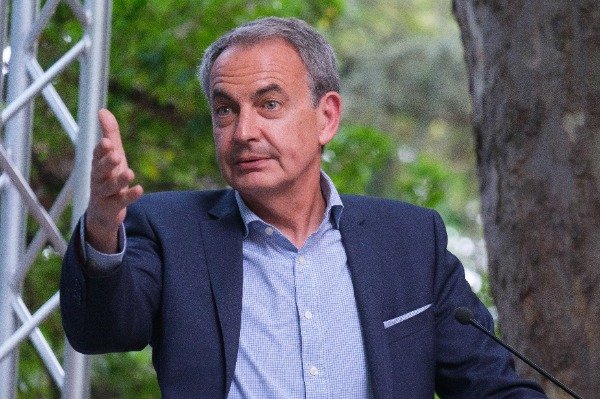

Spanish politics has once again been shaken by a major judicial scandal.
Spain’s High Court confirmed this Tuesday that former Prime Minister José Luis Rodríguez Zapatero is officially under investigation for alleged influence peddling and other possible crimes connected to the government bailout of airline company Plus Ultra.
The report, first published by Reuters, immediately triggered strong political and media reactions across Spain.
According to the information released so far, officers from Spain’s Economic and Fiscal Crime Unit carried out searches at offices and companies linked to the former socialist leader in Madrid. The investigating judge is now trying to determine whether improper political influence was used during the approval of the €53 million public bailout granted to Plus Ultra during the 2021 pandemic crisis.
Socialist leader Zapatero becomes first former Spanish prime minister investigated for corruption.
The judge is examining suspected money laundering and influence peddling around the Plus Ultra bailout, in a case that reaches into Zapatero’s decade of dealings with Caracas. pic.twitter.com/HWTKfeNtL0
— Daniel Lacalle (@dlacalle_IA) May 19, 2026
That bailout had already sparked controversy from the very beginning.
Economists, political analysts, and opposition leaders questioned for years why an airline with limited market presence and serious financial concerns received millions in taxpayer money while thousands of Spanish small businesses struggled to survive during the economic shutdowns imposed throughout the pandemic.
Now, investigators are attempting to establish whether political pressure, institutional favoritism, or private interests played a role behind the operation.
Zapatero is expected to appear before Spain’s High Court on June 2 as a formal subject of the investigation.
Although the former prime minister has denied any wrongdoing, the case represents a significant political blow for the Socialist Party and for Spain’s broader left-wing establishment, especially at a time when Prime Minister Pedro Sánchez’s government is already facing mounting institutional pressure and growing public distrust.
The Plus Ultra scandal has once again revived a question many Spaniards have been asking for years: who truly controls public money in Spain?
While millions of families continue dealing with inflation, economic uncertainty, and declining purchasing power, new investigations involving political figures, controversial bailouts, and alleged influence networks inside state institutions continue to emerge.
🚨 BREAKING NEWS
SPAIN
CORRUPTION
Ex PM Jose Luis Rodriguez Zapatero got charged up with money launderin’ and called in to testify before the National Court for some alleged money launderin’ crime.
That socialcommunist crap in Spain? All corruption, plain and simple.🤷🏼♀️ pic.twitter.com/XjuX8WFnf1— 𝗝𝘂𝗮𝗻𝗮 𝗜𝗻𝗲́𝘀 (@JuanaInesX) May 19, 2026
The situation is fueling growing frustration among citizens who increasingly view the political class as disconnected from the everyday struggles of ordinary Spaniards.
The Spanish left once promised transparency, democratic renewal, and institutional integrity.
Yet corruption scandals, judicial investigations, and accusations involving figures close to political power continue to accumulate. When institutions stop serving the national interest and begin protecting ideological structures or political elites, public trust inevitably collapses.
Spain needs order, accountability, respect for the rule of law, and leaders committed to national stability, family values, and institutional integrity.
Read more:
About The Author

Rafa Gómez-Santos Martín
Rafael Santos is a Portuguese writer and political analyst dedicated to educating Hispanics on traditional values and the importance of protecting children and families. With years of experience in media and public discourse, he has been a strong advocate for cultural preservation and moral principles in an ever-changing world. Passionate about culture, sports, and current affairs, Rafael brings insightful analysis to political and social debates, striving to empower the Hispanic community with knowledge and a deeper understanding of the issues that shape their lives.