
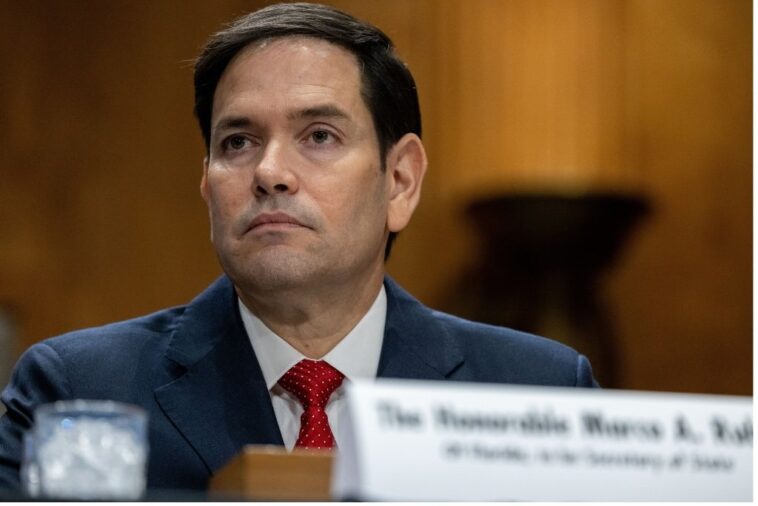

Secretary of State Marco Rubio stated yesterday on television that the United States has secured agreements with 20 countries around the world to accept people living illegally in the U.S. and deport them when returning them to their country of origin is not feasible.
Just after these remarks, made during a cabinet-related discussion, broader updates emerged regarding immigration enforcement. Rubio explained: “One of the key things we’ve achieved is that 20 countries have now signed third-country agreements… We’ve gotten 20 countries around the world to sign agreements allowing us to deport people to those places.”
These arrangements — commonly known as “safe third country” or third-country removal agreements — allow the U.S. Department of Homeland Security (DHS) to send non-citizens to countries other than their homeland when direct repatriation faces obstacles, such as refusal by the home country to accept them, documentation issues, or legal complications.
How the Strategy Works as a Pressure Tool
Rubio highlighted a practical effect of these agreements: they serve as leverage to encourage voluntary departures. He stated: “What usually happens when you go to the person who is here illegally and tell them, ‘We’re going to send you to this third country,’ suddenly they decide they would rather return to their home country.”
This more aggressive enforcement strategy aligns with the Trump administration’s immigration objectives. According to the approach currently being implemented by DHS, informing migrants that they may be removed to a distant third country often leads them to stop resisting and instead agree to deportation to their country of origin.
Immigration Priorities Under the Trump Administration
The announcement builds on the administration’s broader immigration priorities, which include accelerating removals of individuals with criminal records or final deportation orders.
El Salvador, under President Nayib Bukele, has emerged as a prominent partner by accepting deportees of multiple nationalities — including some foreign criminals — and housing them in detention facilities.
Public reports indicate that the U.S. has sought or secured agreements with more than 20 countries, with some sources suggesting the number could be as high as 27 by early 2026. Countries mentioned in public reporting include partners in Africa and Latin America, although the full official list referenced by Rubio has not been publicly detailed.
Among the Hispanic nations known to cooperate in these operations are Costa Rica, Mexico, Panama, El Salvador, Guatemala, Honduras, and Ecuador, in addition to Rwanda, Sudan, and Uganda.
The administration has actively pursued additional partners, emphasizing deterrence and stricter immigration enforcement. Some agreements reportedly involve financial incentives or diplomatic arrangements, prompting criticism from congressional Democrats over costs and human rights concerns.
Legal and Operational Framework
U.S. immigration law (Section 241 of the Immigration and Nationality Act) authorizes deportation to a third country when removal to the designated country of origin is considered “impracticable, inadvisable, or impossible.”
These agreements expand deportation options beyond traditional repatriation, with the goal of reducing backlogs and avoiding delays.
Critics have raised concerns about conditions in receiving countries and due process protections, while supporters argue the policy is an essential enforcement tool that strengthens border security and public safety.
Rubio’s remarks underscore the administration’s ongoing diplomatic efforts to support DHS operations and fulfill campaign promises on immigration enforcement and border security.
The administration continues seeking additional agreements to expand its deportation capabilities.
🚨 WOW! Marco Rubio reveals the US has now secured deportation agreements with 20 third-party countries to deport our illegals to
And DHS is using that as LEVERAGE to get illegals to stop putting up fights to go back to their home countries
If you tell them they're going to… pic.twitter.com/jEskwKtCtD
— Nick Sortor (@nicksortor) May 27, 2026
About The Author

Maria Herrera Mellado
María Herrera Mellado es una abogada y analista política muy respetada. Licenciada en Derecho en EE.UU. y España, también tiene un doctorado en Ciencias Jurídicas y varios títulos de la Universidad de Granada (España), de la Universidad de Arizona y de la Florida International University. Con amplia experiencia en derecho internacional, asesoría en inversiones, representación en inmigración, y protección de la privacidad y lucha anticorrupción, ha asesorado a organizaciones y políticos europeos, estadounidenses e hispanoamericanos. Ha escrito sobre seguridad nacional e inmigración, protección de datos, derecho constitucional, consumo financiero y derecho bancario en revistas internacionales y coescribió libros publicados en Perú y Colombia. Es reconocida por su servicio comunitario en EE.UU. y es considerada una de las mujeres más influyentes de Florida. Es experta en varios idiomas y participa frecuentemente en debates en canales como Univisión, Fox, France 24, Telemundo y es la Editora Jefe de Gateway Hispanic.