
Nigeria’s population of roughly 240 million is divided almost equally between Muslims and Christians, with Muslims holding a probable plurality; no official religious census has been conducted since 1963. Nevertheless, several forces within the country are working toward jihad, Islamization, and the establishment of an Islamic caliphate.
The various Islamist actors have different motivations and often conflict with one another over policy and procedure. At the same time, they share the objective of removing Christian presence through killing, displacement, coercion, or demographic replacement.
Boko Haram and ISWAP have fought each other directly and have distinct ideological and operational disputes. Fulani militias are driven primarily by land seizure and demographic expansion rather than a formal caliphate ideology. The Islamic Movement of Nigeria (IMN), being Shia and Iranian-linked, is theologically at odds with the Sunni jihadist groups. These distinctions are documented and verifiable.
ISWAP and Boko Haram have explicit caliphate mandates and documented histories of forced conversion, making the elimination, subjugation, or absorption of Christian communities a stated component of their ideology. For Fulani militias, the objective is more accurately characterized as displacement, territorial control, and demographic replacement rather than forced conversion or extermination as an end in itself. However, forced conversion is one of the tools used to achieve this goal.
The caliphate question cannot be addressed without its historical baseline. Before the British colonial administration arrived in Nigeria, Usman dan Fodio, a Fulani Islamic scholar, launched a jihad in Gobir in 1804 and by 1808 had established the Sokoto Caliphate, having vowed to enforce Islam by the sword from the Sahara to the Atlantic. When the British dismantled it administratively in 1903, the caliphate was absorbed rather than destroyed ideologically.
A legal analysis by a senior Nigerian jurist described Dan Fodio’s jihad as a “full-blown Islamization agenda” aimed at “expanding the caliphate to other parts of Nigeria in the irrevocable bid to dip the Quran into the Atlantic Ocean in Lagos.” That goal, a caliphate reaching the southern coast, was never achieved, and the ambition, in the analysis of multiple researchers and interviewees, never disappeared.
Three distinct actor categories pursue that project today, with different methods and levels of ideological organization.
ISWAP is the clearest case. A formal affiliate of Islamic State, which declared a global caliphate in June 2014 under Abu Bakr al-Baghdadi, ISWAP requires bay’a, an oath of allegiance, and acceptance of the caliphate’s theological and political authority. Its 2016 split from Boko Haram was itself a caliphate-compliance move: Boko Haram’s indiscriminate killing of Muslims violated IS doctrine requiring governance and protection of Muslim populations under caliphate authority.
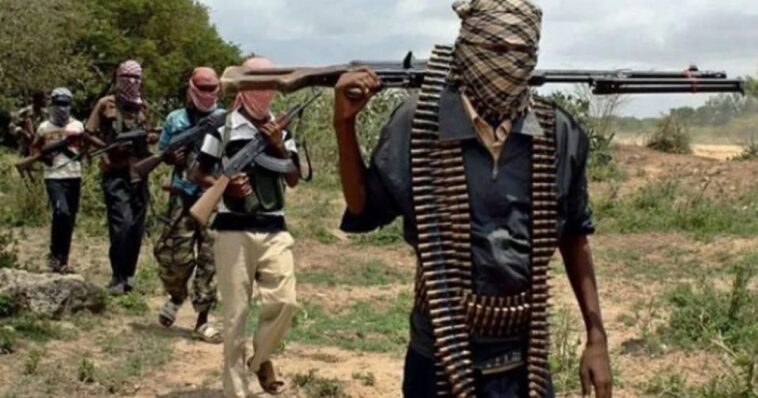
ISWAP controls villages in the Lake Chad Basin, administers sharia courts, collects taxes, and frames the Nigerian state as an apostate entity to be destroyed. It provides basic services in held territory, classic IS caliphate-building doctrine, and its stated, doctrinal, and operational goal is the establishment of an Islamic caliphate in West Africa as a province of the global Islamic State project. This is the group’s declared purpose, confirmed by its governance behavior.
Armed Fulani militias present a more contested but evidentially substantial case. According to the Observatory of Religious Freedom in Africa, the number of Christians killed by armed Fulani herdsmen between October 2019 and September 2023 was almost seven times the number killed by Boko Haram and ISWAP combined, a scale that demands explanation beyond random resource conflict.
Fulani massacres since 2015 follow a consistent pattern: Christian farmers are displaced, emptied villages are declared Fulani Emirates, and land transfers to Fulani cattle grazing. The use of emirate terminology maps directly onto the historical caliphate’s administrative structure.
Genocide Watch concluded that the Fulani jihad is organized and financed by large Fulani cattle owners with support from Fulani officers in the Nigerian Army, moving the analysis away from spontaneous ethnic conflict toward a directed campaign. There is additional evidence that Fulani militias are now in communication with Boko Haram and ISWAP. If confirmed, this would suggest that the violence is not merely localized or opportunistic but part of a broader networked insurgency.
What remains unproven is a unified command structure directing all Fulani militia violence toward a single caliphate goal; the Combating Terrorism Center at West Point noted that nomadic patterns and significant cultural variation across the Fulani’s broad African range have worked against the development of any central leadership.
The Sokoto Sultanate still exists legally in Nigeria as a traditional institution, and politicians have exploited the collective memory of the 1804 jihad for political advantage. Whether this amounts to active caliphate-building or political instrumentalization of identity remains unresolved in the academic literature. The Sultan of Sokoto’s counter-claim — that the violence is purely economic — has grown untenable given the targeting patterns, the geographic expansion into the southeast, and the emirate terminology applied to captured villages.
The House Appropriations Committee’s joint report to the White House stated that “Fulani militant and bandit groups are seizing land and resources and obstructing religious freedom to exert control and coerce conversion to Islam” and that government had “failed to confront both the scale and the intent of these atrocities.”
The UK All-Party Parliamentary Group for International Freedom of Belief formally concluded that radicalized Fulani militants demonstrate clear intent to target Christians and Christian symbols, adopting tactics comparable to Boko Haram and ISWAP.
Three distinct objectives are documentable across these actors, each supported by evidence of varying strength.
Land and resource seizure is the most provable. An economic warfare dimension runs alongside the killing: militants systematically kidnap Christians for ransom, forcing families to sell farmland, one Nigerian church paid $205,000 to recover 50 kidnapped members. By mid-2025, jihadist Fulani herdsmen occupied at least 950 locations across the largely Christian southeastern states of Abia, Enugu, Anambra, and Ebonyi, territory with no historical Fulani grazing rationale, which defeats the resource-conflict explanation.
Islamization of territory is strongly indicated. Genocide Watch documented attackers shouting religious declarations, targeting churches, and singling out clergy. The Nigerian Atrocities Documentation Project concluded that the religious dimension of the conflict holds sway over narratives tied to economic competition, climate change, or border porosity, and that the abundance of fertile land occupied by Christians in the North-Central region drives a sustained campaign to displace Christians and seize their lands.
Forced conversion is real but secondary. Forcible conversion of Christian girls is documented in Northwest Nigeria, and forced marriage into Muslim households functions as conversion in practice. The primary Fulani objective is displacement and land seizure, Islamized territory is the goal, and conversion of surviving persons is incidental. ISWAP maintains an explicit caliphate mandate and documented forced conversion policy.
For Fulani militias, the mechanism is demographic replacement, not mass conversion, although forced conversion is one of the means used to achieve demographic replacement.
Ad block users: Some site features may not work correctly while an ad blocker is enabled, because they break scripts and content this website depends on. If you can’t see comments below, for example, please disable your ad blocker.