There’s no such thing as greatness without a great deal of energy. Indeed, if we graph out on a chart energy consumption and economic prosperity, they correlate strongly. It’s a simple enough point: All the cool stuff of strength and affluence—from manufacturing to air conditioning—requires electricity. The cheaper the juice, the better off we are.
So it’s significant that the U.S. produces more oil and gas than Saudi Arabia and Russia combined and is the biggest energy exporter in the world. This energy abundance means that the U.S. is better able to withstand the troubles in the Strait of Hormuz. Yes, gasoline prices are higher now; but the situation, difficult as it is, could be a lot worse.
This Baby Boomer remembers the multiple “energy crises” of the 1970s, when gasoline prices really spiked—if gas was available at all.
Yet those spikes and shortages in the ’70s were a fluke in U.S. history. Over the long run, American energy prices have been low and going lower—thanks to production and abundance.
After all, back in the 19th century, it was an American, Edwin Drake, who pioneered oil-drilling technology. For most of the 20th century, American oil prospectors were free to drill, and so America was energy independent.
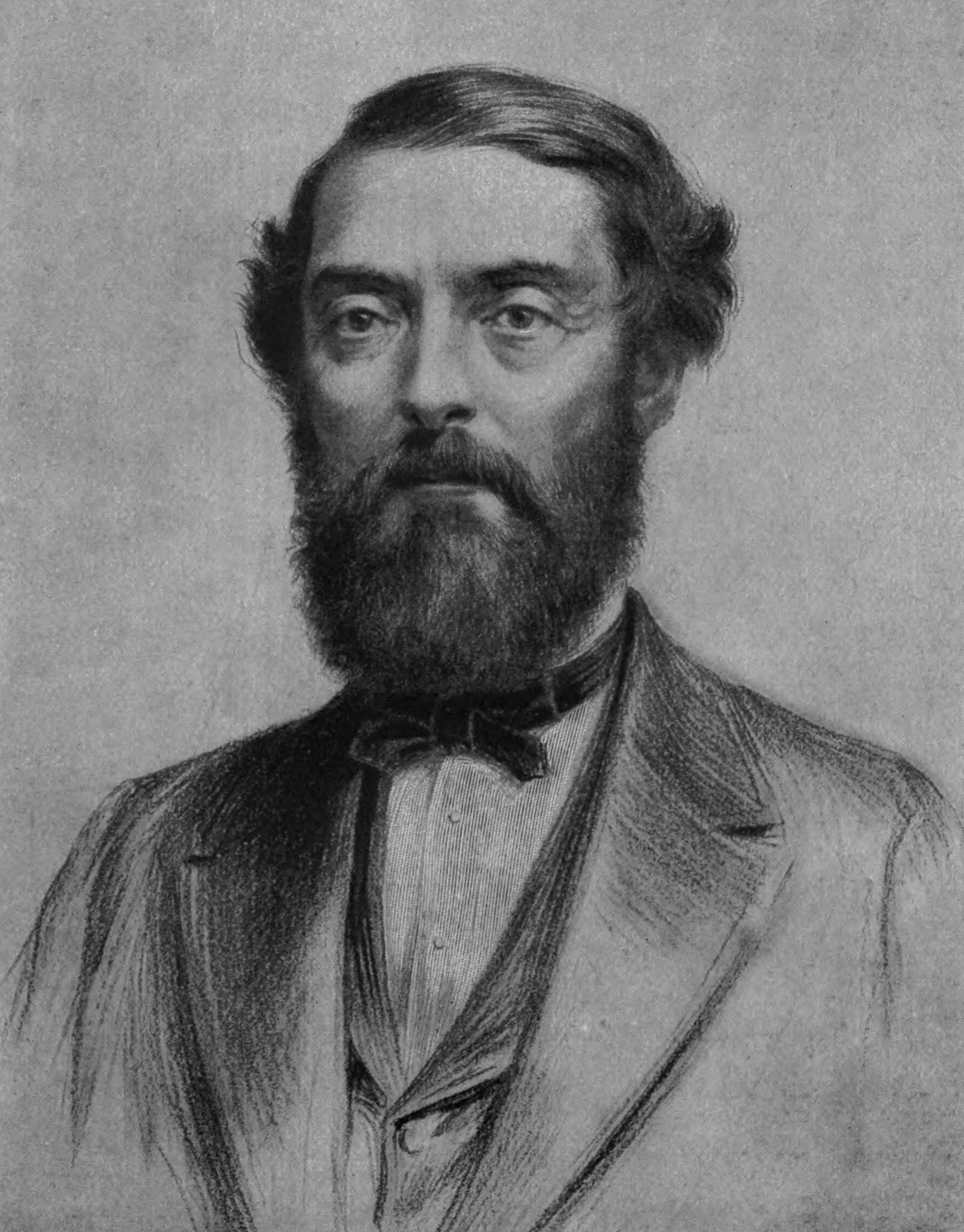
Edwin L. Drake, 1819-1880. (Wikimedia Commons)
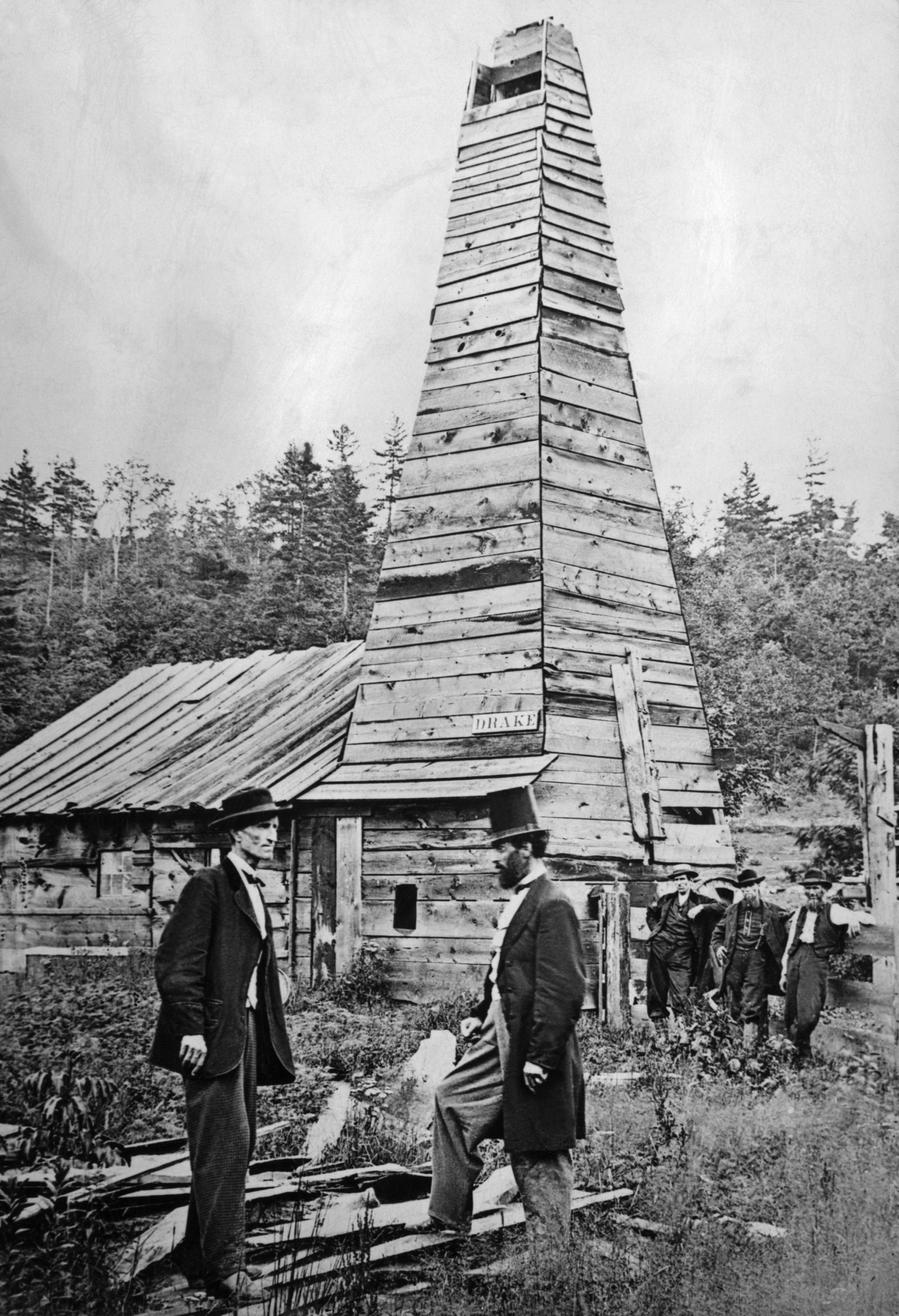
Photograph of Edwin L. Drake (right) in 1861 in front of the first oil well in the United States, which he drilled near Titusville, Pennsylvania. On the man on the left is Peter Wilson, a Titusville druggist who encouraged Drake in the venture.
Yet then, in 1971, President Richard Nixon wrongheadedly imposed price controls—and our energy problems began. The price controls restricted American production, leading to energy dependence on others who were not restricted. The least constrained, of course, was OPEC, the Organization of Petroleum Exporting Countries, which seized opportunities to jack up prices.
In 1973, amidst a geopolitical dispute, the Arab OPEC countries embargoed oil to the U.S.; unfortunately, thanks to those federal price controls, American producers could not fill up the shortfall. Stuck in a gas line? Thank a bureaucrat.
Happily, in 1981, President Ronald Reagan put an end to this oil-price regulation foolishness. Soon enough, market forces reasserted themselves; production rose and prices fell.
The lesson is as clear as a Milton Friedman video: With government control, we will have shortages. With free markets, we will have abundance.
And abundance, of course, is a part of American Greatness. As the historian David Potter wrote in 1954, we are a People of Plenty.
Of course, plenitude requires continuous innovation—the freedom to think, tinker, sweat, and maybe lose everything or win big. That’s freedom in action.
We are all familiar with innovation in, say, electronics, where daily we see it on our desktops, or in our hands. Yet it’s also been happening beneath our feet.
No small part of our greatness today comes from the Made in USA innovation of hydraulic fracturing, or fracking that allows us to get more oil and gas out of the ground by injecting water and chemicals into wells, thereby pushing out the hydrocarbons. It’s a complicated and messy process, but it works.
This story is well told in a 2013 book, The Frackers: The Outrageous Inside Story of the New Billionaire Wildcatters, by Gregory Zuckerman, a reporter for The Wall Street Journal.
As Zuckerman details, the fracking idea had been around for a while, and yet it was not until the early 2000s that oilmen figured out to combine injection and horizontal drilling. (Today, they can drill sideways a full four miles, and soon enough, it will be more, and so even more energy will be accessible.)
The central hero in Zuckerman’s book is George P. Mitchell, the fracker whose vision Zuckerman fairly compares to that of other geniuses, including Henry Ford and Alexander Graham Bell.
(In case anyone’s wondering, the “P” in Mitchell’s name is for “Phydias,” a tribute to his Greek heritage—the historical Phydias helped sculpt the Parthenon in Athens. The actual family surname was “Paraskevopolous.” And yet when a payroll clerk started calling a fresh-off-the-boat immigrant from Greece “Mitchell,” that shorter name stuck. The assimilation of hard workers into the melting pot is yet another aspect of American Greatness.)
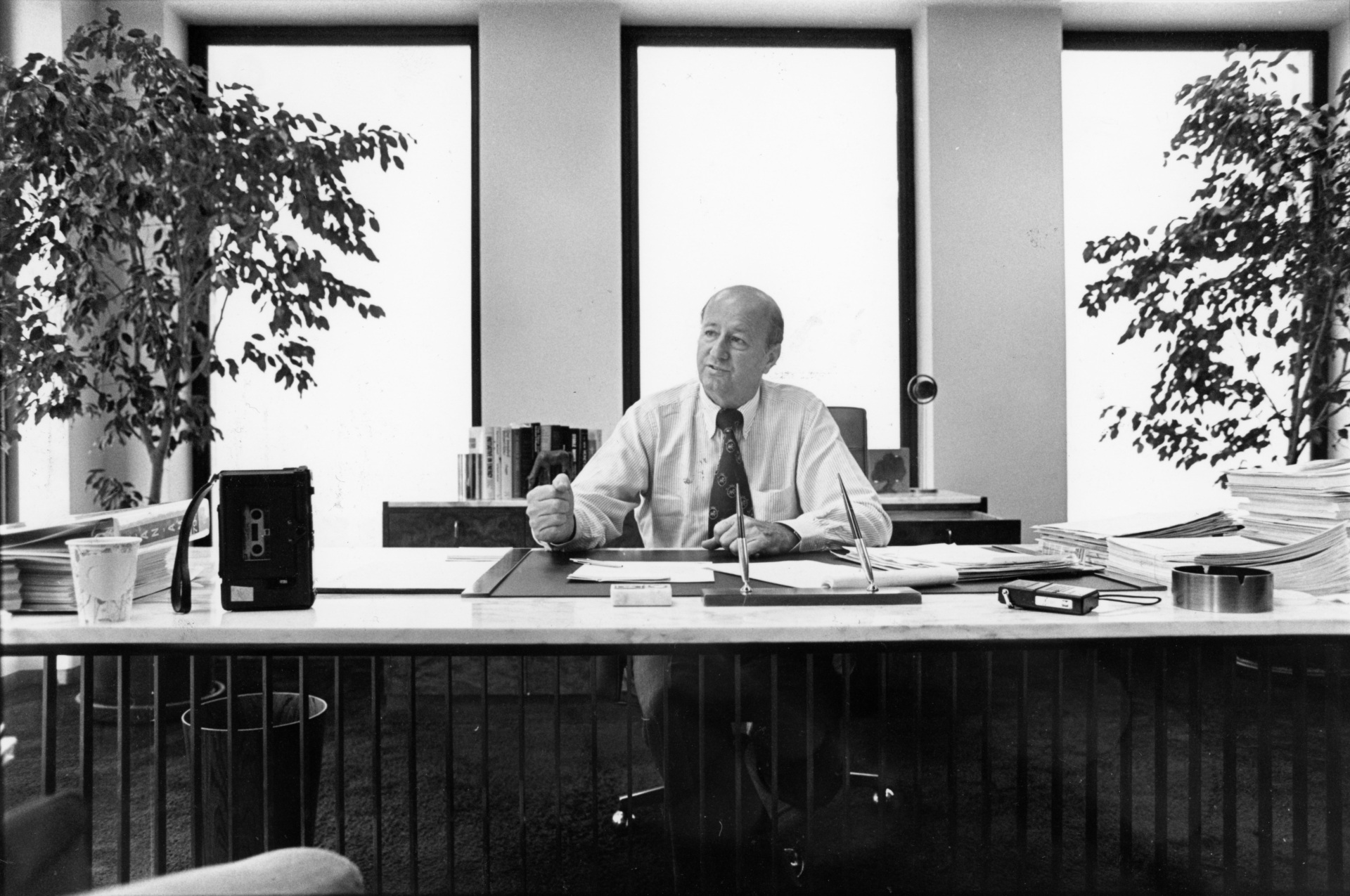
Independent oilman and real estate developer George P. Mitchell in his office in Houston, Texas, in 1979. (Buster Dean/Houston Chronicle via Getty Images)
Another fracker legend is Harold Hamm, a big supporter of Donald Trump and a mentor to our current Energy Secretary, Chris Wright. Hamm’s story is a business cliffhanger: Along with Mitchell and only a few others, Hamm was sure there was a lot more oil and gas to be found in old oil fields, and yet investors who made the mistake of trusting green “experts” and their mouthpieces in the Main Stream Media, were skeptical. The smart set spoke of “peak oil”— as in, production was past its peak—not American Can-Do.
So when Hamm’s company, Continental Resources, launched its initial public offering (IPO) in 2007, Wall Street looked askance. Whereas oftentimes the stock price jumps on an IPO, in Hamm’s case, the price fell. It took a few years for investors to catch on that fracking was for real. Yet when they did, the valuation of Hamm’s company grew more than five-fold. In the free market, success is freely rewarded.
So that’s the story of fracking, and it explains why, in the last two decades, U.S. oil production has tripled. That’s a piece of American greatness.
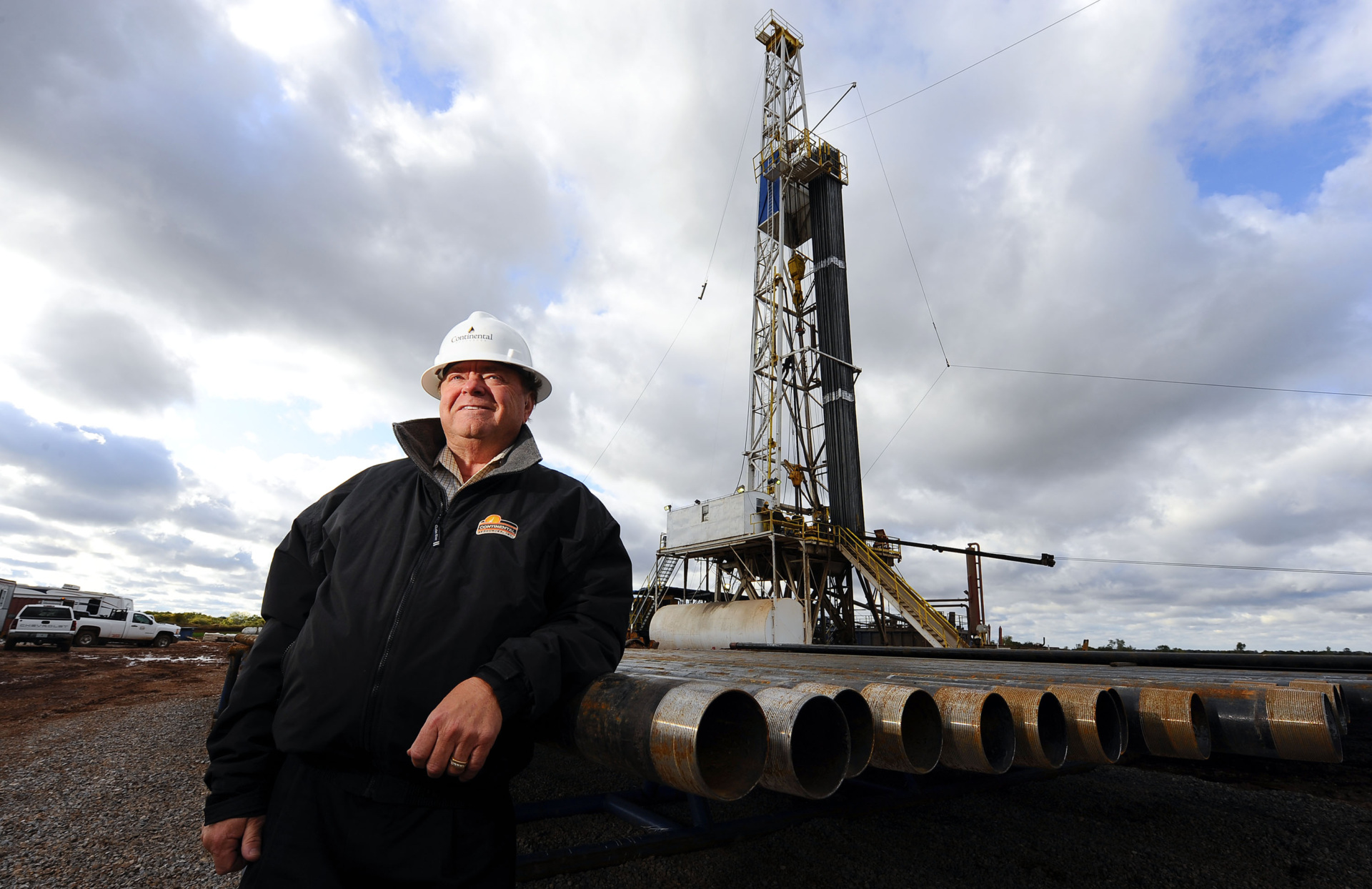
Harold Hamm, chairman of Continental Resources Inc., stands near an oil rig outside Watonga, Oklahoma, on October 22, 2008. (Larry Smith/Bloomberg via Getty Images)
Not surprisingly, other countries have tried to duplicate America’s success—and yet with less success. Zuckerman explains why, and as he does so, we are reminded of the full breadth and depth of American economic greatness:
Foreign nations lack perhaps the key element behind the U.S. energy revolution: an entrepreneurial culture and ample incentives for the years of trial and error necessary for shale breakthroughs . . .headstrong wildcatters persevered because they knew they could gain both fame and remarkable fortune finding economic ways to tap shale. Comparable prizes don’t always exist in other countries, where governments can play a larger role in society.
He adds:
The United States also boasts and extensive energy infrastructure, such as pipelines and elaborate databases of underground geology, deep capital markets to finance newfangled drilling, more rigs than anyone else, collection and storage facilities, and an experienced labor force.
And there’s more:
The U.S. legal system gives individuals ownership of mineral rights under their land and the ability to lease rights to others. That has accelerated drilling in comparison with foreign nations, where mineral rights are controlled by slow-moving governments.
It’s the rare country that can match America’s deep commitment to free enterprise, including resource development.
To be sure, the American system doesn’t always seem kind to American business, but in the game of international competition, everything’s relative. This country, for all its red tape, is still the best place in the world to do business.