
NEWYou can now listen to Fox News articles!
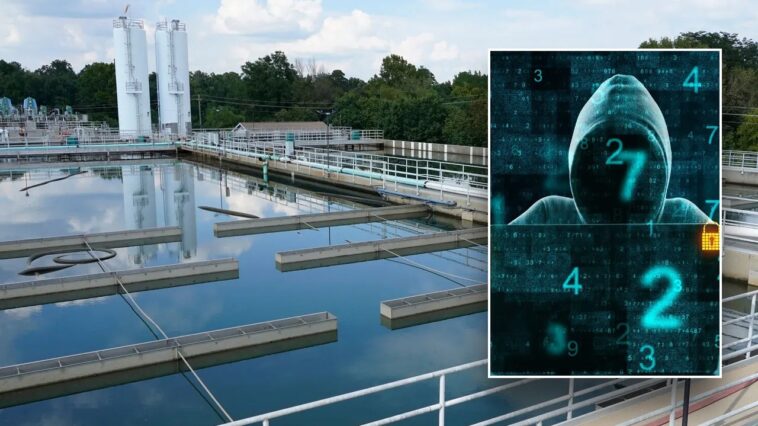
When Americans think about cyberattacks on critical infrastructure, they often picture pipelines, banks, or the electric grid. But one of the most attractive targets for foreign adversaries flows through nearly every American home every day: our drinking water.
Few people stop to consider the consequences if a community’s water or wastewater system were disrupted. Yet these systems have quietly become prime targets for nation-state actors and cybercriminals seeking to undermine public confidence, disrupt essential services, and probe America’s critical infrastructure.
These threats are no longer hypothetical.
In January 2024, attackers infiltrated the water system in Muleshoe, a community in my home state of Texas, causing thousands of gallons of water to spill into city streets after manipulating the system’s industrial controls. Muleshoe was not an isolated incident.
Just weeks ago, an Iran-linked hacking group claimed responsibility for breaching systems associated with California Water Service, one of the nation’s largest water utilities. While investigators found no evidence that water treatment or distribution systems were compromised, the incident served as a stark reminder that America’s water infrastructure remains squarely in the crosshairs of foreign adversaries.
IRAN-LINKED HACKERS SUSPECTED IN UK POWER-PLANT SHUTDOWN AFTER ALLEGED MINNESOTA WATER ATTACK
Recent reports indicate that similar cyber intrusions have targeted utilities across multiple states, while federal agencies continue to warn that nation-state actors from Iran, China, and Russia are actively searching for vulnerabilities in our nation’s critical infrastructure. The question is no longer whether these systems will be targeted. They already are.
Long before the latest headlines, the House Science, Space, and Technology Committee recognized where this threat was heading. In May, our Environment Subcommittee convened experts from government, academia, national laboratories, and the private sector to examine how science and technology can better protect America’s water infrastructure from cyber threats. The testimony was clear: these threats are evolving faster than many utilities can defend against them.
AN AI CYBERATTACK COULD TURN OFF AMERICA’S LIGHTS BEFORE WASHINGTON EVEN UNDERSTANDS WHY
Water and wastewater systems are as essential to public safety, economic prosperity, and national security as the electric grid. More than 324 million Americans depend on public water systems every day, including hospitals, schools, manufacturers, military installations, and countless businesses that cannot function without reliable access to clean water.
Yet the nation’s water infrastructure is especially vulnerable. The United States has more than 50,000 community water systems, many serving small populations with limited technical staff and constrained budgets. Many continue to rely on aging industrial control systems designed long before cybersecurity became a central concern. Others rely on third-party vendors for software and maintenance, creating additional pathways for malicious actors to gain access.
TRUMP SIGNS LANDMARK EXECUTIVE ORDER INVESTING IN QUANTUM COMPUTING AND CRYPTOGRAPHY SECURITY
Traditional cybersecurity measures alone are no longer enough. For years, many believed that isolating operational systems from the internet — known as “air-gapping” — provided sufficient protection. But today’s utilities rely on remote monitoring, automated controls, and interconnected technologies to operate safely and efficiently. Even networks that were once considered isolated have proven vulnerable to determined adversaries.
CLICK HERE FOR MORE FOX NEWS OPINION
That is why the solution is not simply stronger regulations or more compliance checklists. As President Trump has emphasized, America’s greatest strength has always been its ability to innovate. Protecting our water infrastructure will require that same commitment to research, engineering, and technological leadership.
The House Science, Space, and Technology Committee has jurisdiction over the federal research agencies developing the technologies needed to stay ahead of these threats. During our hearing, experts discussed how artificial intelligence can detect suspicious activity before human operators recognize an intrusion. Advanced anomaly detection can distinguish malicious behavior from routine system changes. Cyber-informed engineering can ensure critical infrastructure continues operating safely even when portions of a network are compromised. Secure-by-design technologies can eliminate vulnerabilities before deployment rather than patching them after an attack.
These are not distant research projects. They are practical tools that can help water utilities detect threats earlier, respond faster, and recover more quickly when attacks occur.
America has never waited for a crisis to begin preparing for the next challenge. Protecting our water infrastructure demands that same foresight today.
CLICK HERE TO DOWNLOAD THE FOX NEWS APP
Our adversaries are probing these systems because they understand just how vital they are to everyday American life. Safe drinking water should never depend on whether a small-town utility can outmatch a foreign intelligence service. Congress must continue supporting the research, technologies, and partnerships that will strengthen our nation’s cyber defenses and help ensure every American community can trust the water flowing from its tap.
Congressman Brian Babin (TX-36),is Chairman of the House Science, Space, and Technology Committee and a member of the House Transportation and Infrastructure Committee in the House of Representatives