
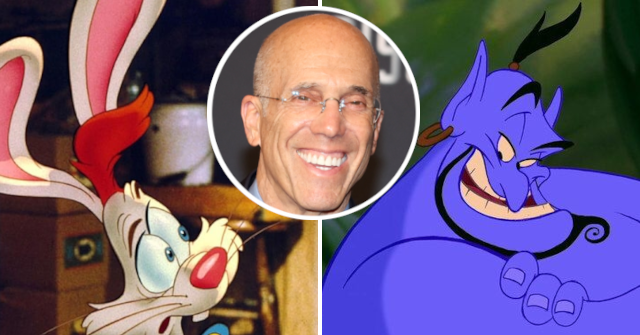
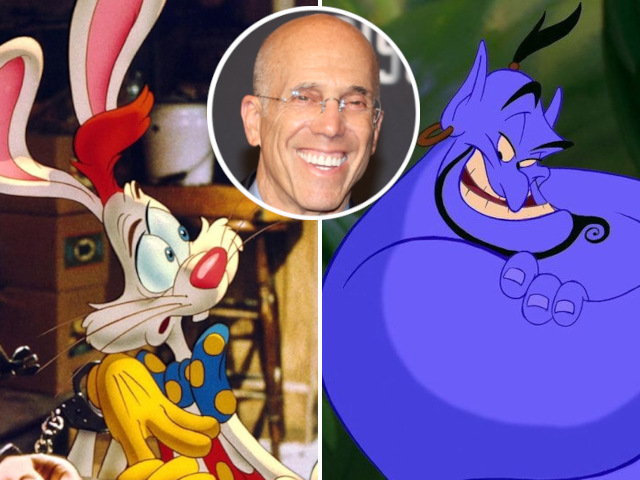
Reaching all the way back to the 1980s, Jeffrey Katzenberg was a giant in the world of feature animation movies for more than 30 years. His biography is like no one other than Walt Disney and includes such timeless classics as Who Framed Roger Rabbit, The Little Mermaid, Beauty and the Beast, Aladdin, The Nightmare Before Christmas, The Lion King, and the Shrek and Kung Fu Panda franchises. And…
This week he took to his verified X account to make a 2,500+ word argument in favor of using AI in animation.
While Katzenberg sympathizes with those who might lose their jobs to AI, he doesn’t hide the fact that job losses is what all the hysterical fear-mongering around AI is really about.
He points out how John Philip Sousa opposed the gramophone as a “substitute for human skill, intelligence, and soul.” Ah, but once Sousa’s copyrights were secured and he got paid for that mechanical music, all the complaints went away.
Thousands of musicians all over the country were gainfully employed for nearly two decades bringing music to silent films. That’s why those musicians opposed sound movies. Naturally, they didn’t admit that. Instead, they attacked this amazing advancement on the grounds that “canned music” was a “menace.”
During Katzenberg’s reign, computer-animated films replaced an untold number of illustrators. He says that while he was at “DreamWorks, we made the difficult decision to sunset hand-drawn animation and become a fully computer-animated studio. It was the right thing to do, but it was not without pain.” He explains that this decision “cost talented people their place in an industry where they had worked their whole lives. Some made the leap to the new tools and did the finest work of their careers. Some never did.”
Katzenberg believes, and for good reason, that AI animation can “cut the time and cost of producing world-class animation by as much as ninety percent,” and suggests Hollywood stop whistling past the graveyard:
Hollywood needs to accept that AI is not going away. The energy they are spending trying to make it disappear is energy they are not spending deciding the terms on which it will exist. And the terms are everything. The north needs something from it that they cannot build and cannot buy: creativity. The kind that takes a blank page and conjures a single right answer where there was none and has held audiences for a century. Without it, the most powerful reasoning engine ever invented will still be missing the only thing that makes a story worth telling.
He also makes it clear that the artist will always be necessary:
The artists who learn to wield these new instruments will do things the engineers never dreamed of. They always have. Edison invented the motion picture but made terrible movies. It took Chaplin, Lloyd, Keaton, and so many others to make movies emotional. Now, the canvas is about to expand yet again. We should decide now that we intend to paint on it.
Katzenberg does fail to mention one Very Big Reason behind Hollywood’s dishonest jihad against AI (while privately using it), and that’s to retain its stranglehold on producing entertainment.
Once the tools to tell stories are available to anyone from anywhere for a reasonable price, Hollywood will lose its 100-plus-year monopoly on production which it only enjoys due to the exorbitant costs.
Remove those costs through AI, and any artist with a decent story to tell and the visual sense of a competent director can become their own Hollywood.