
A coalition of South Korean TV producers, directors, writers, actors, and crewmembers appealed to the government on Wednesday for a $954 million “investment fund” to bail out their industry, which is ironically suffering from increased production costs due to the soaring global popularity of “K-dramas.”
According to the industry groups, the investment fund is needed because production costs are rising and those costs are rising because the global demand for Korean TV shows has greatly increased.
Streaming giant Netflix, in particular, has developed an insatiable appetite for Korean programming after the massive success of Squid Game. Netflix made a commitment to invest $2.5 billion in the Korean TV industry back in 2023, but it apparently was not enough to cover the rapidly increasing paychecks of top actors and directors as they became worldwide stars.
Song Byeong-joon, chair of the Korea Drama Production Association, told the Straits Times on Wednesday that South Korean TV networks began reducing their output of drama programs at the very moment they became hot items for Netflix and other global customers.
The slowdown was partly due to increasing domestic competition from global media, thanks to the very same streamers that got the rest of the world interested in K-drama. The result was a tighter production environment that made it hard for “a new writer’s second work, a supporting actor’s first lead role and an assistant crew member’s directing debut” to attract the funding they need.
Korea Joongang Daily (KJD) reported in October that Netflix has been a “double-edged sword for K-content” because it “drove up production costs and deepened the industry’s reliance on the platform.”
Nothing like Netflix had ever happened to the K-drama world before. KJD noted that no less than 210 Korean shows have made the Netflix Global Top 10 list since the summer of 2021, and 11 percent of Netflix’s total worldwide viewing hours were devoted to Korean content in the first half of 2026, an astounding figure. The U.S. is still the top source of content for Netflix with 51.4 percent of viewing hours, but South Korea is now in second place.
This meteoric success prompted K-drama studios to up their game, with bigger budgets and higher production values — to capture the attention of American audiences, and also to compete with expensive American shows that were coming through the Netflix pipeline into South Korea.
Netflix brought some discipline to the rather improvisational K-drama industry, which had long been accustomed to writing scripts on the fly and airing early episodes of a show while the rest of the series was still in production.
In other words, Netflix made pre- and post-production into standard practices for South Korean television, and that was more expensive than the old practice of rolling tape on Episode 1 while the writers were still trying to figure out what was going to happen in Episode 6.
Global audiences also had a taste for K-dramas with fantastic elements, which were very expensive to produce.
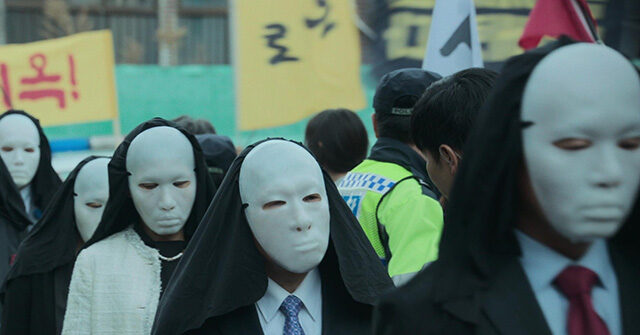
Squid Game had elaborate sets and stunts, while popular horror series like Kingdom and Hellbound needed pricey special effects. Kingdom is like The Walking Dead but set in medieval Korea, while Hellbound is about hulking demons that suddenly begin rendering instant karmic judgment by tearing bad people to pieces in broad daylight. Those productions were a lot more expensive than light romantic comedies and soap operas.
Industry sources agreed that the skyrocketing salaries of popular actors were the biggest driver of increased costs.
“Before actors’ fees began rising, driven in part by Netflix productions, the production cost per episode was around 500 million won. Recently, that figure has increased roughly three to fivefold, reaching 2.5 billion to 3 billion won per episode,” an insider told KJD.
Another reason K-drama wants government support is that production companies are not making much of a profit from the surging popularity of their art form. Korean studios tend to lose control of their intellectual property (IP) to streaming services, so they end up with a small slice of a huge revenue pie when their shows hit the big time. They control a larger stake of their own productions when they use more modest distribution services, but that leaves them with a bigger slice of a much smaller pie.
“When production companies do not own the IP rights, a successful production drives up costs, making it more difficult to reinvest in future projects. This creates a vicious cycle and a distorted industry structure in which the content succeeds but the production company goes bankrupt,” noted cultural professor Park Ki-soo of Hanyang University.
This is why the number of K-dramas is actually declining – from 141 titles in 2022 to 115 in 2025 – as their popularity increases. The main Korean broadcast networks are making about a third as many dramas as they did at their peak in 2012, and smaller networks can no longer afford to make them at all, as domestic audiences abandon broadcast TV for streaming.
There are many theories about the worldwide popularity of South Korean TV shows. Even with modest budgets compared to American shows, they look great, and they do not have the cultural and political hang-ups that can make the U.S. industry such a predictable bore. K-drama is not afraid to be goofy or politically incorrect and it casually slips fantastic elements into routine dramatic setups. A romantic comedy about a pampered South Korean heiress who hang-glides across the DMZ and falls in love with a North Korean military officer? Sure, why not?
The elephant in the room during the debate over the future of K-drama is the biggest success of them all, eclipsing even Squid Games in popularity, and it is not even a Korean production: K-pop Demon Hunters, a deliriously successful animated movie produced by Sony Pictures Animation and Netflix in 2025.
Netflix was having such success with K-drama that it decided to make its own Korean show and hit a grand slam on its first time at bat. K-pop Demon Hunters is the most-viewed movie Netflix has ever produced and it has become an industry unto itself, with merchandising, multimedia tie-ins, a theme park, and even its own subscription streaming service. The movie willed two imaginary musical acts into existence, and they both had chart-topping hits in the United States.
The K-drama industry did not get even the smallest slice of the K-pop Demon Hunters pie. The Koreans are not bitter about this – they love the movie, too, and the K-drama industry has been delighted by the worldwide attention brought to their craft.
Among other things, Korean audiences were impressed by how the Netflix film nailed all the little details of Korean culture, both modern and classical. The National Museum of Korea suddenly found itself dealing with sold-out crowds because K-pop Demon Hunters fans wanted to see all the artifacts featured in the movie.
The dark lining to that silver cloud is that K-drama producers are once again under pressure to step up their game as the sequel to K-pop Demon Hunters approaches. The industry fears that without the investment fund it wants the South Korean government to establish, it will miss a golden opportunity to meet sky-high global demand.
K-drama has a habit of succeeding to death. Kingdom, the zombie drama, was a massive hit – and that’s why it will probably never get the third season fans (and Netflix executives) have been demanding for over five years. The cast is simply too busy, and too expensive, and the cost of delivering a spectacle that would top the second season is too high.