
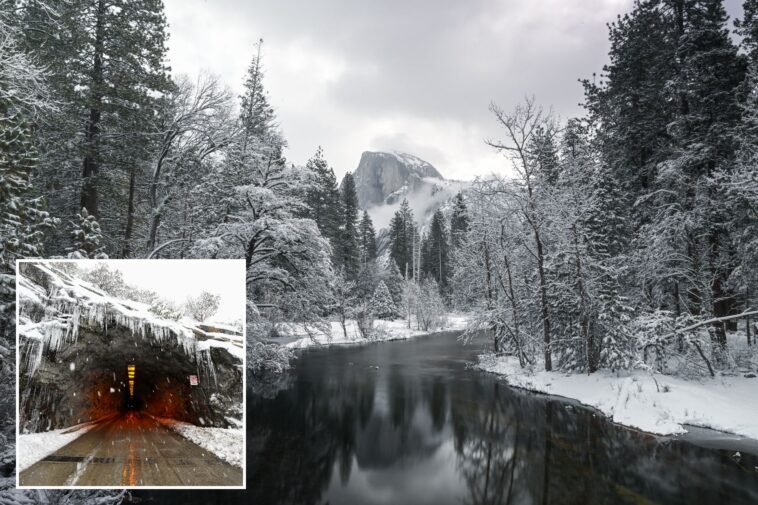
Yosemite National Park is bracing for a major winter assault, shutting all its campgrounds and closing key roads as a severe storm threatens to bury higher elevations under several feet of snow and dump inches of rain elsewhere.
Big Oak Flat Road will close Wednesday at 8 a.m., joining Tioga and Glacier Point roads, which have been shut down for the season. The closures will remain in effect until at least Friday morning.
Park staff expects the heaviest snowfall at higher elevations, while lower areas are forecast to receive several inches of rain.
Sign up for the California Morning Report newsletter
The biggest news, opinion and culture shaping California right now.
Thanks for signing up!

Snow is also “possible” in Yosemite Valley.
The approaching storm has prompted officials to warn visitors to come prepared for hazardous road conditions, including bringing tire chains.
Motorists should also be ready for changing chain requirements and temporary closures as conditions deteriorate.
Download The California Post App, follow us on social, and subscribe to our newsletters
California Post News: Facebook, Instagram, TikTok, X, YouTube, WhatsApp, LinkedIn
California Post Sports Facebook, Instagram, TikTok, YouTube, X
California Post Opinion
California Post Newsletters: Sign up here!
California Post App: Download here!
Home delivery: Sign up here!
Page Six Hollywood: Sign up here!


Highway 140, also known as El Portal Road, through Mariposa is expected to receive the least snow and may provide the best driving conditions during the storm.
Tioga and Glacier Point roads were temporarily closed Nov. 12 before park officials announced they would remain closed for the season.
Travelers can check the latest conditions through Yosemite’s 24-hour road information line at 209-372-0200.
Callers can check for updates on chain controls and temporary weather closures.


The warning comes with driving risks that area already a concern at the park.
Yosemite records between 300 and more than 600 motor vehicle crashes annually, while driving-related fatalities typically average one to two people per year, according to National Park Service data.