See more of our coverage in your search results.

Gas prices are dropping as oil traders celebrate a likely surplus of global crude — despite the rising tensions with Iran.
The Brent crude futures fell below $93 a barrel, with the average cost of gas in the US dipping below $4 for the first time since July, according to AAA.
Gas is now at an average of $3.75 per gallon ahead of the Thanksgiving holiday, 80 cents less than last month, with the average price of diesel also falling below $6 this week.
That’s still 75 cents per gallon more than it was a year ago — but down from a high of $5 over the summer.
Diesel — which fuels the trucks and heavy equipment behind the US economy — remains high, at $5.95 a gallon, up from $3.77 a gallon a year ago.

The positive outlook comes as the International Energy Agency predicted an oil surplus for the coming fourth financial quarter this year totaling 105 million barrels per day.
The steady levels come as the flow of oil out of the Strait of Hormuz remains near pre-war levels, with around 8.5 million barrels sailing through every day under US protection in October, according to the latest analysis from Vortexa.
The forecasted boost in crude supplies also comes as the world’s oil reserves are expected to release another 71 million barrels into the market by the end of February, including 15 million barrels of diesel.

If the trend continues, Goldman Sachs said it expects Brent crude to average $88 a barrel next year and slip even further to $78 by December 2027.
Traders are balancing the optimism with the latest tit-for-tat attacks around the Strait of Hormuz and Iran’s escalating strikes on oil tankers.
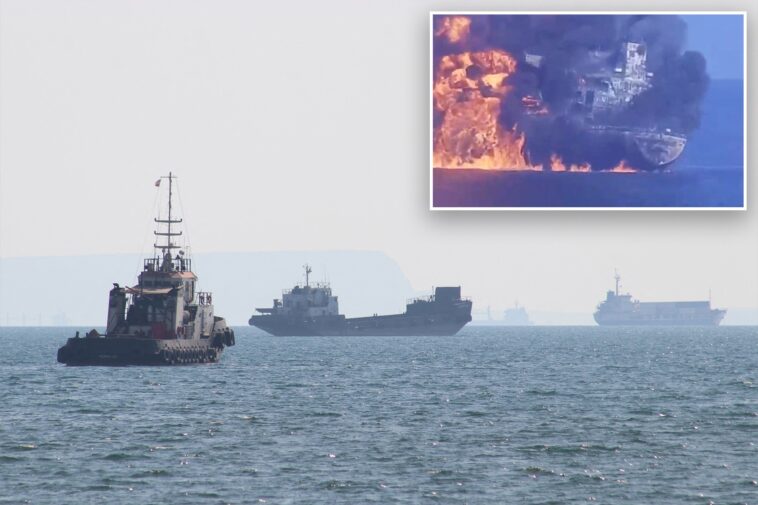
The Islamic Revolutionary Guard Corps claims to have hit half a dozen tankers at the start of the week, with the United Kingdom Maritime Trade Operations confirming the latest attack on Wednesday.

At least one vessel was struck by an unknown projectile while sailing through the Strait of Hormuz, triggering a fire and rescue mission for the ship’s missing crew members.
While traffic remained strong in the strait, the attacks appear to have had a chilling effect for the largest cargo ships as the number of empty tankers sailing through has dropped by 40% since August, according to TankerTrackers.com.
A bulk of the oil transiting through the strait has been through ship-to-ship transfers that help vessels avoid Iran’s detection, but the number of ships to carry the oil out of the Middle East is running low, the maritime tracking firm noted.

“[There are] not enough vacant tankers to take oil out of the region,” TankerTrackers co-founder Samir Madani told Bloomberg.
“It’s one thing to bring the oil out into the Gulf of Oman via the Strait of Hormuz, but it seems like there isn’t enough to take the oil out of the Gulf of Oman,” he added.
With Post Wires