
See more of our coverage in your search results.

There’s gonna be a power struggle!
New York’s overwhelmed energy grid won’t be able to keep up with demand within five years — sparking a blackout crisis and forcing providers to buy energy from out of state, a new report found.
A shortfall of power grids — brought on by outdated infrastructure and the 2021 closure of the Indian Point nuclear plant — could cause a “statewide resource deficiency” by 2032, a report from the New York Independent System Operator (NYISO) released Wednesday found.

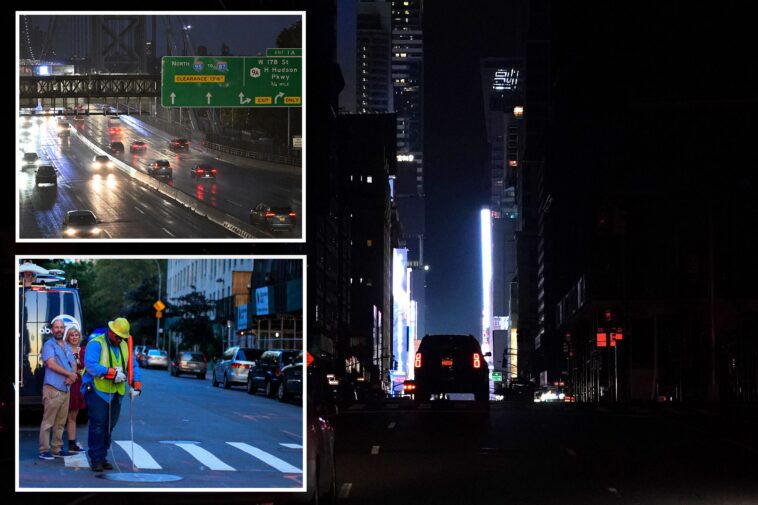
That would mean New York City could be forced to mandate planned blackouts across the New York City region and Hudson Valley during high energy usage hours, like overnight during heat waves.
It’s just the latest woeful news out of New York’s beleaguered power system, which has become the third most expensive in the entire country — trailing Hawaii and California, with New York customers being saddled with 10.4% hikes in electricity rates this year through 2028.
“New York’s reliability needs are no longer a distant concern,” said Zach Smith, senior vice president of the NYISO, a nonprofit corporation that operates the Empire State’s bulk electric grid.
“Electricity demand is growing as the availability of reliable power is increasingly uncertain. New generation and transmission resources take years to plan, permit, and build, so the reliability needs identified in this report must be addressed today,” Smith said.
The statewide deficit will reach 1,850 megawatts by 2036, requiring new generation capacity or the state to import power from other states or Canada, the report found.

That deficit is just shy of the roughly 2,000 megawatts that Indian Point in Westchester County generated before it was shuttered by then Gov. Andrew Cuomo. His successor, fellow Democrat Gov. Kathy Hochul, has opposed reopening the plant — despite being forced to slow down her green energy initiatives over rising costs.
But those green initiatives — including sprawling wind farms and a reduction in fossil fuel power plants — aren’t expected to go anywhere in the long run, adding pressure on the state’s energy pinch.
“The state has been blocking new power plants from opening and that’s left New York relying on older, less reliant, less efficient and dirtier units,” Manhattan Institute fellow Ken Girardin told The Post.

“Too much of New York City’s electricity comes from power plants that were built when Dwight Eisenhower was president,” Girardin said, echoing the grid operator’s concerns about New York City’s transmission constraints in particular.
Hochul has blamed New York’s ability to keep up with energy demand on President Trump, whose administration blocked wind projects off the shore of Long Island.
She’s also launched a highly touted effort to develop 1,000 new megawatts of nuclear power plant electricity generating capacity under a so-called “master plan” released by her administration Wednesday.
Despite including 12 technical studies – over 1,000 pages – the taxpayer-funded wonks at the New York state Energy Research and Development Authority never bothered to mention a timeline for actually bringing a new power plant online in the plan. Hochul’s office wouldn’t provide a date either.
Not to mention that the grid operator specifically notes that the problem facing New York City ahead of 2032 is a throttle in transmission, meaning opening a new power plant anywhere upstate wouldn’t solve the problem on its own.