See more of our coverage in your search results.

Finally, a spending cap that all sports fans can agree on!
State lawmakers are considering a bill that would cap sky-high food and drink concessions at taxpayer-subsidized stadiums and arenas – as concerts and sporting events increasingly become budget-busting nights out.
Entertainment venues with capacities above 2,500 would still be able to mark up the price of food and drinks but couldn’t charge more than 20% above the average compared to other businesses within a 10-mile radius.

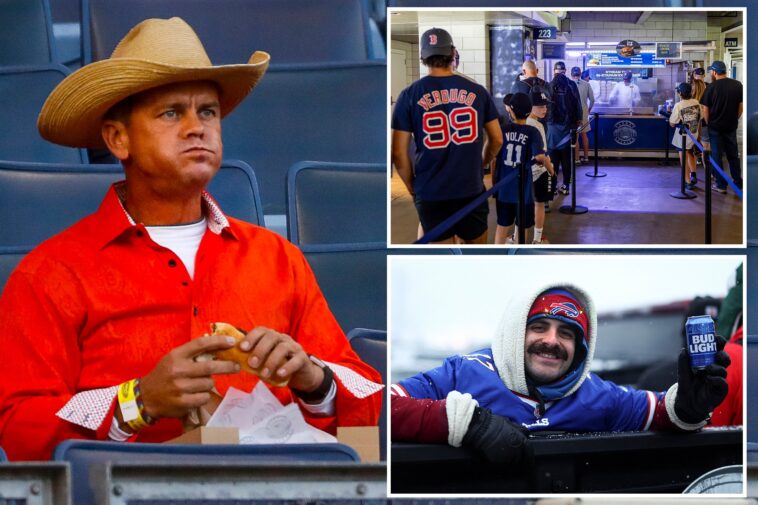
The Fair Concession Pricing Act comes as hot dogs at the new Buffalo Bills stadium are soaking fans for $11 a pop, while a beer at Citi Field costs long-suffering Mets fans an insufferable $17.
“Fair pricing, transparency, and consumer choice should not be luxuries,” said Assemblymember Nilly Rozic, who led a hearing on the bill earlier this month as chair of the consumer affairs and protection committee.
“They should be part of the experience New Yorkers can expect when they visit our public facilities or a game,” she added. “At what point does convenience become an exploitation of a captive consumer?”
Brian Hess, executive director of the Sports Fan Coalition, noted that the brand-new Buffalo Bills Highmark Stadium received $850 million in taxpayer funding – and now serves up the priciest hot dog in the entire National Football League at $11.63 a frank.

The ritzy $2.2 billion stadium also charges up to $14 a beer and over $15 for chicken fingers – with an extra 6% surcharge tacked onto all purchases, including parking and merchandise on the stadium grounds.
The Bills Mafia aren’t the only fans getting sacked by high price tags.
The Mets’ Citi Field in Queens, which has received over $230 million in public subsidies, charges a hefty $17.29 for a 24 oz. Coors Light – even though it retails at a nearby 7-Eleven for just $3.19.
“One fan said it best: ‘When you need a law to stop someone from charging $18 for a beer, that is not a pricing problem, that is a monopoly wearing a jersey,’” Hess said in his testimony at the hearing earlier this month.

The home of the New York Knicks, Madison Square Garden, charges more than 75% over the median price for a brew in the notoriously pricey borough of Manhattan at $16 a pop – costing families nearly $100 for a beer, a soda, and two hot dogs, officials said.
MSG forgoes paying property tax in its deal with the city, saving them roughly $42 million every year.
“These companies take advantage of the fact that once a fan enters an arena, they become the perfect target for prices that would never survive competition on the outside,” Hess added.

Though all of the major stadium reps declined to attend the proposed law’s hearing, Rozic acknowledged that concession operations come with high costs.
“We also recognize that concession agreements and business models vary significantly across venues, including in New York City, where it’s really expensive to operate,” she said.
But Emily DiVito, a senior adviser for economic policy at the Groundwork Collaborative, cited a 2017 case at the Atlanta Falcons’ Mercedes-Benz Stadium – where owner Arthur Blank voluntarily slashed concession prices by about 50%.
The results saw a 30% jump in total transactions, a 20% boost in the number of items bought per transaction and a 20% uptick in merchandise sales.
“They find that people spend more freely when they don’t feel like they’re being gouged,” Devito said.