
See more of our coverage in your search results.

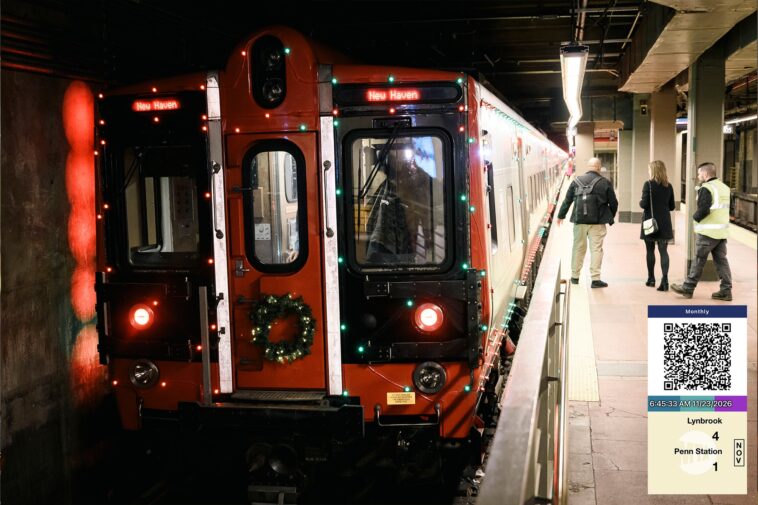
The MTA appears to be tracking Metro-North riders’ phone locations to flag late ticket activations, despite claiming it doesn’t use location data to enforce ticket policies, a Post analysis found.
Since January, the Metropolitan Transportation Authority has charged Metro-North and Long Island Rail Road riders an $8 fine if they activate their TrainTime tickets after boarding. Commuters get a warning before they’re hit with the penalty.
The agency has said the app catches late activations without using a phone’s location, instead relying on the timing of the activation based on train departure times.

But a Post test on a Metro-North train found the same pattern already uncovered on the LIRR, where only phones sharing their location received warnings.
“People should care about this, because if they don’t, one day we’re going to wake up in an Orwellian state,” said Harry Maugans, a cybersecurity expert and privacy advocate.
On a Metro-North train, a phone sharing its location with the TrainTime app received late activation warnings once the train started moving, before its ticket was activated or scanned.
A second phone on the same train that had its location sharing turned off activated the ticket on board yet received no warnings.
One-way tickets aren’t tied to a specific train, so experts told The Post that the app shouldn’t know a rider is on a moving train unless it’s using the phone’s location.

“The tests [The Post ran] are pretty black and white — they’re clearly using some sort of location data when they say they’re not,” said Maugans, who is CEO of data privacy firm Privacy Bee.
Andy, 30, a Metro-North rider, said the findings contradicted with the agency’s claims.
“What else do you expect from a government agency?” he quipped.
Jonathan, 54, who rides Metro-North every day, didn’t mind that the MTA was secretly tracking his location.
“It sounds like Metro-North is trying to crack down on people not paying for tickets,” he said. “You can buy a paper ticket and no one can track your whereabouts.”
An MTA spokesperson said TrainTime doesn’t use riders’ location data to decide whether a ticket was activated on board or to trigger late activation warnings.
“What we know is that riders who activate tickets prior to boarding do not receive warnings, and those who activate on board may receive warnings,” the spokesperson said. “We are not able to evaluate experimental phone methodology.”

The representative also pointed to the MTA’s privacy policy, which says the agency stores location and movement data “at various times while you have the app open” for riders who opt in to sharing it.
But the policy clearly states that the data is kept separate from riders’ TrainTime accounts.
Aayan, 25, who lives in Connecticut and regularly takes Metro-North into the city, didn’t buy the MTA’s denials.
“That sounds like bulls–t to me,” said Aayan, who didn’t want to share his last name. “I feel like they’ve been using the location the entire time.
“I have [my location] turned off and always activate late — I’ve never been hit with a warning or any surcharge,” he added.
Dylan Hayes, 30, who rides Metro-North five days a week, keeps location sharing on and has gotten the warning.
“I feel like they already have our information — whoever ‘they’ are — they’re tracking us anyways. So many apps have my location,” he said.
The Post has filed Freedom of Information Law requests with the MTA about TrainTime and location data and is still awaiting a response.