
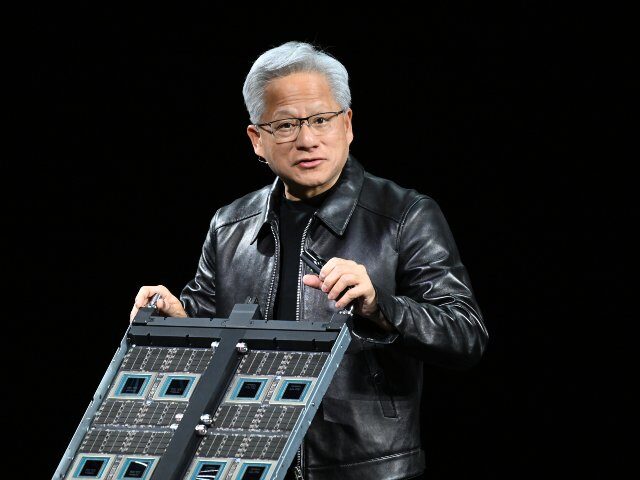
- Sources said thousands of Nvidia B300 GPUs originally intended for remote-access arrangements have hit the market since the restrictions were announced and took effect.
- The Commerce Department rule seeks to close export-control workarounds, while Congress considers the Remote Access Security Act to expand federal authority over cloud access.
- U.S. officials have raised concerns about Chinese companies accessing Nvidia chips through facilities in Thailand and Europe, with Jamieson Greer citing smuggling and third-country remote access.
Sellers of advanced Nvidia chips are hunting for new buyers after the Trump administration tightened rules blocking Chinese companies from remotely accessing the hardware through overseas data centers.
CNBC reports that a lot of Nvidia AI chips have hit the market since November 16, when the new restrictions were announced. Jack Duhamel, president of AI infrastructure marketplace GPU Mart, said the surge is directly tied to the rule changes on how China can remotely access powerful Nvidia AI chips.
Breitbart News previously reported on the remote access rule changes:
The U.S. Department of Commerce’s Bureau of Industry and Security (BIS) released an interim final rule designed to block remote access to advanced AI chips that get around the country’s export controls.
“Rapid advancement in cloud computing and SI infrastructure have made it increasingly possible to access advanced American computing capabilities remotely, including through data centers located outside countries subject to U.S. export restrictions,” BIS said in a Monday statement.
The rule “addresses this evolving technological landscape by further aligning protections governing remote access to advanced computing capabilities with existing controls on the physical shipment of sensitive American technology” the agency continued.
“The United States is the global leader in advanced computing and super intelligence technology and is committed to promoting the global adoption of American technology for legitimate commercial purposes while ensuring that sensitive technologies are not exploited in ways that threaten U.S. national security,” BIS added.
The chips in question were originally bound for data centers where Chinese companies could rent remote access to them. Since the rule took effect on November 19, sellers have been trying to offload that inventory instead. Duhamel and one other source said deals have circulated for thousands of Nvidia B300 GPUs in the days since the announcement.
The rule adds to pressure Nvidia is already facing from Congress over how Chinese companies have been gaining access to its chips. The Remote Access Security Act, which would hand the U.S. government broader authority over access to cloud services, has passed the House but still awaits a Senate vote. Nvidia has told customers, according to sources who previously spoke with CNBC, that the bill would expand federal control over cloud access.
Concerns about indirect access to Nvidia’s hardware have been building for months. In July, U.S. officiaSet featured imagels accused Chinese AI lab Moonshot AI of reaching Nvidia chips through a facility in Thailand. CNBC reported on November 5 that Moonshot AI had also sought chip access through data centers in Europe.
U.S. Trade Representative Jamieson Greer addressed the new rule on CNBC’s Squawk Box on Wednesday. “For a long time, we have not allowed the sale of Blackwell chips, which are the highest AI chips or similar chips to China directly,” he said. He described the measure as an attempt to shut down workarounds that had let Chinese firms get the chips anyway. “Some rules were issued by the Commerce Department last week to close off indirect access, either smuggling through places like Southeast Asia or remote access from data centers in third countries,” Greer said.
Read more at CNBC here.
Lucas Nolan is a reporter for Breitbart News covering issues of AI, free speech, and online censorship.