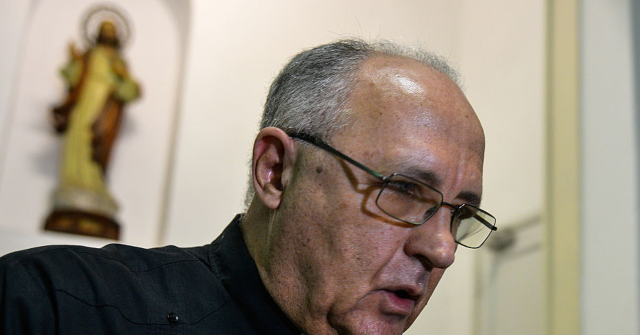
The bishop and clergy of the Episcopal Church in Cuba on Monday published an open letter urging the communist Castro regime to stop violently repressing Cubans and to listen to their demands for human rights — stressing that there has been “enough” of the violence.
The 21 signing priests, led by Bishop Ángel Roberto Rivera Rodríguez, called for Cuban authorities to stop demanding more “sacrifices” from the embattled Cuban population. The priests noted in the text that their reflection is a “wake-up call” to Cuban authorities that is not intended to “provoke confrontation but to foster dialogue.”
The Cuban Episcopal Church published a copy of the letter on both its official website and Facebook page, prefacing its text by quoting Luke 4:18-19 from the Bible. In the public missive, the priests addressed the repressed Cuban population stressing that, as the body of Jesus Christ on Earth, “We cannot remain silent in the face of the suffering we are all enduring at this moment in our history.”
The priests noted that Cuba is going through difficult times marked by mass migration that is tearing families apart and emptying communities, forcing prices up, and fostering growing inequality among Cubans that contradicts the dignity God has given to each of His children. The clergy also expressed their “deep dissatisfaction” with the hardships that Cubans are enduing, such as hunger, shortages of medicine, power blackouts, lack of water, and the “near-total” deterioration of Cuba’s healthcare and education systems.
“These are not abstract realities, rather, they manifest themselves in the lack of bread on the table, in the sick who go untreated, in the new generations deprived of an education, and in mothers without hope,” the letter reads in part.
The Church expressed its frustration and pain at Cuba law enforcement officials’ use of violence, intimidation, and harassment of Cubans who have raised their voices to demand basic rights that are enshrined in the nation’s own constitution. The Cuban priests emphasized that to silence the voices of young Cubans is to silence “the present and future of our homeland.”
“In light of all this, we say: Enough!!” The text read. “Because we firmly believe that no Cuban should raise a hand against another Cuban, neither for political reasons nor for any other reason.”
“We stand with the most vulnerable and dispossessed, and with all those who are directly suffering for their determination to freely express their discontent,” the text continued.
The Episcopal Church made an appeal to the mercy of God so that Cuban authorities listen to the clamor of the Cuban people, “whom they are called to serve and protect, not to keep asking for more sacrifices.”
“The clergy of the Episcopal Church in Cuba is here, and will always be here, to accompany and serve our people with the faithfulness demanded by the cross of the Lord,” the letter read. “We affirm the justice and truth embodied in the message of Jesus Christ, our Lord, and we ardently hope that they will embrace Cuba and all of us who live here.”
The Episcopal Church also joined other Christian denominations in Cuba and thousands of Cubans in expressing their solidarity with young dissident influencer Anna Sofía Benítez and her mother Caridad Silvente. The pair was recently convicted and sentenced to two years of “limited liberty” for having recorded and published a video of a visit they received from a Cuban State Security agent on March 10. At the time, Cuba-focused outlets detailed, the agent delivered a citation instructing Benítez to appear before Cuban authorities over the content of her anti-regime social media videos.
The Cuban communist regime has a nearly seven-decade-long record of persecuting Christians in Cuba since late communist dictator Fidel Castro outlawed Christianity after forcefully taking power in 1959. As Breitbart News reported, Cuba is one of the world’s most dangerous places to freely practice Christianity. In spite of that, the country has experienced a resurgence in Christian prayer gatherings over the past months.
Christian K. Caruzo is a Venezuelan writer and documents life under socialism. You can follow him on Twitter here.