
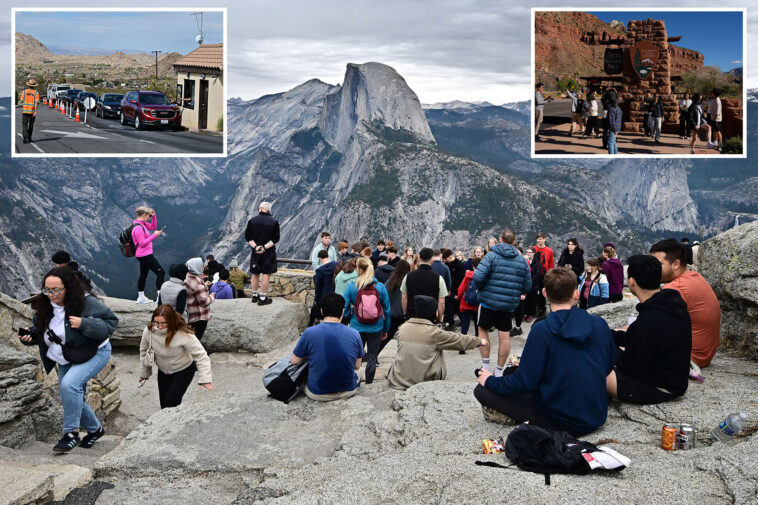
Overseas visitors to 11 of America’s most popular national parks will need to pay an extra $100 per person to get in starting Jan. 1, the Interior Department announced Tuesday in a bid to make up for lost income from the recent government shutdown, as well as severe budget cuts.
Foreigners also will be left out of eight so-called “fee-free days” that correspond to patriotic holidays — including President’s Day, Memorial Day, Flag Day, July 4 weekend, and Veteran’s Day.
As part of the changes, foreign tourists will also see their annual parks pass price jump to $250, while US residents will continue to be charged $80.


The $100 surcharge will be levied in addition to the standard entry fee at Acadia National Park, Bryce Canyon National Park, Everglades National Park, Glacier National Park, Grand Canyon National Park, Grand Teton National Park, Rocky Mountain National Park, Sequoia and Kings Canyon National Parks, Yellowstone National Park, Yosemite National Park, and Zion National Park.
“President Trump’s leadership always puts American families first,” Interior Secretary Doug Burgum said in a statement. “These policies ensure that US taxpayers, who already support the National Park System, continue to enjoy affordable access, while international visitors contribute their fair share to maintaining and improving our parks for future generations.”
The money made off the new fees will help support the national parks, including with upgrading facilities for visitors and maintenance, according to the statement.


Tuesday’s announcement follows a July executive order in which President Donald Trump directed the parks to increase entry fees for foreign tourists.
The US Travel Association estimated that in 2018, national parks and monuments saw more than 14 million international visitors. Yellowstone reported that in 2024, nearly 15% of its visitors were from outside the country, which was down from 30% in 2018.
The National Park Service has long operated on a relative shoestring budget compared to other federal agencies. For the current fiscal year, the Trump administration requested Congress appropriate $2.1 billion to NPS — a cut of 37% from the $3.3 billion appropriated in fiscal year 2025, which ended Sept. 30.
The One Big Beautiful Bill Act, enacted by Trump on July 4, rescinded a further $267 million earmarked for park improvements. That same month, the independent National Parks Conservation Association (NPCA) issued a report that found nearly a quarter of permanent NPS staff — more than 4,000 employees — had departed since Trump took office in January.
“It’s in no way efficient to take a beautiful jewel — a crown jewel of this nation, our national park system, that is beloved by millions of people across the country — and not only demoralize the staff and reduce the staff to the point where the leadership has been eliminated in many parks, where the maintenance, the ability to be able to even bring visitors in, open campgrounds — we have seen parks have to close parts of the park and change hours and things like that because of the fact that it’s so understaffed,” NPCA President and CEO Theresa Pierno told “PBS NewsHour” July 23.
“And what we also have to recognize is that, for every dollar invested in our national parks, it returns $15 to the economy. And that’s in the hotels and the food service and all of the things that people do when they come to our national parks, the communities around the parks. Thousands of people are hired in jobs that are connected to the visitors of the parks.”
With Post wires