
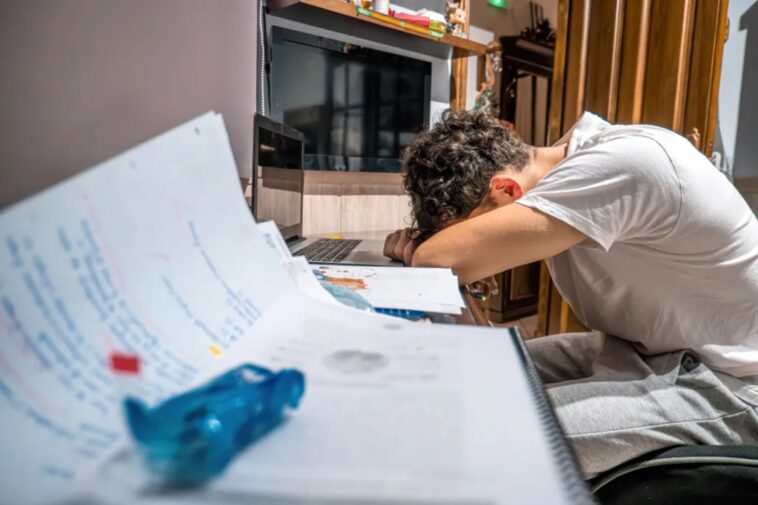
Gen Z students are arriving at college with such feeble reading skills that some are incapable of even comprehending full sentences — forcing professors to start reading to them aloud in class, according to a shocking new report.
Instructors at universities across the country — including top programs — detailed to Fortune how they have had to change their curriculum and teaching style to accommodate their Gen Z pupils — who are more focused on TikTok than printed text.
“It’s not even an inability to critically think,” Jessica Hooten Wilson, a professor of great books at Pepperdine University told Fortune.

“It’s an inability to read sentences.”
She said instead she’s forced to read passages aloud in class together and analyze them line-by-line.
She also said she needs circle back on a poem and text during the semester, she said.
“I feel like I am tap dancing and having to read things aloud because there’s no way that anyone read it the night before,” Wilson said.
“Even when you read it in class with them, there’s so much they can’t process about the very words that are on the page.”
Even at Northwestern University’s Kellogg School of Management — which is among the best in the country — up to half of students every semester describe themselves as “novice or reluctant” readers, one professor revealed.
Profs chalk this up to a generation glued to phones, video-first social media apps and AI summaries.
Some also said education that focuses on standardized testing and scanning text for key details has robbed students of the skill to read deeply and at length.
“They’ve been formed in a kind of scanning approach to reading,” University of Notre Dame theology professor Timothy O’Malley told Fortune.
The shocking lack of reading skills coincides with a study from YouGov that indicates that almost half of Americans didn’t crack open a single book in 2025.
And even more depressingly, Americans between the ages of 18 and 29 said they read an average of 5.8 books in 2025, the study shows.
O’Malley said students are used to using AI to give them cliff’s notes, which often miss the nuances and the biggest points of the reading.
He said earlier in his career, he used to assign 25 to 40 pages of reading for each class and students would either come to class prepared or not.

“Today, if you assign that amount of reading, they often don’t know what to do,” O’Malley said.
Critics calls the new dumbed-down reading methods “coddling.” But some professors are leaning in.
Abilene Christian University theology professor Brad East insisted that when teachers worry less about grades, students are more into reading.
“It isn’t important to me to have stress-filled cumulative exams, nor do I particularly care about grade inflation,” East told Fortune. “I want them to learn.”
Wilson, the Pepperdine professor, noted her students at her current college are better prepared than other places she’s taught.
But she fears the lack of attraction to reading will have consequences besides respectable grades and a good career, claiming literacy helps build community.
“I think losing that polarization, anxiety, loneliness, a lack of friendship, all of these things happen when you don’t have a society that reads together,” she said.