
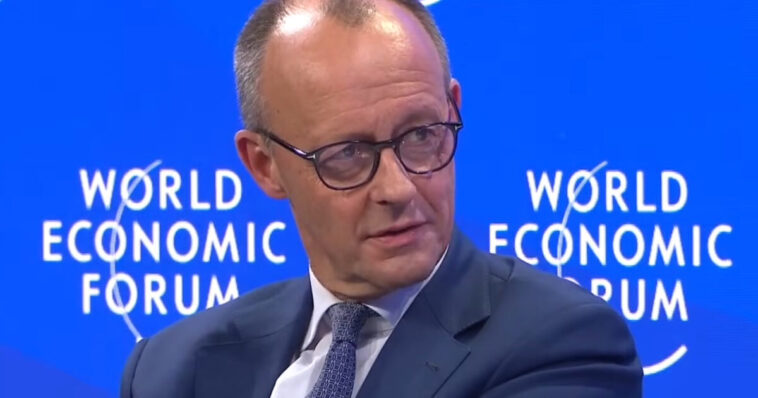

A controversial push by Friedrich Merz to fast-track Ukraine into the inner workings of the European Union is triggering a growing backlash, as a chorus of critics warn the plan risks importing rampant corruption, instability, and economic disruption into the heart of Europe.
Central to the proposal, according to various media reports, is a newly made up form of “associated membership” for Ukraine—effectively granting Kyiv access to key EU institutions without full membership.
Under the plan, Ukraine would be allowed to take part in European Council meetings—where EU leaders set the bloc’s overall political direction—and in ministerial sessions of the Council of the European Union, which coordinates laws and policies among member states, albeit without voting rights.
It would also gain a presence within the European Commission, the EU’s executive body responsible for proposing and enforcing legislation; the European Parliament, which represents EU citizens and helps pass laws; and even elements of the EU’s judicial system, including roles linked to the European Court of Justice, which interprets and upholds EU law.
Merz has pitched the idea as a necessary response to Ukraine’s wartime situation. He claims it would “accelerate” the accession process and send a powerful signal of support.
But across Central Europe, the reaction has been far less enthusiastic. Many see the proposal as a reckless gamble with long-term consequences.
The core concern is simple: Ukraine remains one of the most corruption-ridden countries in Europe. Despite years of promises, reforms have been slow, uneven, and often superficial.
Billions of dollars in Western aid have poured into the country since the war began. Yet transparency remains limited, and questions about where that money ends up continue to mount.
The idea of rapidly integrating Ukraine into EU structures under these conditions, for detractors, is deeply troubling. It risks importing systemic corruption directly into the European system.
Even before the war, Ukraine struggled with entrenched oligarch networks and weak institutions. The conflict has only made oversight more difficult.
The concern is not just political—it is economic. Ukraine’s massive agricultural sector could severely disrupt markets across Central Europe.
Farmers in Poland, Hungary, and Slovakia have already sounded the alarm. Cheap Ukrainian imports have flooded local markets, undercutting domestic producers.
Full or partial EU integration would likely intensify that pressure. For many working families, it could mean lost income and economic instability.
There are also fears about labor markets. A large influx of Ukrainian workers could drive down wages and strain public services.
Many many, this represents a direct threat to economic sovereignty and social stability.
The proposal also carries significant and obvious geopolitical risks. By tying Ukraine more closely to EU institutions, Brussels could deepen its involvement in an ongoing war.
Merz’s plan includes a political commitment to extend EU security guarantees to Ukraine. Critics warn this could entangle the bloc in a broader conflict, saying it blurs the line between partnership and direct involvement.
There is also the issue of fairness. Several candidate countries—such as Serbia, Montenegro, North Macedonia, and Albania—have spent years, in some cases decades, navigating the slow, complex, and often frustrating EU accession process, implementing reforms and meeting strict criteria along the way. Turkey, despite its long-standing candidacy, has effectively been stalled for years, Some say placing Ukraine ahead of these nations—despite its ongoing war, economic instability, and unresolved corruption concerns—undermines the credibility of the entire accession framework and sends a message that political expediency now outweighs merit and reform.
Ukraine, by contrast, is being offered a fast track—despite far greater structural problems. That double standard has not gone unnoticed.
Even Merz has admitted that full EU membership remains unrealistic in the near term. The legal and institutional hurdles are simply too large.
Yet instead of addressing those challenges, Brussels appears eager to bypass them.
For many in Central Europe, the proposal confirms their worst fears. The EU, they argue, is increasingly driven by ideology rather than practical governance.
Zelensky’s push for deeper integration is also seen through a political lens. Analysts suggest it could help him secure domestic support amid ongoing war pressures.
But that raises a critical question. Should EU policy be shaped by the internal needs of a government facing mounting challenges?
For a growing number of Europeans, the answer is no. They believe the EU must prioritize its own citizens first.
The debate comes at a time of rising skepticism toward Brussels. Across the continent, voters are pushing back against policies seen as disconnected from reality.
Mass migration and the social cohesions problem that come with it, economic strain, and sovereignty are already major fault lines. Adding Ukraine into the mix could very well intensify those divisions significantly.
Ad block users: Some site features may not work correctly while an ad blocker is enabled, because they break scripts and content this website depends on. If you can’t see comments below, for example, please disable your ad blocker.