
Bombo … what?
The “bomb cyclone” about to wallop the East Coast has been referred to as a bombogenesis by meteorologists — leaving many scratching their heads.
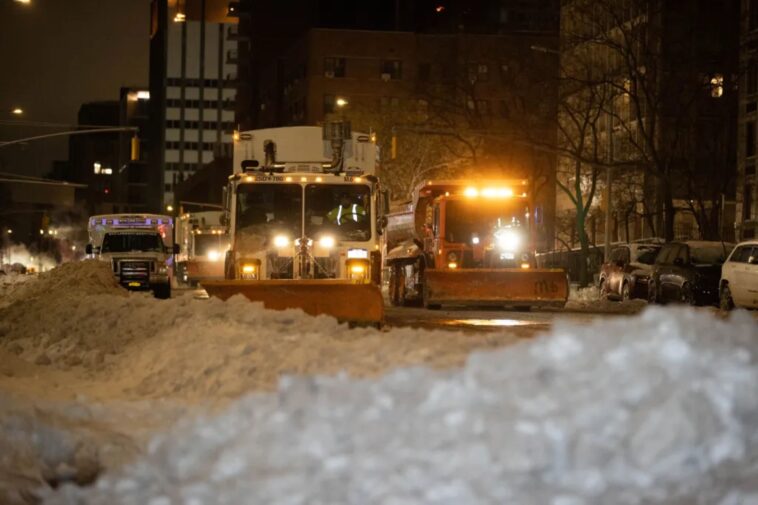
It’s also left Americans still digging themselves out of a foot or more of snowfall from last weekend’s Winter Storm Fern, worrying about being buried by another few inches.

This weekend’s storm is expected to drop another 3 inches of snow on the Big Apple — and could bring wind chills plunging down below 0 as the city is already being gripped by temps in the teens and 20s.
Here’s everything you need to know about the coming storm — and hopefully it will ease some worries while looking at the forecasts for the rest of the week.
What is a bomb cyclone?
Bomb cyclones are storms that develop rapidly, gaining lots of power over a very short time.

“This is a rapidly deepening storm, but the true definition can get technical as the criteria can vary with latitude,” AccuWeather meteorologist Matt Benz told The Post.
“A general rule is that the storm’s pressure must drop 24 millibars in 24 hours,” he said.
Why are they called bomb cyclones?
The term dates back to the 1940s, when some meteorologists began informally calling strong storms spawning over oceans “bombs” because they developed “with a ferocity we rarely, if ever, see over land,” Fred Sanders, a former MIT professor, told USA Today in 2005.
Sanders, who died in 2006, brought the explosive term into common usage in a 1980 article in the Monthly Weather Review called “Synoptic Dynamic Climatology of the ‘Bomb.’”
“He was a forecaster in the late 1940s and did a lot of work in forecasting,” John R. Gyakum, who co-authored the paper, said of his late graduate school adviser.
“I have a suspicion that the term was coined well before the paper was published but it has been cited many times and entered the popular lore more nowadays,” said Gyakum, now a professor of synoptic and dynamic meteorology at McGill University in Montreal.
How long do bomb cyclones last?
The storm systems typically develop over 24 hours, move quickly and generally move on over the same amount of time.

This weekend’s storm is expected to hit New York late Saturday night, and will be clear by Sunday night.
Is a bomb cyclone dangerous?
Bomb cyclones can be extremely dangerous.
They typically bring high winds, which can cause destruction and send debris flying through the air.

Wind chills coming with bomb cyclones can be especially dangerous and plunge temperatures to dangerous levels — leaving people outside in the storm for prolonged times in extreme danger.
This weekend’s bomb cyclone could drive city temps to the single digits and below 0, AccuWeather warned.
Start your day with all you need to know
Morning Report delivers the latest news, videos, photos and more.
Thanks for signing up!
The storms can also cause coastal flooding caused by the high winds and storm surges
When was the last bomb cyclone?
One of the most recent and severe bomb cyclones to hit the northeast happened in 2018.
New York City saw about 10 inches in that storm, but Boston saw about 17 while the New England coast was whipped by winds that hit nearly 80 mph in some places.
Boston also saw a more than 15-foot storm surge that left parts of downtown flooded.