
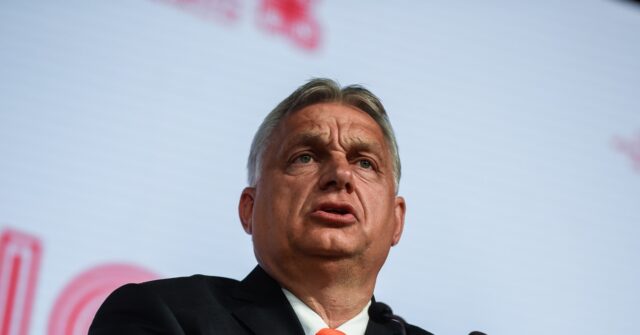
The Hungarian parliament approved a constitutional amendment this week that is set to prevent former leader Viktor Orbán from standing again for prime minister.
Recently elected Hungarian PM Péter Magyar appears to have cemented his grip on power in Budapest this week, with the National Assembly voting 135 to 50 in favour of imposing an eight-year term limit for prime ministers, 24.hu reported.
Critically, the amendment was designed to be retroactive, meaning that anyone who has previously served for eight or more years in office would be barred from running for prime minister in the future.
Critics have noted that there is only one man alive to whom this would apply, former Prime Minister Viktor Orbán, and have therefore accused Magyar of seeking to ban his political opponents.
Orbàn served two separate stints as prime minister, initially from 1998 to 2002, before serving as opposition leader until 2010, when he returned to power and remained in office until May of this year, when his Fidesz party fell to Magyar’s Tisza party.
When asked if the amendment concerned him on Monday, Orbán wryly quipped: “It doesn’t concern me, it’s about me.”
The leader of Orbán’s Fidesz party in the parliament, Gergely Gulyás, was less genial about the move by Magyar, saying that “implementing personalised legislation with retroactive effect is a unique low point” of the post-communist era of Hungarian governance.
Hungarian Member of European Parliament András László added: “Liberals preach democracy and apply legal means to exclude top challengers, instead of winning the argument and popular support. We’ve seen lawfare against conservatives in France, Italy, Austria, Germany, Poland, Czechia, etc.”
The Fidesz politician remarked: “In Hungary, we’ve been in power with a supermajority for 16 years. We’ve never banned our opponents from running. Tisza did it merely weeks after winning.”
In addition to barring Orbán from potentially running against him in the next election, Magyar has also moved to use lawfare to target allies of the former prime minister, establishing investigative committees dedicated to uncovering alleged misconduct by former Orbán government officials.
While this would normally be seen as a bid to clear the field of potential opponents, Magyar is also likely motivated by the prospect of Brussels releasing large sums of Covid relief funds that were frozen by Eurocrats over their opposition to Orbán’s conservative domestic policies.