

NEWYou can now listen to Fox News articles!
The FBI has just released its latest annual internet crime report, and the numbers are staggering: Americans filed 1,008,597 complaints with the Internet Crime Complaint Center (IC3) last year, with losses nearing $20.9 billion.
Buried in the new data is an eerily familiar trend getting more expensive for older adults. Identity theft complaints involving Americans 60 and older totaled 5,359 complaints and $48.5 million in reported losses in 2025, a steep jump from the year before.
Sign up for my FREE CyberGuy Report
- Get my best tech tips, urgent security alerts and exclusive deals delivered straight to your inbox.
- For simple, real-world ways to spot scams early and stay protected, visit CyberGuy.com – trusted by millions who watch CyberGuy on TV daily.
- Plus, you’ll get instant access to my Ultimate Scam Survival Guide free when you join.
DO YOU KNOW THE TRUE COST OF IDENTITY THEFT?

Identity theft tied to major data broker breaches has cost Americans more than $20 billion over the past decade, according to a Senate report analyzing hundreds of millions of exposed records. (Sara Diggins/The Austin American-Statesman via Getty Images)
Seniors account for a disproportionate share of losses
The report shows a clear fault line by age. Americans 60 and older filed more than 200,000 complaints in 2025, with reported losses reaching $7.7 billion, the highest total of any age group. By comparison, people in their 30s and 40s submitted more complaints overall, but reported lower total losses. Complaints from older adults more often involve bank accounts, retirement funds, and investment portfolios, where a single identity fraud incident can result in a large withdrawal or transfer.
IC3 data is based on self-reported complaints submitted by victims and businesses throughout the year. Each report includes details such as transaction type, payment method, and estimated losses. The FBI aggregates these submissions to identify where money is moving and which groups are being affected.
Identity theft appears within this data as one of several fraud types. Identity theft prompts fewer complaints than categories such as investment or tech support scams. In many cases, it’s used to get access to existing accounts, where stolen personal details can pass verification checks and move funds.
Identity theft losses trail other fraud types
Investment scams led all categories in 2025, with reported losses of more than $4.5 billion. Business email compromise followed, with losses exceeding $2.9 billion, while tech support scams accounted for more than $1 billion. These categories make up a large share of the $7.7 billion in total losses mentioned earlier.
Identity theft sits below those totals, though it remains part of how some of these cases unfold. Among victims age 60 and older, identity theft complaints added up to $48.5 million in reported losses last year. That’s a roughly 70% increase from 2024.
Other federal data shows how common identity theft remains. The Federal Trade Commission (FTC) receives more than a million identity theft reports each year, placing it among the most frequently reported consumer issues, even as total losses remain lower than other fraud types.
5 MYTHS ABOUT IDENTITY THEFT THAT PUT YOUR DATA AT RISK
How are victims getting scammed?
Complaints from older Americans span a wide range of fraud types, with a few categories appearing consistently across IC3 reports.
- High-volume scams: The most frequently reported complaints include phishing and spoofing, tech support scams, and government impersonation, all of which involve direct contact through phone calls, emails, or online messages. Other commonly reported cases include non-payment or non-delivery scams, extortion, and personal data breaches, each contributing to overall complaint volume among victims aged 60 and older.
- High-loss scams: The categories tied to the largest losses are different. Investment scams, business email compromises, and confidence or romance scams account for a significant share of reported losses, even with fewer complaints.
- New categories also appear in the 2025 data. AI-related scams are included for the first time, with thousands of complaints and substantial reported losses among older victims. Charity fraud is also listed as a newly reported fraud type for this group.
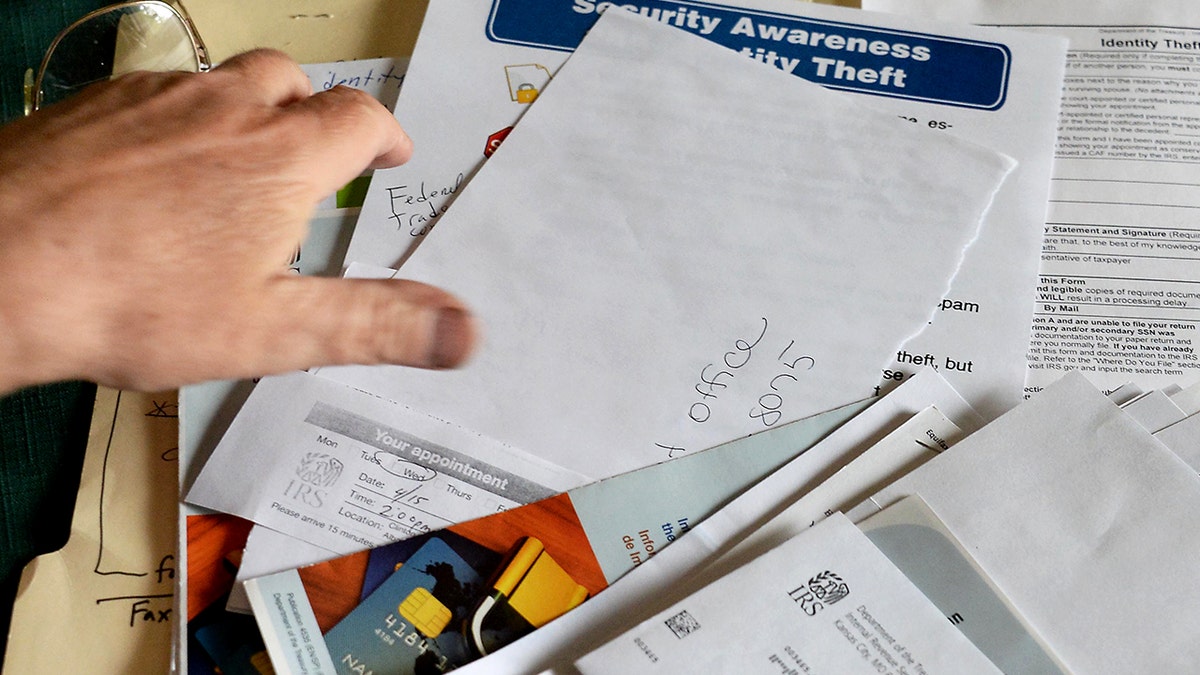
An identity theft victim in Albany, New York, looks over documents he’s gathered. Victims of identity theft frequently spend weeks disputing fraudulent accounts, contacting lenders and restoring their credit reports after stolen data is misused. (John Carl D’Annibale/Albany Times Union via Getty Images)
How to avoid these scams
With losses climbing, knowing how these scams work and how to spot them early can make all the difference.
1) Limit how personal information is shared
Be cautious when asked for Social Security numbers or account credentials. Government agencies, banks, and tech companies do not request this information through unsolicited calls, emails, or messages.
2) Pause before sending money
Scams that lead to the largest losses often involve urgency. Requests to move money quickly – especially through wire transfers, cryptocurrency, or gift cards – should be treated with caution. Taking time to verify the request can prevent large losses.
3) Verify contacts independently
If a message claims to be from a bank or government agency, use a known phone number or official website to confirm. Do not rely on contact details provided in the message itself.
4) Watch for unusual account activity
Regularly review bank and investment accounts for unfamiliar transactions. Small or unexpected changes can be an early sign of unwanted access.
5) Use account protections where available
Enable two-factor authentication and account alerts where possible. These tools can help flag or block unauthorized access attempts.
Monitoring can help catch identity misuse earlier
When identity theft happens, the first sign could be a new account or a transaction the account holder didn’t authorize. Credit monitoring and identity protection services can track activity across credit files and financial accounts, alerting users when new accounts are opened or when personal information appears in known data breaches.
That can give victims a window to act, such as freezing credit, locking accounts, or disputing fraudulent activity, before they lose money. Many services also offer identity theft insurance and fraud resolution support, helping cover certain losses and guiding victims through the recovery process.
If fraud does happen, that support can include working directly with banks, credit bureaus, and creditors to restore accounts and remove fraudulent activity.
For older Americans, where accounts often hold larger balances, timing can mean the difference between a small loss and a much larger one, and how quickly accounts are restored.
MICROSOFT ‘IMPORTANT MAIL’ EMAIL IS A SCAM: HOW TO SPOT IT
No service can prevent every kind of identity theft. However, monitoring tools and guided recovery support can make it easier to detect suspicious activity early and respond quickly.
See my tips and best picks on Best Identity Theft Protection at Cyberguy.com
Kurt’s key takeaways

OpenAI joins the Global Anti-Scam Alliance as bad actors use AI to scam victims out of money and data. (Halfpoint/Getty Images)
The numbers tell a clear story. While identity theft may not top the list of total losses, it plays a critical role in how many of the biggest scams succeed. For older Americans, the stakes are higher because the accounts being targeted often hold decades of savings. What stands out isn’t just the increase in complaints. It’s how fraud is evolving. Scammers are combining tactics, using identity theft to unlock accounts, then moving money through investment scams, impersonation schemes or social engineering attacks. Once they get in, the damage can escalate quickly. The takeaway is simple. Slowing down, verifying requests and adding basic protections like alerts and two-factor authentication can make a real difference. Catching suspicious activity early often determines whether a loss stays small or becomes life-changing.
CLICK HERE TO DOWNLOAD THE FOX NEWS APP
If scammers only need one piece of your personal information to get started, how confident are you that yours isn’t already out there? Let us know by writing to us at Cyberguy.com
Sign up for my FREE CyberGuy Report
- Get my best tech tips, urgent security alerts and exclusive deals delivered straight to your inbox.
- For simple, real-world ways to spot scams early and stay protected, visit CyberGuy.com – trusted by millions who watch CyberGuy on TV daily.
Plus, you’ll get instant access to my Ultimate Scam Survival Guide free when you join.
Copyright 2026 CyberGuy.com. All rights reserved.
Kurt “CyberGuy” Knutsson is an award-winning tech journalist who has a deep love of technology, gear and gadgets that make life better with his contributions for Fox News & FOX Business beginning mornings on “FOX & Friends.” Got a tech question? Get Kurt’s free CyberGuy Newsletter, share your voice, a story idea or comment at CyberGuy.com.