
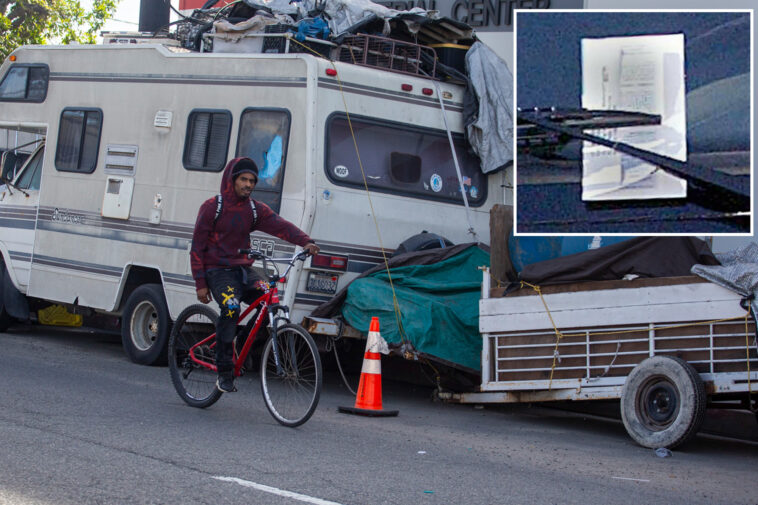
Los Angeles is flipping the switch on speed cameras that will snap you, ticket you, and hit your wallet, but there’s a stunning loophole carved out for the homeless: they don’t have to pay.
In a unanimous 14-0 vote Tuesday, the Los Angeles City Council cleared the way for a sweeping automated speed enforcement program, authorizing up to 125 cameras on the city’s most dangerous, high-crash streets.

The fines are real, and they climb fast.
Drivers caught going 11 to 15 mph over the limit face $50 tickets. That jumps to $100 for 16 to 25 mph over, $200 for 26 mph or more, and a staggering $500 for anyone clocked above 100 mph.
But there’s a loophole for the homeless.
Councilmembers ordered the Department of Transportation to expand its Community Assistance Parking Program, allowing low-income and homeless individuals to work off speed camera tickets through community service instead of paying fines during the pilot.
The local move lands alongside a new state law that took effect Jan. 1, allowing cities to reduce or wipe away certain vehicle-related penalties for people experiencing financial hardship, including those who are homeless, and requiring alternatives like payment plans or community service.
Now, Los Angeles is extending that framework beyond parking tickets and into speed enforcement.

The camera rollout will come in waves.
Installation and testing are expected between April and July, followed by a 60-day public education campaign and a 60-day warning period before tickets start flowing. Full enforcement is expected by late summer or fall 2026.
City officials insist the system will pay for itself.


The vendor contract is projected to cost about $6.675 million a year, roughly $4,450 per camera, per month. To break even, the city would need about 133,500 fully paid $50 tickets annually, or roughly 66,750 $100 tickets, not counting additional administrative costs.
Any revenue beyond that is slated for traffic safety improvements, with officials saying the General Fund won’t take a hit.
Under state law, the tickets are civil penalties, meaning no points on your license and no risk of suspension. Cameras will capture rear license plates only, and facial recognition is off the table.
As approved, most council districts are expected to get about eight cameras, with a handful receiving more based on crash data and high-risk corridors.