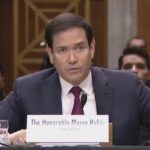
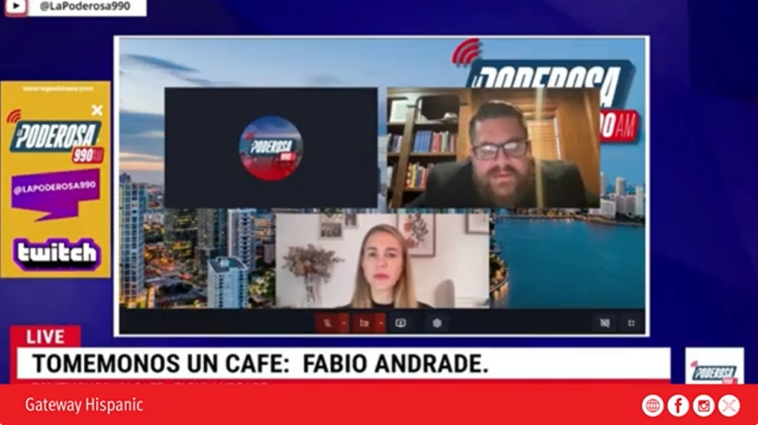
During her appearance on the program Tomémonos un café, María Herrera Mellado offered an analysis that goes beyond political rhetoric and focuses on the concrete results of the current U.S. strategy toward Latin America. For the analyst, Marco Rubio’s role as the first Hispanic Secretary of State is not merely symbolic but deeply strategic, as his Cuban background gives him direct insight into the authoritarian regimes that have shaped the region for decades.
The immigration attorney argued that the offensive led by Rubio, with the backing of President Donald Trump, has achieved what for years was considered impossible: pressuring Nicolás Maduro’s regime into releasing political prisoners. These are not common criminals, she emphasized, but citizens jailed solely for demanding free elections and freedom of expression. In her view, this reality dismantles the narrative that any attempt at international pressure would automatically lead to a global conflict.
One of the central points of her analysis was the reaction—or rather, the lack thereof—by powers such as Russia and China. She noted that despite alarmist warnings about a potential international escalation, both countries chose silence, indicating that prior diplomatic agreements had been reached. From her perspective, this confirms that foreign policy does not always have to rely on open confrontation, but rather on firm negotiations that prioritize the liberation of entire peoples.
Regarding Cuba, Herrera Mellado was clear: the weakening of energy supplies and economic pressure have pushed the regime to the brink of collapse. As she explained, these measures are not intended to punish the population, but to cut off the sources that sustain a political elite responsible for prolonging the island’s crisis and lack of freedoms. Speaking about human rights without affecting the economic structure of dictatorships, she argued, only serves to prolong the problem.
Finally, María Herrera Mellado concluded that the process currently unfolding in Venezuela and Cuba demonstrates that dictatorships are not invincible when leadership, strategy, and political will are present. For her, the message is clear: well-directed international pressure, combined with smart agreements, can restore hope and freedom to countries that for years seemed condemned to stagnation.