
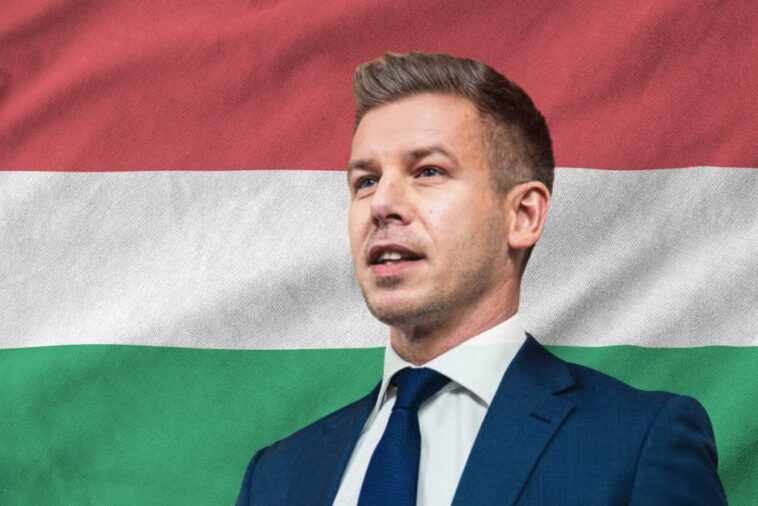
Today in the early hours, Budapest’s streets erupted in celebration. Fireworks lit the sky over the Danube as Péter Magyar, the 45-year-old leader of the Tisza Party, declared victory in Hungary’s parliamentary elections.
His centre-right opposition movement had just crushed Viktor Orbán’s Fidesz party, securing a stunning 53.6% of the vote and 138 seats in the 199-seat parliament – a supermajority that will let him rewrite the constitution, dismantle Orbán’s “illiberal democracy,” and unlock frozen EU funds. Orbán, the man who had ruled Hungary for 16 unbroken years, conceded defeat in a terse speech, calling the result “painful but clear.”
European leaders could barely contain their glee. Ursula von der Leyen, President of the European Commission, posted immediately: “Hungary has chosen Europe. Europe has always chosen Hungary. Together, we are stronger.
According to Hungary’s incoming prime minister, Peter Magyar, his government will look to reverse Prime Minister Viktor Orban’s decision to withdraw from the International Criminal Court (ICC). Additionally, on the Hungary-Israel relationship, Magyar said that EU decisions on… pic.twitter.com/hSwQfEyWn7
— OSINTdefender (@sentdefender) April 13, 2026
A country returns to its European path.” French President Emmanuel Macron, German Chancellor Friedrich Merz, and NATO Secretary-General Mark Rutte were among those who phoned Magyar that night.
For Brussels, it was more than an election result – it was the end of a long nightmare. Orbán had blocked EU sanctions on Russia, vetoed aid to Ukraine, and turned Hungary into the bloc’s internal troublemaker. Now, von der Leyen and others hailed Magyar as the man who would “save Hungary” and bring it back into the European mainstream.
But as the champagne corks popped in Brussels and Budapest, a quieter question echoed in Hungarian pro-government circles and among some international observers: Why has so little been said – especially in Western media – about Péter Magyar’s own troubled past?
The Allegations That Surfaced at the Worst Possible Moment
The claims are serious and have been repeated relentlessly by Orbán’s media machine for the past two years.
• Domestic violence: Magyar’s ex-wife, Judit Varga – Orbán’s former Justice Minister and a Fidesz stalwart – publicly accused him in March 2024 of years of physical and emotional abuse during their 16-year marriage. She described a “rollercoaster of domestic violence,” including one incident in which Magyar, allegedly drunk, threw objects at her and the buckle of his belt struck her back. Varga said she endured blackmail and terror before finally leaving. A 2020 police report noting aggression was later published by pro-Fidesz outlets.
• Drugs: In February 2026, just weeks before the election, a scandal erupted over a secretly recorded image from an August 2024 party. Magyar admitted he was present in an apartment where alcohol and “drug-like substances” (resembling cocaine) were visible on a table. He said he had consensual sex with his then ex-girlfriend, Evelin Vogel, but insisted he consumed neither alcohol nor drugs. He immediately volunteered for hair and urine tests at a Vienna laboratory in March 2026 and has repeatedly challenged Fidesz politicians to do the same. He has never admitted to using cocaine himself.
• Insider trading and sudden wealth: In 2025, pro-government newspapers like Index and Magyar Nemzet reported that in July 2023 – while still inside the Orbán orbit and serving on the supervisory board of a bank linked to Orbán ally Lőrinc Mészáros – Magyar sold other shares and bought Opus Global stock hours before a buyback announcement, then sold at a profit. Opus is also tied to the Mészáros empire. Critics claimed this made him “very rich.”
Additional claims of mistreatment of other women, including from ex-girlfriend Vogel, have circulated in Hungarian tabloids and social media.
Nevertheless, claims of domestic violence remained accusations without any court conviction, which Magyar denied as politically motivated. He also never admitted to drug use, stating only that he was present at a party where substances were visible. Additionally, an investigation into alleged insider trading was closed and cleared him.
But, Why the Selective Silence?
These stories were reported – loudly and repeatedly – in Hungary’s pro-Orbán press (Mandiner, Magyar Nemzet, Index). They dominated Fidesz campaign messaging right up until election day. Yet in much of the international coverage leading up to and immediately after the vote, they received only passing mention, if any at all. Why?
Three structural reasons stand out:
1. No legal findings, only allegations. Western journalists and editors are trained to distinguish between proven facts and claims from ex-spouses in bitterly contested divorces. Without a conviction, the domestic-violence story is treated as he-said-she-said – explosive but unadjudicated.
2. Classic timing of political smears. The most damaging accusations surfaced or were amplified exactly as Magyar transformed from Orbán loyalist into the regime’s most dangerous critic. Many analysts viewed them as textbook “kompromat” – the same tactic Orbán’s circle has used against other opponents.
3. The bigger story won. Once Magyar’s Tisza Party surged in the polls and then delivered a landslide, the narrative shifted to historic regime change, EU realignment, and the end of Orbánism. Von der Leyen’s congratulations and the street parties in Budapest made for better copy than two-year-old divorce allegations.
Magyar himself has framed his personal scandals as proof of the system he is fighting: a state apparatus that weaponises secret services, friendly media, and kompromat against anyone who defects. He points to his willingness to submit to drug tests and his public denials as transparency that Orbán’s circle never offered.
The Man Who Would “Save Hungary”
Whatever one makes of the personal allegations, the political facts are now undeniable. Péter Magyar spent years inside the Fidesz ecosystem – as a diplomat, businessman, and husband to a top minister – before turning against it with a whistleblower audio tape that rocked the government in 2024. He built Tisza from scratch into a movement that just achieved what no other opposition force had managed in 16 years: a supermajority.
He has promised to restore judicial independence, recover EU funds, fight corruption, and re-anchor Hungary in the Western alliance. European leaders are betting he will deliver. Hungarian voters, in overwhelming numbers, just did the same.
Whether the ghosts of his past – the unproven but persistent accusations from ex-partners – will haunt his premiership remains to be seen. For now, the man whom Ursula von der Leyen says must “save Hungary for Europe” stands victorious on the banks of the Danube, with a mandate to try. The question is no longer whether the world will hear about his past. It is whether Hungary – and Europe – will judge him by it, or by what he does next.
About The Author
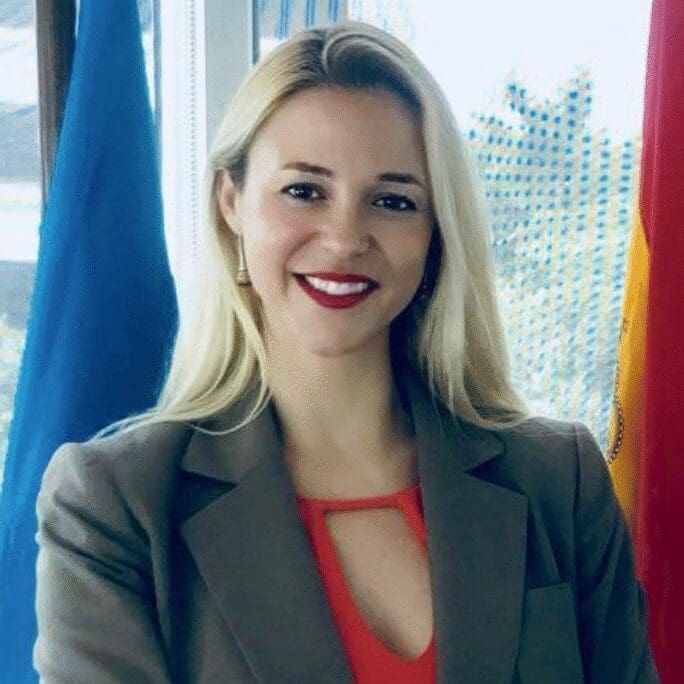
Maria Herrera Mellado
María Herrera Mellado es una abogada y analista política muy respetada. Licenciada en Derecho en EE.UU. y España, también tiene un doctorado en Ciencias Jurídicas y varios títulos de la Universidad de Granada (España), de la Universidad de Arizona y de la Florida International University. Con amplia experiencia en derecho internacional, asesoría en inversiones, representación en inmigración, y protección de la privacidad y lucha anticorrupción, ha asesorado a organizaciones y políticos europeos, estadounidenses e hispanoamericanos. Ha escrito sobre seguridad nacional e inmigración, protección de datos, derecho constitucional, consumo financiero y derecho bancario en revistas internacionales y coescribió libros publicados en Perú y Colombia. Es reconocida por su servicio comunitario en EE.UU. y es considerada una de las mujeres más influyentes de Florida. Es experta en varios idiomas y participa frecuentemente en debates en canales como Univisión, Fox, France 24, Telemundo y es la Editora Jefe de Gateway Hispanic.