
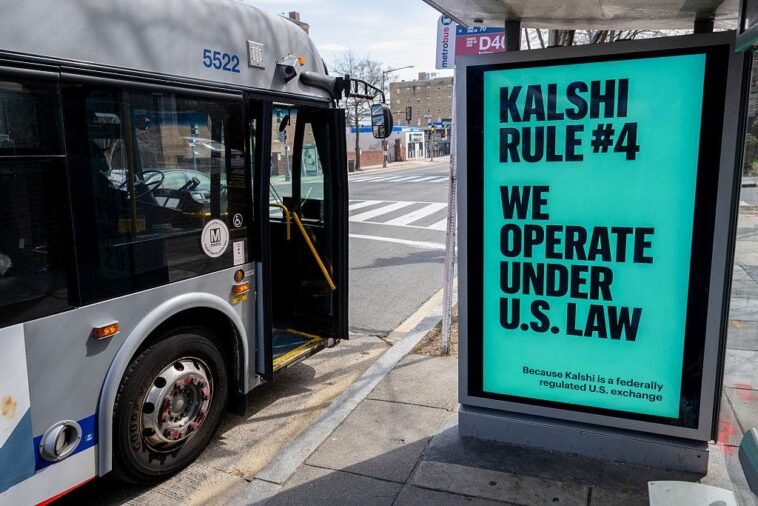
A federal appeals court ruled Friday that Nevada can enforce its gambling laws against sports-related prediction contracts, rejecting challenges from Kalshi and Crypto.com and dealing a major blow to the rapidly growing industry.
The Ninth Circuit Court of Appeals rejected Kalshi’s argument that its sports contracts are federally regulated financial instruments under the Commodity Exchange Act. The court also rejected an appeal from Crypto.com.
“The sports event contracts were not ‘swaps’ because they were sports bets,” the unanimous three-judge panel wrote.
The decision conflicts with an earlier Third Circuit ruling that found New Jersey could not apply its gambling laws to Kalshi. The split raised the possibility that the Supreme Court could eventually decide whether sports-event contracts are financial instruments under federal jurisdiction or wagers subject to state gambling laws.
The court rejected Kalshi’s argument that the contracts should be treated as swaps — a type of derivative regulated by the Commodity Futures Trading Commission — simply because they are structured as financial instruments.
“The CFTC is not a national gambling regulator,” Judge Ryan Nelson wrote for the panel. “No one suggested it was until over a decade after the law was passed.”
The CFTC told CNBC that it has exclusive authority over prediction markets operating under the Commodity Exchange Act and has previously sued states to prevent them from regulating the platforms under state gambling laws.
State regulators have pushed back aggressively. Dozens of states have argued that sports-related prediction contracts are effectively sports wagers and should be subject to the same laws and taxes as traditional gambling.
“The substance of the sports event contracts offered on Kalshi’s exchange is sports gambling, regardless of whether Kalshi calls them swaps,” the Ninth Circuit said.
The court also pointed to Kalshi’s own marketing, noting that the company had advertised itself as “the first app for legal sports betting” in all 50 states.
The Ninth Circuit’s decision upheld a lower-court ruling in Nevada that allowed state gaming authorities to regulate Kalshi’s sports contracts.
“This is sports betting and needs to be properly regulated by the state,” Nevada Gaming Control Board Chairman Mike Dreitzer wrote in a statement after the decision.
Kalshi argued that the ruling did not eliminate federal protections for federally regulated exchanges and said it intends to continue fighting.
“The Ninth Circuit agreed with the Third Circuit on a fundamental point: Federal law prevents states from regulating trading on a federally licensed exchange, like Kalshi,” Kalshi spokeswoman Dani Lever said in an email to CBS News.
Lever added that the company believes the CFTC’s regulations permit sports contracts and that it will seek further review.
The Ninth Circuit’s ruling immediately reverberated through the gambling industry. According to CNBC, shares of DraftKings and Flutter Entertainment, the parent company of FanDuel, rose following the decision as investors assessed the implications for the increasingly competitive prediction-market sector.
“This is a classic circuit split,” Columbia Law School professor Joshua Mitts told CNBC. “Ultimately, this is the kind of legal controversy or legal difference of opinion which will make its way to the Supreme Court.”