As Lakers coach JJ Redick addressed his team inside their locker room after Saturday’s Game 1 win over the Rockets, the focus was already turning to Tuesday’s Game 2 of the best-of-seven first round playoff series.
“I’ll just be honest with you,” Redick said, with the postgame comments being shared by the team. “The way you guys prepared [last] week, and all the s–t we talked about being together and elevating, we have another level we can get to. There’s a lot left for us to get better at. We’re going to clean everything up.”
Redick delivered a similar message after Monday’s practice ahead of Tuesday’s Game 2 at Crypto.com Arena, scheduled for 7:30 p.m. tipoff.

The Lakers have an opportunity to lead 2-0 in a playoff series for the first time since winning the 2020 NBA Finals against the Heat.
“I don’t think there was anything revelatory in the tape that we didn’t feel like we saw or felt in live play,” Redick said.
Sign up for the California Morning Report newsletter
California’s top news, sports and entertainment delivered to your inbox every day.
Thanks for signing up!
“I said this to the team afterwards, there’s a lot of stuff we can do better and a lot of stuff we can clean up. We know they’re going to be the more desperate team in Game 2 and we have to play with the same sense of desperation we had in Game 1.”
What areas can the Lakers improve?
Defensive rebounding
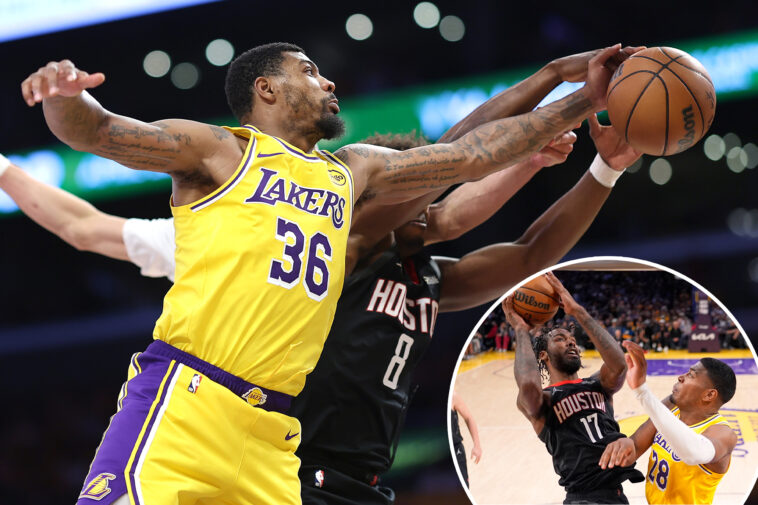
The Lakers entered the playoff series against the Rockets with two objectives: Take care of the basketball and limit the Rockets’ offensive rebounding.
They won Game 1 despite not accomplishing either.
The Lakers had 20 turnovers, resulting in 24 Rockets’ points.
And the Rockets grabbed 21 offensive rebounds for a whopping 41.9% offensive rebounding percentage, 3% better than the league-leading offensive rebounding percentage (38.8%) they had during the regular season.
The Rockets scored 23 second-chance points.

Redick acknowledged the Lakers will allow offensive rebounds. Expecting them not to would be unrealistic, especially against the Rockets, who’ve been the league’s best offensive rebounding team over the last two years.
But the Lakers can improve the types of offensive rebounds they allow.
Long offensive rebounds that go over players’ heads after a 3-point shot – which happened a couple of times against the Lakers in Game 1 – naturally occur. So is true for the occasional offensive rebound when one of Houston’s bigger players grabs the board over a smaller Lakers player after a switch or mismatch.
But what about the offensive boards that happen when a Rockets player near or around the dunker spot isn’t boxed out properly and gets their hands on an offensive board? Or when a player rebounds their own miss near the basket? Those are the ones the Lakers need to clean up.
“That’s where they’re more consequential,” Redick said. “Particularly against this team.”
Download The California Post App, follow us on social, and subscribe to our newsletters
California Post News: Facebook, Instagram, TikTok, X, YouTube, WhatsApp, LinkedIn
California Post Sports Facebook, Instagram, TikTok, YouTube, X
California Post Opinion
California Post Newsletters: Sign up here!
California Post App: Download here!
Home delivery: Sign up here!
Page Six Hollywood: Sign up here!
Closing quarters
The Rockets outscored the Lakers by a combined score of 23-18 in the final two minutes of each quarter in Game 1.
The only quarter the Lakers outscored the Rockets in was the third, which they won 4-3, buoyed by Luke Kennard splitting a pair of technical foul free throws.
All four of the Lakers’ points in the final two minutes of the fourth were free throws.
With the game pretty much already decided, the last two minutes of the fourth, where both teams scored nine points, were less consequential.
But in a closer game where the Lakers’ shots aren’t falling at the same clip or the Rockets have better offensive success, these stretches will be even more important.

Turnovers
Speaking of the closing minutes of quarters, the Lakers turned the ball over a combined six times in the final two minutes of each quarter – including three giveaways to close the second.
Several turnovers resulted from the Lakers trying to play too fast – the kind of unforced turnovers the Rockets had little to do with.
The Rockets already create enough issues with their size and length. The Lakers don’t need to create more for themselves.
[Tuesday] is going to require an elevated sense of desperation on our part,” Redick said. “Because they’re going to come in with that.”