
Patients in Canada are having their lives ended by assisted suicide on the same day that they submit their paperwork requesting it, according to a shocking new report.
A total of 65 people died under the country’s Medical Aid in Dying (MAiD) program on the same day they applied for it in 2023 in Ontario, a report from the Chief Coroner of Ontario’s Medical Assistance in Dying Death Review Committee (MDRC) revealed.
A further 154 patients were helped by the state with ending their lives the day after the request was made, the report states.

In one shocking case, a woman in her 80s, only referred to as Mrs. B, had her life ended under the country’s euthanasia program despite withdrawing her request — when her husband and caregiver requested it again on her behalf.
The woman, who suffered from chronic complications following coronary artery bypass graft surgery, was receiving palliative care support at home when she told her family that she wanted to end her life through the MAiD program.
She then informed her assessor that she “wanted to withdraw her request, citing personal and religious values and beliefs,” according to the report.
Her spouse then requested another euthanasia assessment, which deemed Mrs. B eligible despite her expressed desire to opt for palliative care instead.
A third assessor confirmed the second assessor’s approval, and Mrs. B received MAiD the same day.
MAiD was passed in 2016 and originally required a 10-day waiting period between a request for assisted suicide and the act of euthanasia.
Start your day with all you need to know
Morning Report delivers the latest news, videos, photos and more.
Thanks for signing up!
This requirement was removed in 2021 by Canada’s parliament for those whose deaths were “reasonably foreseeable,” despite concerns that patients would opt for same-day suicides because it was quicker than accessing high-quality palliative care.
“Some members expressed their concern that access to MAiD was more easily organized and accessible in this circumstance than the previously requested and preferred option for end-of-life care,” a report from the MDRC stated at the time.
Critics have held up Mrs. B’s case as evidence that patients are being given same-day euthanasia because it is easier for doctors to arrange than end-of-life care, and families are taking it due to caregiver burnout.

Mrs. B was granted same-day euthanasia, despite her first assisted suicide practitioner having “concerns regarding the necessity for ‘urgency’ and… the seemingly drastic change in perspective of end-of-life goals, and the possibility of coercion or undue influence (i.e., due to caregiver burnout),” the MDRC’s report stated.
“The focus [in this case] should have been on ensuring adequate palliative care and support for Mrs. B and her spouse. Hospice and palliative care teams should have been urgently re-engaged, given the severity of the situation,” Dr. Ramona Coelho of the MDRC said.
It is the latest troubling incident under Canada’s euthanasia program, which many say is targeting so-called “burdensome” groups such as the elderly and disabled.
The policy was described as “probably the biggest existential threat to disabled people since the Nazis’ program in Germany in the 1930s,” by Tim Stainton, director of the Canadian Institute for Inclusion and Citizenship at the University of British Columbia in 2022.
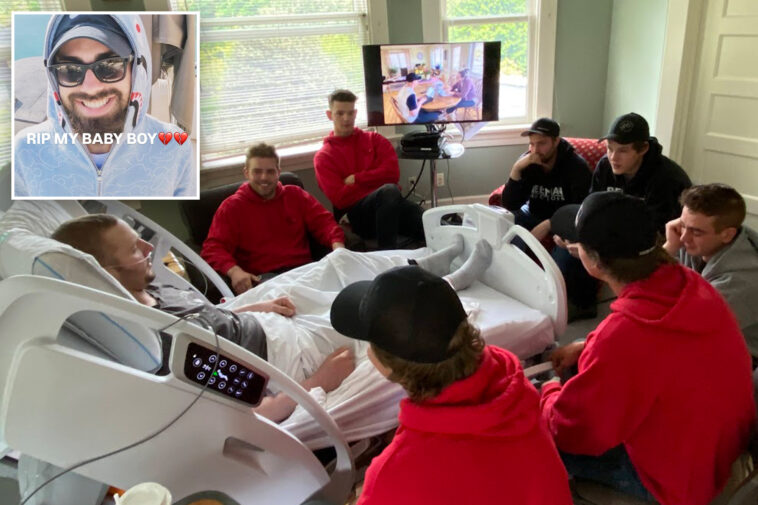
Last week, the parents of 26-year-old Kiano Vafaeian accused authorities of failing to protect their “vulnerable” son, who was able to end his life with assisted suicide despite a history of mental illness.
Vafaeian had seasonal depression, suffered from Type 1 diabetes, and lost vision in one eye when he died last December.
Gov. Kathy Hochul sparked outrage in December when she stated that she would sign into law the “Medical Aid in Dying” bill, giving state sanction to doctors in New York helping terminally ill patients end their lives.
If you are struggling with suicidal thoughts or are experiencing a mental health crisis and live in New York City, you can call 1-888-NYC-WELL for free and confidential crisis counseling. If you live outside the five boroughs, you can dial the 24/7 National Suicide Prevention hotline at 988 or go to SuicidePreventionLifeline.org.