
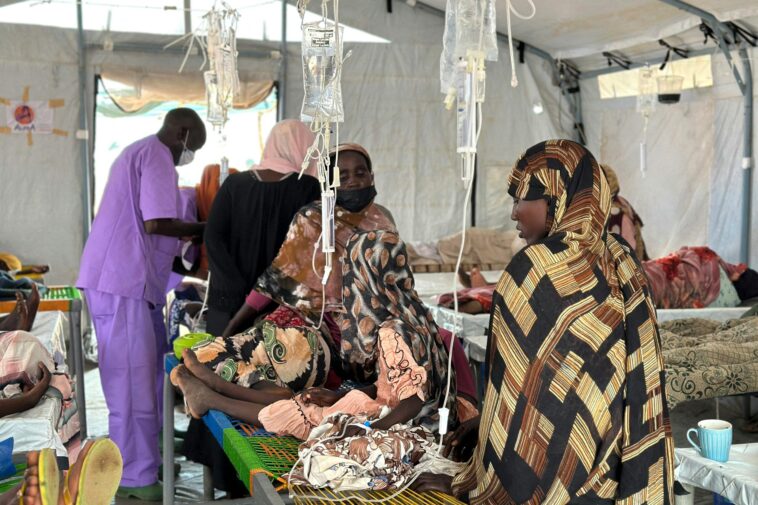
The recent Ebola outbreak in Africa has received a lot of media attention in recent weeks, but there is a potentially deadlier pandemic sweeping across Africa: cholera.
According to the Centers for Disease Control and Prevention, officials have confirmed 115 deaths out of 598 confirmed cases of Ebola outside the U.S. since the outbreak started in early May. In comparison, the European Centre for Disease Prevention and Control has reported 3,596 new cholera cases and 176 deaths in Africa since the end of April.
The reason cholera is underreported is that the disease has affected Africa and parts of Asia for centuries.
Cholera is one of the world’s deadliest diseases and has swept the globe with seven pandemics since its discovery, according to the World Health Organization. The current outbreak has lasted for 65 years since starting in Southern Asia and has since gone worldwide.
“Researchers estimate that there are 1.3 to 4.0 million cases and 21,000 to 143,000 deaths from cholera worldwide each year,” the WHO reported.
The symptoms of cholera can be even more painful and more quickly lead to death than Ebola symptoms.
Cholera is a disease that triggers rapid, uncontrollable diarrhea that can cause severe dehydration, internal organ failure, and death of infected patients within hours if left untreated.
Ebola, on the other hand, causes internal bleeding. It can take between 2 and 21 days for an infected person to begin showing symptoms, and symptoms can continue for weeks.
Though Ebola does have a higher fatality rate than cholera, studies show that treatment in the United States can significantly lower the chance of death.
“Death rates [for Ebola] drop sharply with intensive supportive care, the kind that keeps patients hydrated and their blood pressure and oxygen stable,” UC Berkeley Public Health reported. “During the 2014 West Africa outbreak, mortality ran 40 to 70 percent across affected countries; for the small number of patients evacuated to Europe and the U.S., it was closer to 20 percent.”
Ebola, unlike other viruses such as COVID-19, is not airborne but spreads through contact with a contaminated person’s bodily fluids. In Africa, the disease has spread rapidly due in part to local burial customs that dictate that a whole tribe should bury the dead.
Cholera spreads through contaminated water. Thus, while Ebola spreads from person to person, entire villages can contract cholera at the same time due to using a single source of contaminated water.
Cholera has also been increasing in Africa in recent years. Conflicts in Sudan and the Democratic Republic of the Congo, along with earthquakes and natural disasters, have harmed the water infrastructure in Africa, causing more people to resort to cholera-infested sources.
“Reported cholera cases rose by 5% and deaths by 50% in 2024 compared to 2023, with more than 6000 people dying from a disease that is both preventable and treatable,” the WHO stated. “Conflict, climate change, population displacement, and long-term deficiencies in water, sanitation, and hygiene infrastructure continue to fuel the rise of cholera.”