
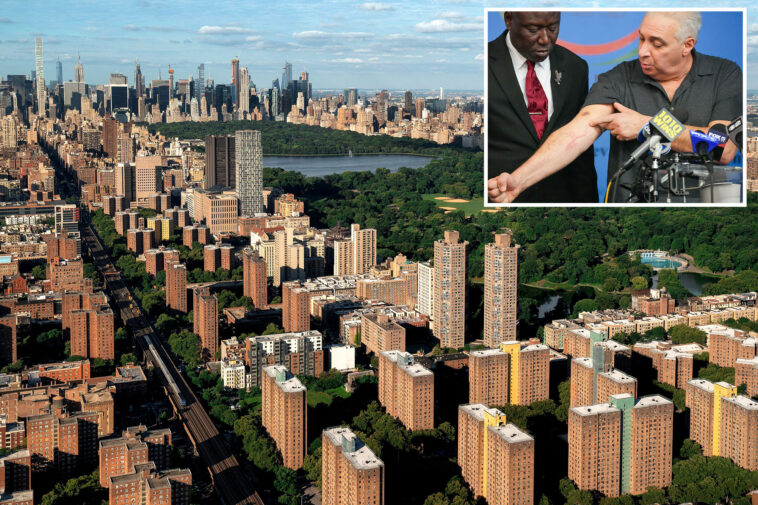

Officials have made the shocking revelation that the ongoing outbreak of Legionnaire’s disease on the Upper East Side wasn’t caused by a building’s decrepit drinking water system — but by water mist from a cooling tower erected to help New Yorkers beat the heat.
The city has installed 179 cooling towers across the zip codes impacted by the outbreak so far (10028, 10128 and 10075) where at least 23 people have been sickened so far, Council Speaker Julie Menin announced in a letter to residents Monday.
Menin said the cooling towers are in the process of being inspected, and that the outbreak was identified “relatively early” thanks to 56 cooling tower inspectors on duty – up from 33 last year, when seven people died during an outbreak in Central Harlem last summer.


“Still, this outbreak was preventable, and the fact that [the New York City Department of Health and Mental Hygiene] has not confirmed the source is troubling.”
Menin pointed to legislation passed by the City Council that took effect in May to toughen requirements for building owners to test cooling towers at least monthly during the warmer months, instead of the previous 90 days between inspections.


The law also requires samples provided by building owners to be logged in a DOHMH database within five days of sampling. Those who fail to comply are subject to fines between $2,000 and $4,000.
“I have many questions for DOHMH regarding implementation of the law since May 8. I’d like to know what portion of buildings on the Upper East Side required to test have actually done so, what oversight from the agency has looked like, and whether any buildings have received fines thus far,” Menin wrote.