I was living in Austin in May 2022 when a gunman killed 19 children and two teachers at Robb Elementary in Uvalde, Texas, the town where I grew up. I had known some of the children. I had known the shooter. Four years later, I went to Israel still carrying that anger, expecting to find the same bitterness in people who had lost far more. I didn’t.
Growing up, I had known some of the children in Uvalde through relatives and tennis lessons. I had known Salvador Ramos. If we had not moved, my sister could have been a victim at Robb Elementary. When the news reached my high school in Austin that afternoon, I could not keep my composure. I was in a blinding panic, calling and texting family members and friends in Uvalde, trying to find out who was safe.
In the middle of the chaos, false news rumors spread that Ramos was transgender. In my initial shock I repeated that to my peers. Friends whose politics differed from mine cut me off mid-sentence. They said they were sorry for my losses, but linking transgender identity to mental illness was transphobic and politically incorrect.
While I was still trying to reach people I knew and the bodies of children I had grown up around were still being identified, my teachers and classmates in front of me chose to police language rather than condemn a mass murderer.
I could not fathom how someone’s left-leaning politics could so egregiously erode their morals. Something snapped in me that day. My anger was acute, and it festered. From then on, I dedicated myself to politics and journalism with a hardened sense of purpose.
That is what I carried into Israel. I went with a group of journalists through the College Fix and Passages to see the region’s conflicts up close and to interact with Christians, Jews, Muslims, Oct. 7 survivors, and political leaders.
War and terror attacks in the Middle East have long been the subjects that draw me most. For years Western coverage has portrayed Israelis as uniquely bloodthirsty. I never fully believed it, but the constant repetition of that narrative still shaped what I expected to encounter. What I found was different.
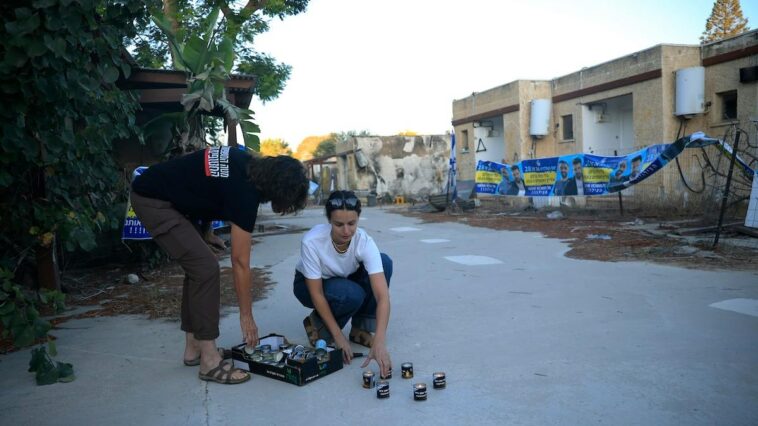
We spent a full day at sites of the Oct. 7, 2023, massacre. One of them was a kibbutz whose gate bordered Gaza. The kibbutz has remained untouched since Oct 7. The walls are riddled with bullet holes, rooms stay blackened by grenades, and children’s toys sit covered in dust among the rubble. Homes where families had lived ordinary lives became the rooms in which they were slaughtered.
Hamas terrorists went from home to home without distinguishing between the young and the old, men and women, race or religion. They shot people in their beds and burned families alive. When I walked the grounds, I could feel the weight of the attack in my bones.
Standing there, I found it hard to reconcile the remains of the village with the atrocities that had been carried out inside those houses. At that moment, all problems I carried from the United States felt insignificant in comparison.
At the Nova festival grounds we listened to Shalev Biton, a young man not much older than me, who shared with raw emotion the account of his survival on Oct. 7. He described fleeing as Hamas gunmen moved through the festival grounds hunting people down.
A Bedouin Muslim farm worker hid him along with others. When the terrorists reached the farm, they shouted that they knew he was hiding Jews and demanded to know where they were, threatening to kill him if he refused. Biton told me, “I wouldn’t wish that horror on any human being, including civilians in Gaza.” He added, “In the eyes of Hamas, they don’t see Jew or Muslim; you’re just in their way.”
The Israelis I met were people who had every reason to hate. Many had lost friends, neighbors, and family members. Some had walked into their own homes and found them killed, or had survived by only a few minutes while others were taken or shot in front of them. They had endured atrocities most Americans cannot conceptualize.
I also spoke with others who asked to remain anonymous: Muslims, Christians, and Jews whose relatives had been brutally slain or tortured and who had been the ones to discover what was left of them. For many, this kind of loss is not limited to Oct. 7. In a region shaped by recurring geopolitical conflict, it has become a repeated fact of life.
Yet these people remained composed while they spoke. They wanted Hamas dismantled and had advocated for the safe return of the hostages. Some even said they hoped the people who carried out the attacks might one day change.
The difference was hard to grasp. Four years earlier, the murder of children I knew had left me with a sense of resentment. I had watched people around me defend abhorrent political correctness under the guise of inclusion, and something in me had shut down in response.
The restraint I witnessed in Israelis was the refusal to become what had tried to destroy them.
I left Israel with a deeper understanding of the conflict, but I was most struck by the people living through it. Their resilience was not performative; it was faithful and deeply human. Many had every reason to be consumed by anger and vitriol, yet what stayed with me most was their refusal to let grief harden into hatred.
***
This article is part of Upstream, The Daily Wire’s new home for culture and lifestyle. Real human insight and human stories — from our featured writers to you.