
Dodger Stadium used to suffocate offense, now it invites it.
For decades, Dodger Stadium lived on the reputation of a pitcher’s park. A place where fly balls went to die under the Southern California night, where the marine layer rolled in like a silent accomplice.
Not anymore.
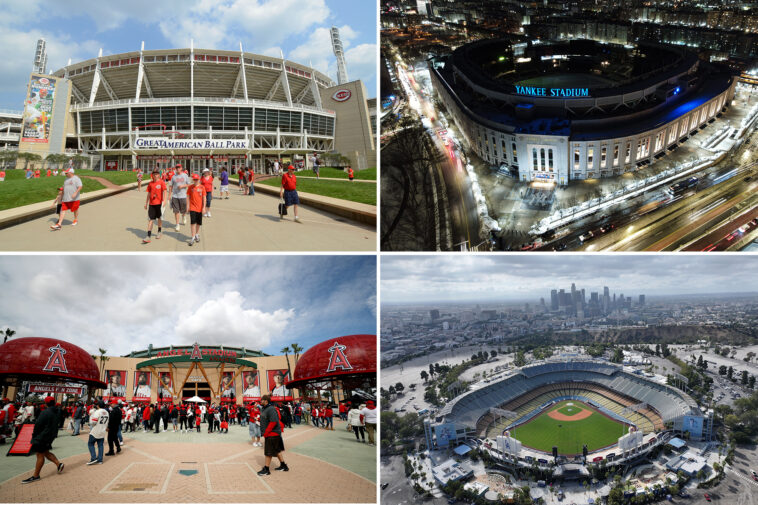
According to a RotoWire MLB study built on Statcast data from 2020 through 2025, Dodger Stadium has quietly—and now unmistakably—become Major League Baseball’s most prolific home run haven. Not Coors Field. Not Cincinnati’s bandbox. Not the Bronx. Los Angeles. With 1,241 home runs launched into its bleachers and beyond, it sits atop the sport, narrowly ahead of Great American Ball Park (1,221) and Yankee Stadium (1,216).

Part of the shift in Dodger Stadium going from a pitcher’s park to the most home run friendly park in baseball is hitting philosophy. The Dodgers hired Robert Van Scoyoc as their hitting coach ahead of the 2019 season, reinforcing a commitment to modern, launch-angle-oriented hitting philosophies.
Another part is roster construction. You’ve heard of the Bronx bombers, right? Well what about the Dodger destroyers. Los Angeles has been in the top five in total home runs every season going back to 2020, and they hammered 244 home runs alone in 2025, 142 of them at home. When you consistently trot a lineup full of former MVPs who love the long ball, your home run totals are going to rise.
At the center of this power surge stands Shohei Ohtani, the game’s gravitational force, who has already launched 57 of his 109 Dodgers home runs within these same once-pitcher-friendly walls.
“I think that our team is a big part of hitting them,” said Dodgers’ manager Dave Roberts when told that the most home runs launched in baseball since 2020 have been at Dodger Stadium. “We play 81 games at home. So offensively, we’ve done a good job of hitting homers in our ball park. And when you get Shohei [Ohtani] it skews that number a little bit too.”


But Roberts also pointed to something that isn’t talked about enough. The weather.
The marine layer still lingers and the physics of flight for a baseball have remained the same.
Sign up for the California Morning Report newsletter
California’s top news, sports and entertainment delivered to your inbox every day.
Thanks for signing up!
But over the last decade, due in large part to climate change and global warming, the average temperature in Los Angeles from April to September has risen by 3 degrees Fahrenheit, with five of the warmest years in California history having occurred since 2020.
“I think there’s something to the air in the summertime,” said Roberts. “The air gets light and the ball flies. But it is a surprising stat of all the ballparks in the big leagues Dodger Stadium leads the league in home runs.”

It is surprising that Chavez Ravine was once known as a park that punished imperfection and now it rewards precision—and modern hitters are nothing if not precise.
Even Angel Stadium, another venue long held hostage by dense coastal air, ranks fourth with 1,150 home runs. The narrative that weather alone dictates offense is cracking, just like bats meeting 98 at the top of the zone.
Another surprising twist? Coors Field—baseball’s mile-high launching pad—didn’t even crack the top five, tying for sixth. Oracle Park, once feared for its cavernous dimensions, sits near the bottom. Meanwhile, Dodger Stadium—baseball’s old soul—has become its loudest amplifier.
The Dodgers have won three World Series titles since 2020, but Dodger Stadium didn’t change its identity overnight.
It got rewritten by the recent history of success.
Download The California Post App, follow us on social, and subscribe to our newsletters
California Post News: Facebook, Instagram, TikTok, X, YouTube, WhatsApp, LinkedIn
California Post Sports Facebook, Instagram, TikTok, YouTube, X
California Post Opinion
California Post Newsletters: Sign up here!
California Post App: Download here!
Home delivery: Sign up here!
Page Six Hollywood: Sign up here!