
Republished with permission from AbleChild.
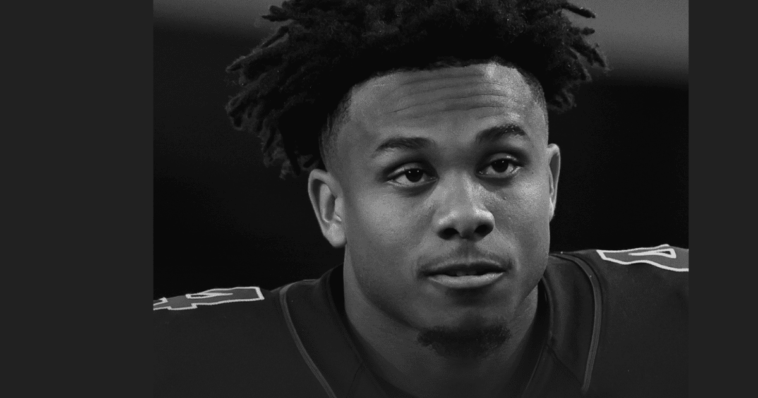
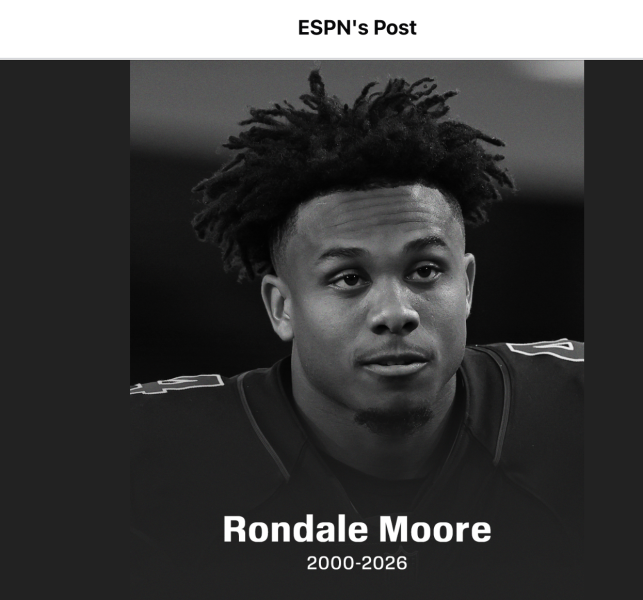
It’s still months until the 2026 National Football League (NFL) season opener kicks off but, with the recent suicide of 25-year-old wide receiver Rondale Moore, talk about mental illness and the NFL’s responsibilities in that arena is grabbing headlines.
Former Cincinnati Bengals wide receiver, A.J. Green who played in the NFL for a dozen seasons knew Moore and, after Moore’s death, believes it’s time for the NFL to initiate some hard-hitting policies on mental health. While nothing has been made public about whether Moore had been receiving any kind of mental health support including drugs, he was known to have been dealing with serious injury issues that come with such a brutal contact sport, often beginning with pee wee football and continuing through college and into the professional NFL.
Green is quoted in an interview with The Player Tribune explaining that “there’s a lot that could still be improved in the NFL as far as how the league is helping its players with their mental health…and one way I would start making it mandatory, if you have a major injury, that you see an independent mental health counselor as part of your rehab.”
Sounds simple. But on the other hand, with that kind of increased help, Green complains that there is a stigma attached to mental health and says, “none of that means anything if the people who are making the football decisions, in private, are viewing mental health issues as a red flag.” Green believes that “stories like Rondale’s will probably keep happening because it means we’re telling players that having a mental health issue is gonna F*** with their money.” In short, Green is saying if a player complains about mental health or is diagnosed with a mental disorder it could affect his ability to play in the league.
The NFL would argue, however, that it is empathetic and it has expanded mental health resources for both players and staff. As part of the 2019 Behavioral Health Agreement, each NFL team must maintain a team-specific licensed behavioral health clinician on-site for at least 8 to 12 hours per week, each team must maintain a team-specific Mental Health Emergency Action Plan and an education outreach program for players, their families and team personnel.
Currently, there is no data available about how many NFL players are receiving mental health support and in what form. One report explains that since 2002 there have been 945 suspensions and over $68 million in fines for substance-related violations in the NFL. But that data isn’t coming from the NFL. And another study conducted by ESPN and the National Institute on Drug Abuse suggests that NFL players are four times more likely to misuse medications.
Some players, however, have been more public about mental health “treatment” as former Seattle Seahawks cornerback Richard Sherman estimated “about half” of the league uses Adderall. This Attention Deficit Hyperactivity Disorder (ADHD) medication is banned by the NFL unless a player is granted a Therapeutic Use Exemption (TUE). However, if Sherman is correct, that would mean that hundreds of NFL players possibly are qualifying to regularly use a cocaine-like substance.
The list of Substances of Abuse (SOA) by the NFL include cocaine, synthetic marijuana, amphetamines (including adhd medications), opiates, opioids, PCP, and MDMA like ecstasy. And, the NFL conducts two different tests on players annually, including the SOA and annual tests for Performance Enhancing Substances (PES). Generally, these tests can be administered numerous times during the year including during the regulation season.
The NFL does not release data about how many players are taking prescribed psychiatric drugs like antidepressants, antianxiety and antipsychotics. In fact, AbleChild was unable to locate any information about the NFL conducting any testing for these psychiatric drugs.
It is also of interest that the NFL does not make any data available about how many players, year to year, are provided with a TUE in order to consume ADHD drugs, nor does the NFL release data on the number of players who have received fines or suspension for violating SOA or PES policies. This is important information as it may help the NFL to better understand when players may be experiencing detrimental personal issues… before a player takes his life.
One cannot help but notice that the NFL has instituted a broad set of mental health interventions and support policies yet refuses to test for psychiatric mind-altering drugs that are well known to be associated with suicidal ideation.
In fact, it appears that the NFL front office is acting exactly like every other entity when it comes to crisis situations like the recent suicide of Rondale Moore. Throw more money and resources to institute more mental health services yet refuse to look at the number of players who already may be taking prescription psychiatric drugs of which the NFL refuses to test for.
Antidepressants alone are reasons for concern. Some of the known side effects associated with antidepressants include aggravated depression, aggressive reaction, confusion, mood or behavior changes, anxiety, agitation, depersonalization, irritability, hallucination, mania and suicidal ideation to name a few.
Given the intense physicality of the sport many of these adverse events would seem normal. But the NFL would have to know if players are taking the mind-altering drugs in order to make appropriate decisions about how best to deal with mental health issues.
Whether Moore was on any psychiatric drugs at the time he took his life would be valuable information the NFL could use to better serve the players it says it wants to protect. And, knowing how many of the hundreds of NFL players take psychiatric drugs can only be determined by testing the players as it already does for a handful of other drugs.
The mental health issues plaguing the NFL are easily tackled if the NFL expands its mental health playbook to include drug testing for prescription psychiatric drugs. It’s the right call.
Be the Voice for the Voiceless
AbleChild is a 501(3) C nonprofit organization that has recently co-written landmark legislation in Tennessee, setting a national precedent for transparency and accountability in the intersection of mental health, pharmaceutical practices, and public safety.
What you can do. Sign the Petition calling for federal hearings!
Donate! Every dollar you give is a powerful statement, a resounding declaration that the struggles of these families will no longer be ignored. Your generosity today will echo through generations, ensuring that the rights and well-being of children are fiercely guarded. Don’t let another family navigate this journey alone. Donate now and join us in creating a world where every child’s mind is nurtured, respected, and given the opportunity to thrive. As a 501(c)3 organization, your donation to AbleChild is not only an investment in the well-being of vulnerable children but also a tax-deductible contribution to a cause that transcends individual lives.