
Republished with permission from AbleChild.
Chandelier methodology
For twenty‑five years, AbleChild has stood with families who were told that their bright, intense, curious children were “disordered” and in need of medication, rather than understood and appropriately educated. This 25th Anniversary year, AbleChild will recognize Dr. Trevor Tebbs for a lifetime of work that turns that narrative on its head: instead of asking, What’s wrong with this child? his work asks, What if there is nothing wrong with the child at all?
Dr. Tebbs’ long career in gifted education, including his service on the faculty of Brown University, keeps returning to one hard question: what if the “problem” is an environment that neither recognizes nor nurtures giftedness? He shows that many so‑called “difficult” behaviors in a bright, “smarter than most” child restlessness, questioning authority, emotional intensity, daydreaming, rapid talking, often grow out of boredom, perfectionism, bullying, or rigid classrooms, not from a broken brain. In place of a narrow checklist, his perspective is more like standing under a chandelier than staring through a keyhole: he looks at cognitive level, school climate, level of academic challenge, personality, and family life together before anyone talks about diagnoses or prescriptions.
When you lay that kind of picture next to the familiar ADHD symptom checklist, the resemblance is impossible to ignore; line by line, the checklist reads like a description of gifted traits that, in another era, would have been recognized as potential. Instead, these traits are too often pathologized, labeled, and medicated. AbleChild has spent 25 years documenting what happens when a one‑size‑fits‑all diagnostic tool is laid over an education system that is not prepared to meet the needs of highly able children: parents are told their child has a disorder, schools rely on labels rather than challenge, and powerful medications become the default solution, and no one is getting better.
Meanwhile, the money tells the same story. ADHD‑related services in schools consume an estimated 13.4 billion dollars a year, while gifted education receives only about 16.5 million. That gap makes it painfully clear what the system is built to find and fund more diagnoses and more drugs, not the recognition and support of gifted children.
At the same time, government investment tells its own story: billions are poured into ADHD labels, special‑education categories, and stimulant prescriptions, while gifted education receives only a tiny fraction of that support. Instead of funding training and classrooms that can actually meet the needs of highly able students, public dollars overwhelmingly sustain a diagnosis‑and‑drug pipeline. That spending pattern locks the ADHD checklist in place as the default lens for children’s behavior, even when the very same traits match what used to be recognized as giftedness.
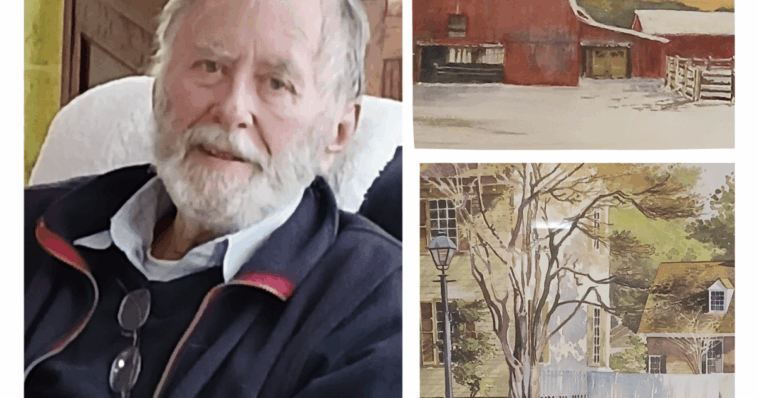
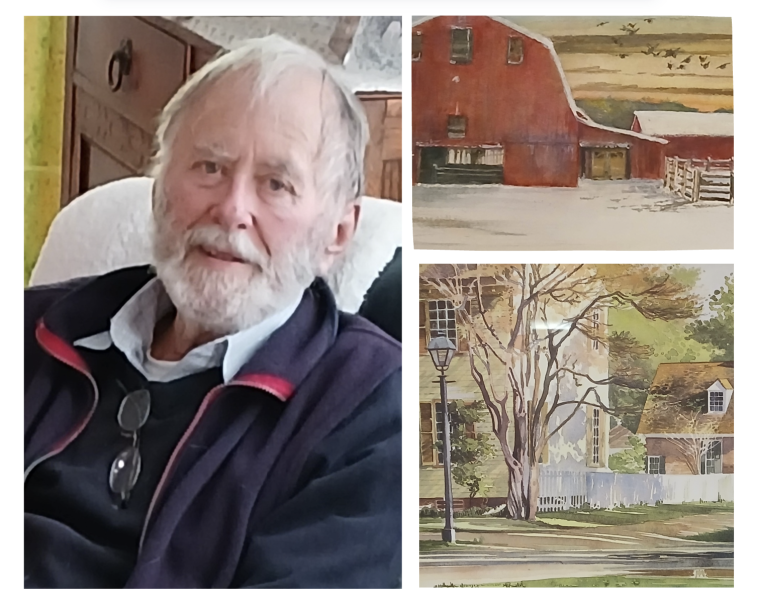
From his home in Vermont, where he is retired and lives with his wife Jennifer, who has been by his side throughout this journey, Dr. Tebbs spoke with AbleChild about the gifted children who shaped his life’s work. Now in his eighties, he wondered if the talent to paint was still there, and with a few strokes of the brush he discovered it was, and his watercolors will be featured in an upcoming exhibit, bringing his gifts full circle from early work once shown at the International Monetary Fund in Washington, D.C., to new pieces created in the quiet mountains of Vermont.
He reflected on the connection between AbleChild and his decades with gifted children this way:
“The AbleChild organization represents for both of us a major influence in what turned out to be many years of involvement with young people considered highly-able, or, in many ways, especially gifted. Personality Type – i.e., in particular – introversion versus extroversion. These two factors have much to do with their being misunderstood and/or mislabelled. In my opinion, these two factors alone underline the imperative for, not only organizations such as AbleChild, but the appropriate education of teachers, parents and other individuals involved with gifted young people.”
By recognizing Dr. Tebbs at its 25th Anniversary event, AbleChild is drawing a clear line: the nation can continue to pour resources into an ever‑expanding diagnosis‑and‑drug pipeline, or it can invest in the kind of gifted‑aware understanding that prevents misdiagnosis in the first place. His work offers a roadmap for teachers, parents, and policymakers who are willing to ask harder questions about curriculum, school climate, and genuine challenge instead of simply increasing the dose. When we lift AbleChild’s work up, the ADHD label loses its grip and all children are lifted. By replacing a checklist that narrows a child’s future with an approach that recognizes giftedness, temperament, and environment, we don’t just rescue “the gifted”; we make room for every child to be seen accurately and supported humanely.
Be the Voice for the Voiceless
AbleChild is a 501(3) C nonprofit organization that has recently co-written landmark legislation in Tennessee, setting a national precedent for transparency and accountability in the intersection of mental health, pharmaceutical practices, and public safety.
What you can do. Sign the Petition calling for federal hearings!
Donate! Every dollar you give is a powerful statement, a resounding declaration that the struggles of these families will no longer be ignored. Your generosity today will echo through generations, ensuring that the rights and well-being of children are fiercely guarded. Don’t let another family navigate this journey alone. Donate now and join us in creating a world where every child’s mind is nurtured, respected, and given the opportunity to thrive. As a 501(c)3 organization, your donation to AbleChild is not only an investment in the well-being of vulnerable children but also a tax-deductible contribution to a cause that transcends individual lives.
AbleChild 25th Anniversary Event March 2026 visit AbleChild25.com