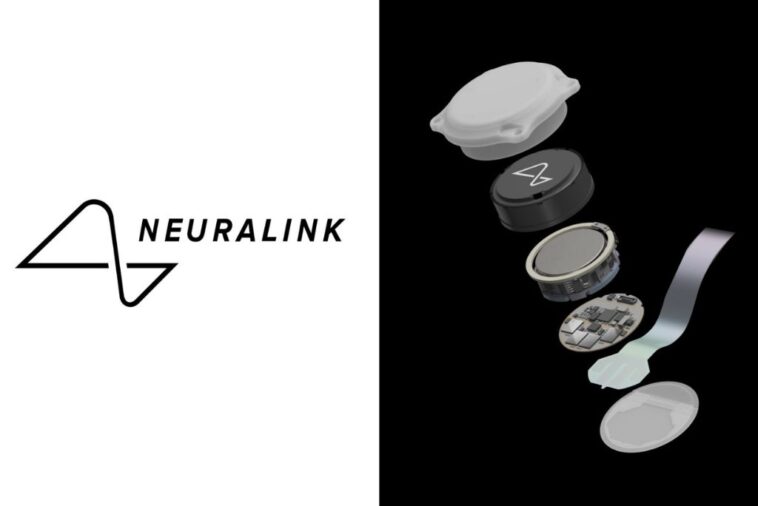

The news about a brain chip that promises to restore vision to blind people has gone viral on social media, generating both excitement and doubt.
Behind this information lies a real project developed by Neuralink, the neurotechnology company owned by billionaire Elon Musk, called Blindsight. Although the device has received international attention and some regulatory support, the technology is still under development, and there is not yet definitive clinical evidence proving that it can “cure” blindness.
What is Blindsight?
Blindsight is an experimental device created by Neuralink designed to help people with visual disabilities regain some level of vision through a neural implant placed directly in the brain’s visual cortex.
This chip captures visual signals through cameras or other sensors and translates them into impulses that stimulate specific neurons in the visual cortex, bypassing a damaged or absent optic nerve.
Regulatory progress
In September 2024, the U.S. Food and Drug Administration (FDA) granted Blindsight the designation of a “Breakthrough Device,” a status intended to accelerate the regulatory review of promising technologies aimed at treating serious medical conditions.
This designation, however, does not amount to final approval for general medical use—it simply allows Neuralink to move more quickly through clinical trials and regulatory collaborations to demonstrate real-world safety and effectiveness.
Impresionante lo de Elon Musk.
Van a probar este año en humanos un chip que permite a gente ciega (incluso sin ojos) poder ver de nuevo.
Una cámara manda la info directamente a la corteza visual del cerebro.
La estronduosa superioridad del capitalismo. pic.twitter.com/1btOtJg7g5
— El Trumpista (@ElTrumpista) January 28, 2026
According to statements by Musk, if a person’s visual cortex is intact, Blindsight could allow them to see even if they have lost both eyes or were blind from birth. However, in its initial phase, the visual perception would be low-resolution, compared to the graphics of early video games—something Musk himself has described as “Atari-like graphics.”
Musk has also suggested that with future technological improvements, the system could even allow users to perceive light spectra that the normal human eye cannot see—such as infrared or ultraviolet—although this remains a much more distant goal.
Scientific reports and internal presentations from Neuralink have shown that Blindsight has stimulated vision-related areas of the brain in experiments with monkeys, enabling them to respond to visual stimuli without using their physical eyes.
Regarding human trials, the company states that it is awaiting approval to implant Blindsight for the first time in a human patient in 2026, after gaining experience with its first chip, called Telepathy, which has already been implanted in several people with paralysis to allow them to control devices using their minds.
Currently, at least 21 people have participated in clinical trials involving Neuralink’s brain implants, although these trials have primarily focused on other functions, such as communication and device control.
Expert criticism and caution
Several scientists and medical professionals have called for caution and responsibility when discussing these advances, emphasizing that there is still a lack of solid scientific evidence proving that Blindsight can restore useful vision comparable to natural sight.
Technical studies on visual neuroprosthetics indicate that the ability to perceive shapes and objects through a cortical implant depends on many complex factors—and that the experience of “seeing” could be very different from natural human vision.
This type of technology goes beyond a medical breakthrough: it raises questions about access, long-term safety, impact on human identity, and the regulation of brain implants. Some experts have compared these devices to neuroadaptive technologies that may never fully replicate natural human vision, although they could still offer significant functional benefits.
Additionally, there have been cases of previous technologies—such as certain retinal implants—that lost commercial support, leaving patients without options to maintain or remove their devices. This highlights the need for long-term technological and medical support structures.
The Blindsight project developed by Neuralink is real and has gained regulatory momentum after being classified as a breakthrough device by the FDA, opening the door to future clinical trials that could change how blindness and other visual impairments are treated.
However, there is still no conclusive scientific evidence showing that this chip can restore fully functional vision comparable to natural sight. For now, what exists are promising laboratory advances, signals observed in animal testing, and early plans for human trials.
The true revolution lies not in a viral headline, but in evidence, responsibility, and the real impact on people who may one day regain part of what they have lost.
Stay informed with the most important news and reliable analysis!
Subscribe to our newsletter: https://gatewayhispanic.com/sl-newsletter
About The Author

Mariana Ramirez Medina
Mariana Ramírez es una joven nacionalista mexicana comprometida con la verdad y la excelencia en el periodismo. Con una sólida vocación por informar, su propósito es acercar a los lectores a la realidad de los acontecimientos con claridad, honestidad y sin manipulaciones.
Se distingue por su transparencia y su dedicación a la búsqueda de hechos verificables, convencida de que el periodismo debe ser un pilar de confianza entre la sociedad y la verdad.
También aspira a destacar como una periodista reconocida por la profundidad de sus investigaciones, su compromiso con la integridad y el respeto con el que aborda cada historia.
Impulsada por la misión de fomentar una sociedad más informada, consciente y crítica, Mariana trabaja para que la verdad sea el eje central de su labor periodística, contribuyendo con responsabilidad y rigor al debate público.