
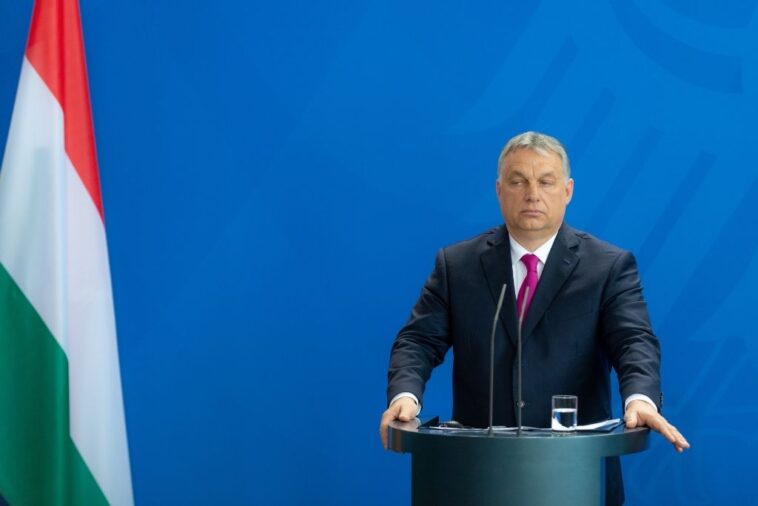

Hungarian Prime Minister Viktor Orbán has recently consolidated a political discourse that articulates a vision of a new world order based on sovereign nations, rejects the old liberal consensus, and seeks to redesign Hungary’s international alliances according to what he defines as national interest and economic stability.
According to official statements made during an international press conference, Orbán declared that “the rules of the old liberal world order no longer apply, and the era of nations has begun,” insisting that Budapest must maintain a sovereign foreign policy without yielding to supranational pressures.
Hungary’s strategy, strongly marked by the defense of national sovereignty, has translated into concrete decisions such as the initiative to withdraw from the International Criminal Court (ICC), an operational move already approved by the Hungarian Parliament in 2025, making Hungary the first EU state to undertake such a step.
Budapest has described this move as a reaffirmation of its right to decide on its international criminal jurisdiction, although critics warn that it undermines global judicial cooperation and transparency in serious crimes such as genocide and war crimes.
SEE MORE:
In parallel, Hungary has intensified diplomatic efforts with partners who share its sovereigntist vision, including cooperation with Austria and other Central European governments that advocate respecting national cultures and identities instead of adhering to a bureaucratic uniformity imposed by Brussels.
These initiatives take place in a global context where several political leaders question the relevance of the old world order structures, especially following the rise to power of U.S. President Donald Trump, whom Orbán has described as a crucial ally in promoting conservative values and national priorities over globalist agendas.
Hungary’s foreign policy has also included diversification of energy and strategic ties, such as negotiating new gas supply alliances with U.S. companies and opening diplomatic channels with countries traditionally peripheral or non-aligned with the EU.
This occurs while Budapest maintains complex relations with actors such as Russia and China, highlighting that inherited energy dependence weighs on its economy and conditions its external decision-making.
Domestically, Orbán’s discourse on national sovereignty is not limited to the international sphere. The Hungarian administration has promoted laws and offices dedicated to “protecting” the political scene from foreign influence and has adopted a belligerent tone toward independent media and civil organizations receiving international funding, sparking protests and warnings from civil rights bodies.
This illustrates a government strategy that intertwines sovereigntist foreign policy with a narrative of internal security against alleged globalist threats.
As Orbán prepares the political ground for the 2026 national elections, his measures have generated both support and resistance.
His supporters see these decisions as strengthening Hungarian independence and a firm stance against structures perceived as dominant and interventionist.
His critics, however, warn that this approach could isolate the country within the EU and undermine democratic foundations, especially if it translates into persistent restrictions on press freedom and civil society.
SEE MORE:
The political and social consequences of this shift are profound: Hungary positions itself as an actor challenging the European status quo, redefining alliances while straining the multilateral cooperation mechanisms that have characterized recent decades.
The impact on the European Union’s stability, policy cohesion in the face of global crises, and the protection of democratic values remains the subject of heated debate.
The left, obsessed with an abstract and dogmatic globalism, repeatedly fails because it ignores the reality of facts, the sovereignty of peoples, and the responsibility of governments to their citizens, favoring technocratic elites who do not respond to the real needs of nations.
In a changing world, the left remains anchored in destructive utopias that weaken order, law, family, and tradition.
READ MORE:
Stay informed with the most important news and reliable analysis!
Subscribe to our newsletter: https://gatewayhispanic.com/sl-newsletter
About The Author

Rafa Gómez-Santos Martín
Rafael Santos is a Portuguese writer and political analyst dedicated to educating Hispanics on traditional values and the importance of protecting children and families. With years of experience in media and public discourse, he has been a strong advocate for cultural preservation and moral principles in an ever-changing world. Passionate about culture, sports, and current affairs, Rafael brings insightful analysis to political and social debates, striving to empower the Hispanic community with knowledge and a deeper understanding of the issues that shape their lives.