

© Daniel Hernandez-Salazar / Shutterstock
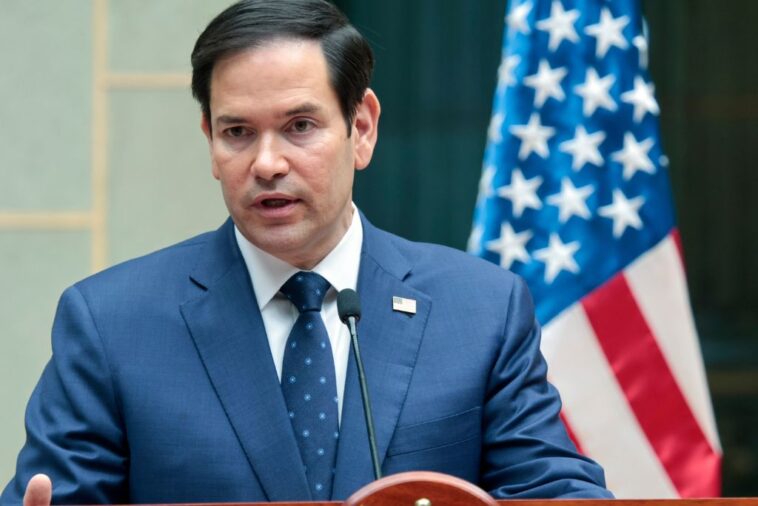
Secretary of State Marco Rubio held a phone call with Mexican Foreign Minister Juan Ramón de la Fuente.
During the conversation, Rubio emphasized the urgent need for stronger cooperation to dismantle the violent networks of narcoterrorists operating in Mexico, responsible for the massive flow of fentanyl and arms that threaten U.S. national and regional security.
Atendiendo las instrucciones de la presidenta Claudia Sheinbaum (@Claudiashein), hoy el canciller Juan Ramón de la Fuente sostuvo una llamada con el secretario de Estado (@StateDept), Marco Rubio (@SecRubio), para dar seguimiento al Programa de Cooperación de Seguridad Fronteriza…
— Relaciones Exteriores (@SRE_mx) January 12, 2026
The Department of State confirmed that Rubio reaffirmed Washington’s unwavering commitment to eradicating narcoterrorism, insisting on «tangible results» that protect the Western Hemisphere from this plague.
This direct pressure arises in a context where fentanyl produced from Chinese chemical precursors and trafficked by cartels such as Sinaloa and Jalisco Nueva Generación has caused more than 100,000 annual overdose deaths in the United States, a humanitarian disaster largely attributable to the laxity of left-wing policies in Mexico.
Under the government of President Claudia Sheinbaum, heir to the failed «hugs not bullets» approach of her predecessor Andrés Manuel López Obrador, Mexico has seen an increase in cartel violence, with more than 200,000 homicides since 2018 and growing territorial control by these criminal groups.
Rubio, known for his firm stance against leftist regimes in Hispanic America, made it clear that Mexico plays a key role, but that inaction will not be tolerated, marking a contrast with the soft diplomacy of previous Democratic administrations.
Mexico’s Secretariat of Foreign Affairs (SRE) responded by highlighting «principles of sovereignty,» «shared responsibility,» and «collaboration» without subordination, following Sheinbaum’s instructions.
However, this evasive rhetoric ignores the reality: 90% of the arms used by cartels come from the United States, but the northward fentanyl trafficking is a problem originating in Mexican laboratories, exacerbated by corruption and permissive policies.
Security experts point out that without drastic measures, such as terrorist designations for cartels and joint operations, the crisis will persist, affecting economies and societies on both sides of the border.
We had previously reported it in Gateway Hispanic about the intensification of the Trump administration’s pressure against Mexican cartels over fentanyl in November 2025, where tariffs were imposed and additional restrictions were threatened due to failures in border control.
This call from Rubio represents a logical escalation in that conservative strategy, prioritizing security over ideological excuses.
About The Author

Joana Campos
Joana Campos es abogada y editora con más de 10 años de experiencia en la gestión de proyectos de desarrollo internacional, enfocada en la sostenibilidad y el impacto social positivo. Anteriormente, trabajó como abogada corporativa. Egresada de la Universidad de Guadalajara.