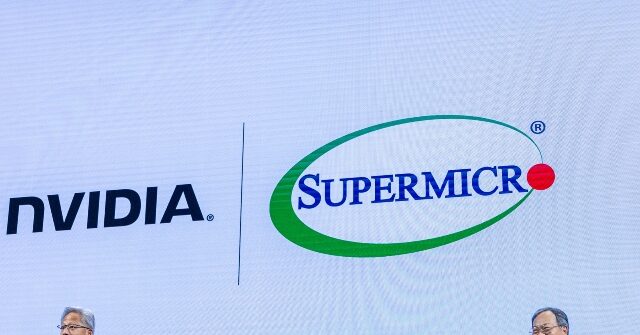
Federal prosecutors have charged three individuals connected to server manufacturer Super Micro Computer, including the tech giant’s co-founder, with illegally diverting billions of dollars worth of Nvidia-powered AI servers to China in violation of U.S. export controls.
CNBC reports that the U.S. Attorney’s Office for the Southern District of New York unsealed an indictment on Thursday charging Yih-Shyan “Wally” Liaw, Ruei-Tsan “Steven” Chang, and Ting-Wei “Willy” Sun with violating the Export Control Reform Act. The charges relate to an alleged scheme to smuggle advanced AI technology containing Nvidia chips to China, despite strict export restrictions designed to protect U.S. national security interests.
Liaw, a co-founder of Super Micro Computer and member of its board of directors, serves as senior vice president of business development at the company. He controls approximately $464 million worth of Super Micro shares. Chang works as a sales manager in Taiwan, while Sun served as a contractor for the company. Super Micro confirmed these roles in a statement released after the indictment became public.
Following the announcement of the charges, Super Micro shares dropped more than 27 percent in Friday morning trading. The company stated that while it is not named as a defendant in the case, it has placed the employees on leave and terminated its relationship with the contractor.
According to the indictment, the defendants orchestrated an elaborate scheme involving a Southeast Asian company acting as a middleman. This intermediary allegedly compiled fraudulent paperwork to make it appear the servers would remain in Southeast Asia, while a separate logistics firm repackaged the equipment to conceal its true destination before shipping it to China.
The scheme allegedly involved the use of “dummy” servers placed at the Southeast Asian company’s storage facilities to deceive Super Micro’s compliance team, while the actual servers containing restricted technology had already been forwarded to China. The defendants also allegedly pressured the compliance team to approve shipments and used these dummy servers during a visit from a U.S. export control officer.
Federal prosecutors estimate the operation generated approximately $2.5 billion in sales for Super Micro since 2024. Between late April 2025 and mid-May 2025 alone, $510 million worth of servers were sold to the Southeast Asian company and subsequently shipped to China. The indictment states that Super Micro had no license from the U.S. Commerce Department to export servers featuring Nvidia graphics processing units to China.
The indictment reveals that Chang allegedly worked to prevent auditors from inspecting areas of data centers where the Southeast Asian company was supposedly storing servers that had actually been shipped to China. He also reportedly arranged for what he called a “friendly” auditor to conduct compliance reviews. This detail has drawn attention given that Super Micro announced in 2024 that its auditor, Ernst & Young, had resigned, with BDO subsequently hired as a replacement.
Text messages included in the indictment show Liaw allegedly pushing for the Southeast Asian company to order more advanced chips. In late 2024, he reportedly pressed for adoption of the B200 chip, which employs Nvidia’s newer Blackwell architecture. In one message, Liaw asked an executive at the Southeast Asian company about quantity projections for the coming months, stating this was the only way to secure B200 allocation from Nvidia.
In 2025, Liaw allegedly sent the executive a link to a White House statement about new export rules for AI products, suggesting the pace of shipments would need to accelerate before the regulations took effect. When a broker sent Liaw a link to news about Chinese nationals arrested for smuggling AI chips into China, he allegedly responded with sobbing emojis.
The case emerges amid ongoing concerns about how advanced AI chips have reached China without authorization, particularly as American AI companies like Anthropic and OpenAI face competition from Chinese rivals such as DeepSeek. Nvidia’s graphics processing units have been in high demand globally for training generative AI models.
The export control landscape has shifted under the Trump administration. While President Trump initially sought to prevent China from obtaining advanced processors, he announced in December that he had told Chinese President Xi Jinping the U.S. would permit Nvidia to ship H200 GPUs to China under conditions protecting national security. Earlier this week, Nvidia CEO Jensen Huang confirmed the company is restarting manufacturing to fulfill H200 orders from China. Last summer, Nvidia received licenses to export the H20 chip to China, with Huang agreeing to provide the U.S. government with information on 15 percent of its China sales.
Jay Clayton, the Trump-appointed U.S. Attorney for the Southern District of New York and former SEC chairman, emphasized the seriousness of the charges. “Crimes involving sensitive technology must be met with swift action, otherwise the law is meaningless,” Clayton said in a statement.
Liaw and Sun were arrested on Thursday, while Chang remains a fugitive, according to the attorney’s office. Super Micro stated it maintains a robust compliance program and is committed to full adherence to all applicable U.S. export and re-export control laws and regulations, calling the alleged conduct a contravention of company policies and compliance controls.
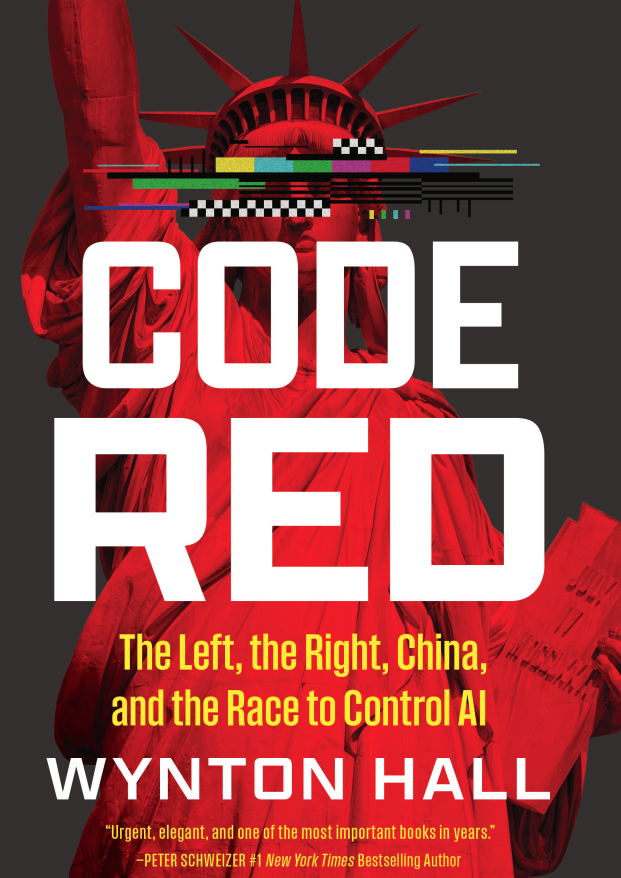
Breitbart News social media director and author Wynton Hall warns in his new book, Code Red: The Left, the Right, China, and the Race to Control AI, that China is just as eager to take full control of AI as Silicon Valley leftists are. America’s major challenge, according to Hall, is to beat China without becoming China.
Senator Marsha Blackburn (R-TN), who was named one of TIME’s 100 Most Influential People in AI, praised Code Red as a “must-read.” She added: “Few understand our conservative fight against Big Tech as Hall does,” making him “uniquely qualified to examine how we can best utilize AI’s enormous potential, while ensuring it does not exploit kids, creators, and conservatives.” Award-winning investigative journalist and Public founder Michael Shellenberger calls Code Red “illuminating,” ”alarming,” and describes the book as “an essential conversation-starter for those hoping to subvert Big Tech’s autocratic plans before it’s too late.”
Read more at CNBC here.
Lucas Nolan is a reporter for Breitbart News covering issues of free speech and online censorship.