
The audios that have shaken Colombia in recent hours are no minor episode. Far from it, they are not just another anecdote in the long list of controversies surrounding President Gustavo Petro.
What is at stake, according to security and justice experts, is the possibility that members close to the government may have discussed or hinted at alleged efforts to favor drug traffickers wanted by U.S. authorities.
This issue alone would be enough to spark a political storm, but it takes on another dimension as it surfaces just before diplomatic meetings and at a time of particular sensitivity for Bogotá and Washington.
The audios were released by sources that so far have kept the exact origin of the material confidential.
They feature several voices talking about contacts and potential maneuvers involving drug lords facing ongoing proceedings in the United States. Although President Petro is not heard in the recordings, opposition sectors interpret the content as a sign that someone within the government could be willing to provide some form of unofficial protection or negotiation.
The president’s response was swift. Petro called the recordings “smear tactics” and asserted that he has never had contact with drug traffickers nor ordered any irregular intervention in favor of criminal organizations.
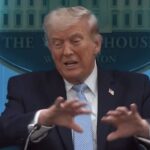
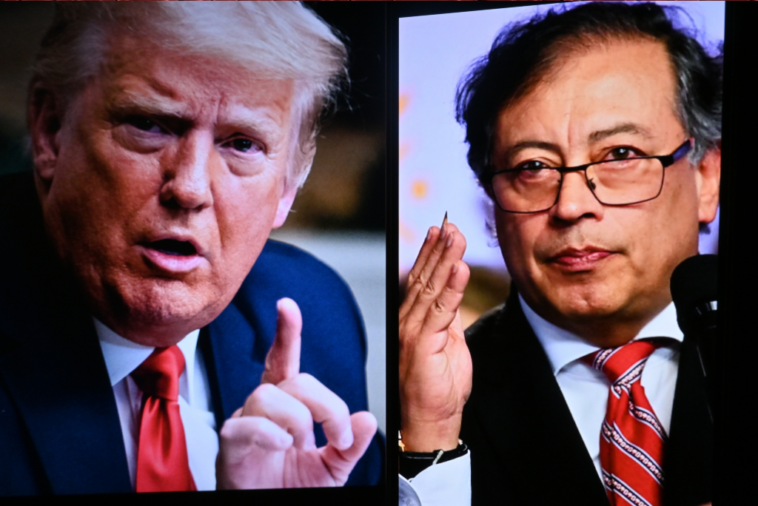
He did admit, however, that he was alerted to the existence of the audios before meeting with President Donald Trump, which heightened suspicions in diplomatic circles and raised concerns about whether the Casa de Nariño fears that these leaks could damage its relationship with Washington.
In the U.S. capital, various analysts emphasize that Washington maintains a strict policy regarding cooperation with governments that send ambiguous signals in the fight against drug trafficking.
History shows, as former DEA agents note, that even the perception of political interference in criminal investigations can erode bilateral trust.
For now, there is no official statement from the U.S. Department of Justice, but sources consulted by Hispanic-American media warn that any hint of protection for drug lords automatically triggers internal evaluation protocols.
Within Colombia, reactions have also been immediate. Conservative legislators have demanded full transparency, complete publication of the audios, and an investigation with independent oversight.
Other sectors call for caution until the full context of the recordings is known, warning that the country has already experienced manipulated leaks.
What no one disputes is that these revelations arrive at a critical moment, when violence linked to criminal networks is on the rise and rural communities demand a stronger state presence.
If anything, this episode shows that the fight against drug trafficking does not tolerate ambiguity or ideological speeches.
Every time leftist sectors take power, they try to impose narratives that clash with the harsh reality of organized crime.
Those who believe problems can be solved with speeches, concessions, or improvised policies are mistaken. Experience shows that when governments stray from order, the law, and institutional responsibility, criminal groups advance, and society suffers.
Colombia faces a crossroads, and these audios — authentic or not in their political interpretation — are a reminder of what is at stake: public trust, international cooperation, and the country’s stability.
What these audios make clear is that leftist governments, when in power, tend to prioritize ideology and political narratives over reality and the law. Ambiguity in the face of organized crime not only erodes international trust but also jeopardizes the safety and stability of ordinary citizens. Colombia needs transparency, firmness, and respect for the law, not ideological concessions that favor criminals. The left fails time and again because it ignores facts, gets carried away by rhetoric, and sacrifices responsibility and order in the name of social experiments that citizens always end up paying for.
About The Author

Rafa Gómez-Santos Martín
Rafael Santos is a Portuguese writer and political analyst dedicated to educating Hispanics on traditional values and the importance of protecting children and families. With years of experience in media and public discourse, he has been a strong advocate for cultural preservation and moral principles in an ever-changing world. Passionate about culture, sports, and current affairs, Rafael brings insightful analysis to political and social debates, striving to empower the Hispanic community with knowledge and a deeper understanding of the issues that shape their lives.