

NEWYou can now listen to Fox News articles!
The New York Times editorial board walked back some of its previous stances on marijuana legalization and the drug’s potential for addiction in a Monday editorial titled “It’s Time for America to Admit That It Has a Marijuana Problem.”
The editorial board noted that it has “long supported marijuana legalization” and even published a six-part series comparing the federal ban on marijuana to the prohibition of alcohol, advocating for the ban to be repealed.
“Much of what we wrote then holds up — but not all of it does,” the Times wrote of its 2014 series.
‘HIGH JANUARY’ FUELS CANNABIS BOOM AS EXPERTS FLAG SOME SERIOUS HEALTH DANGERS
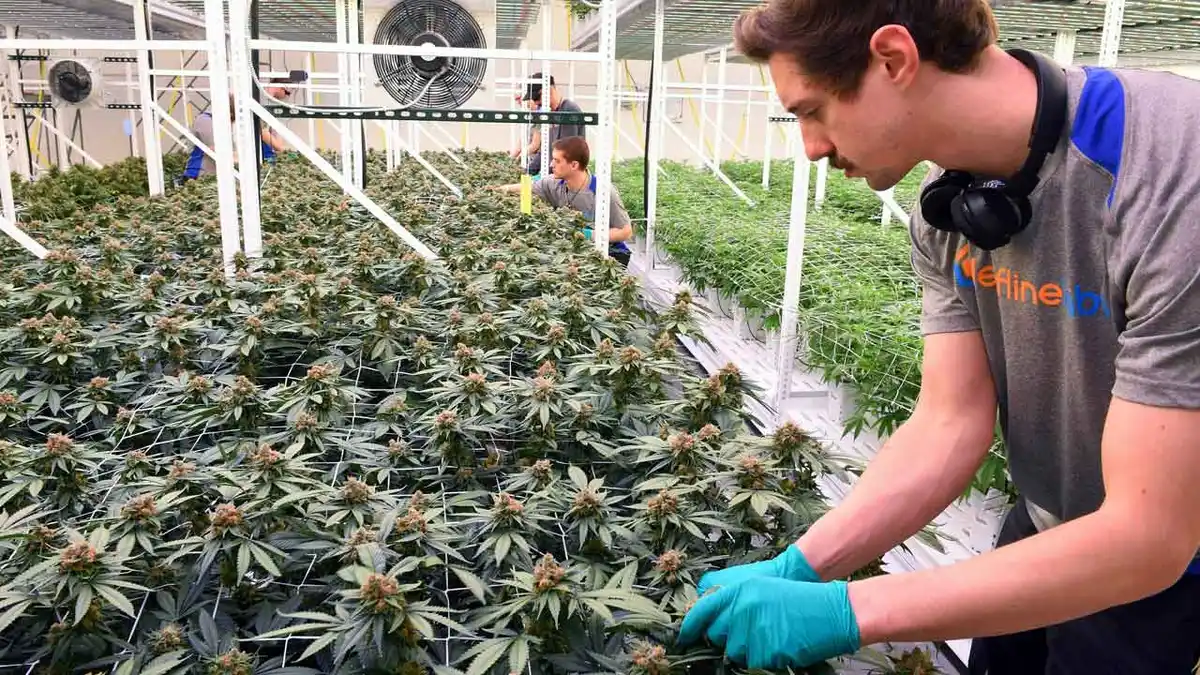
Cultivator Hunter Rogness prunes fan leaves from marijuana plants in the Leafline Labs grow center in Cottage Grove, Minn., Feb. 21, 2019. (Scott Takushi/Pioneer Press via AP, File)
“At the time, supporters of legalization predicted that it would bring few downsides. In our editorials, we described marijuana addiction and dependence as ‘relatively minor problems.’ Many advocates went further and claimed that marijuana was a harmless drug that might even bring net health benefits. They also said that legalization might not lead to greater use.”
Despite these prior claims, the Times argued that it is “now clear that many of these predictions were wrong,” and that the legalization of the drug “has led to much more use.”
The outlet cited data from the National Survey on Drug Use and Health, which suggested that approximately 18 million Americans have used marijuana almost daily, or about five times a week, in recent years, up from about 6 million in 2012 and less than 1 million in 1992.
This dramatic uptick in marijuana consumption in the United States has “caused a rise in addiction and other problems,” according to the Times.
MARIJUANA CONSUMPTION SET TO EXPAND INTO YOGA STUDIOS, THEATERS, OTHER VENUES IN BLUE STATE
“Each year, nearly 2.8 million people in the United States suffer from cannabinoid hyperemesis syndrome, which causes severe vomiting and stomach pain. More people have also ended up in hospitals with marijuana-linked paranoia and chronic psychotic disorders. Bystanders have also been hurt, including by people driving under the influence of pot,” the outlet pointed out.
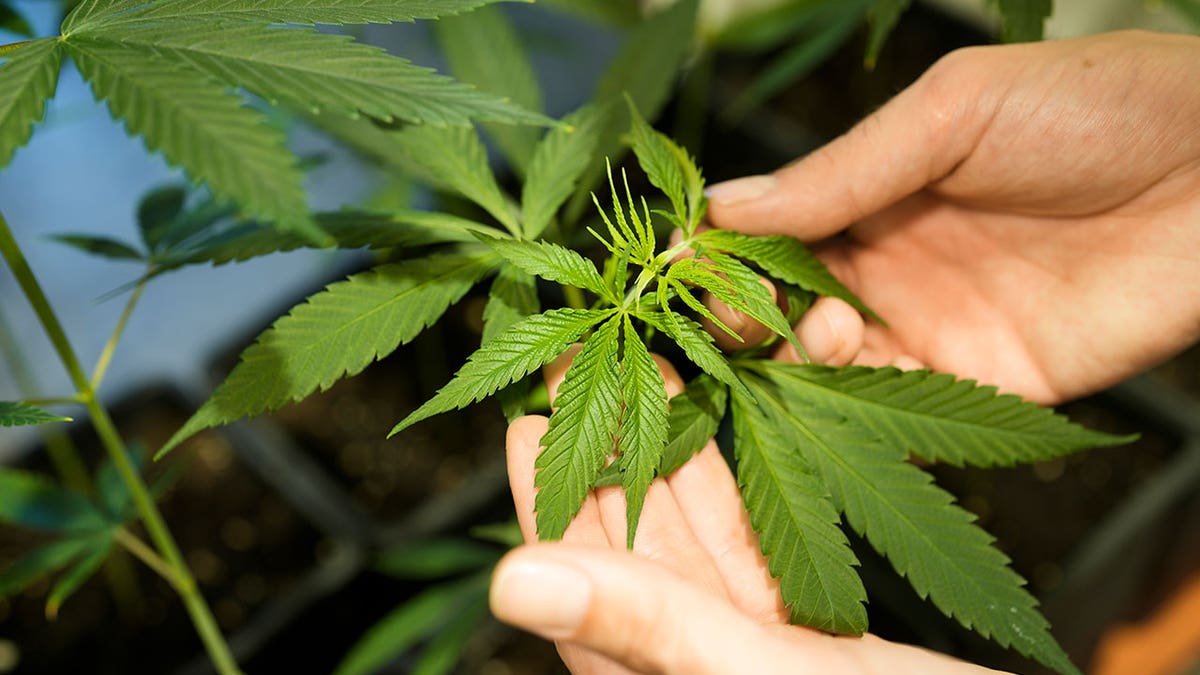
An employee shows a growing cannabis or hemp plant in a box at the Cannabis Museum in Berlin, Germany, Tuesday, Aug. 15, 2023. (AP Photo/Markus Schreiber, File)
The Times board argued that “America should not go back to prohibition to fix these problems,” because the people who “suffered the legal and financial consequences were disproportionately Black, Latino and poor,” and a society that permits adults to use alcohol and tobacco “cannot sensibly arrest people for marijuana use.”
“We oppose the nascent efforts to re-criminalize the drug, such as a potential ballot initiative in Massachusetts this year that would ban recreational sales and home growing,” the editorial board maintained. “Yet there is a lot of space between heavy-handed criminal prohibition and hands-off commercial legalization. Much as the United States previously went too far in banning pot, it has recently gone too far in accepting and even promoting its use.”
The Times added lawmakers should do more to regulate its usage.
CLICK HERE FOR MORE COVERAGE OF MEDIA AND CULTURE
As far as how to address the problem, the editorial board argued that “a better approach” to the problem “would acknowledge that many people end up worse off when they start to use marijuana more frequently.”
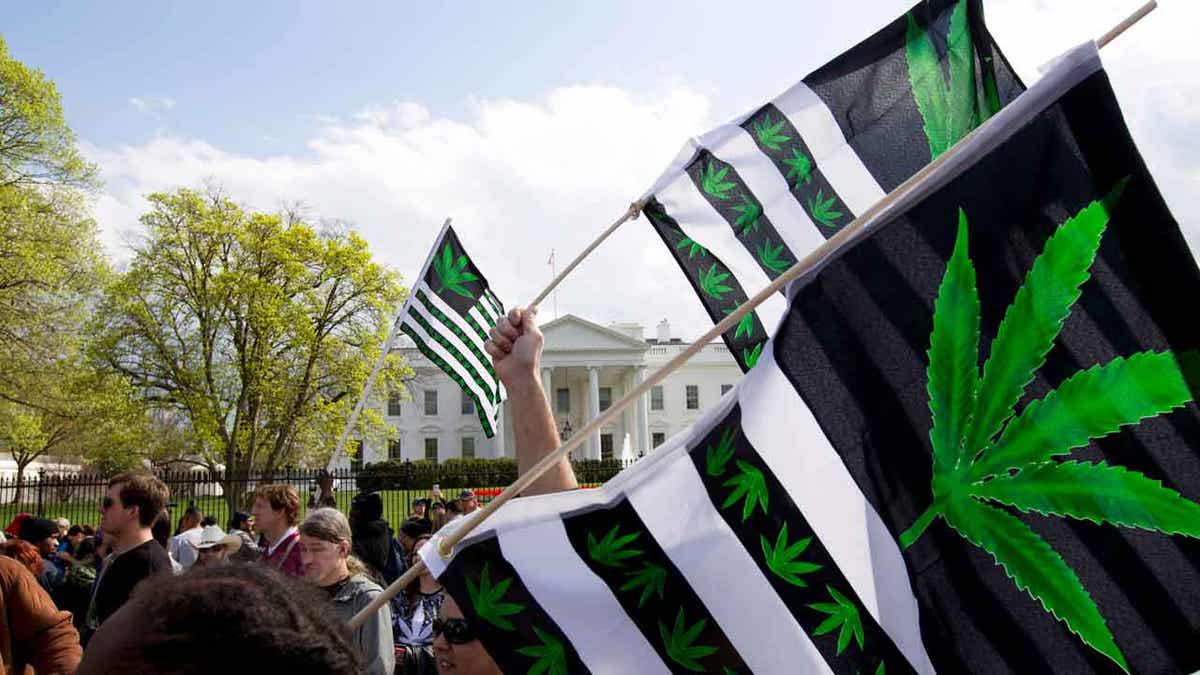
A demonstrator waves a flag with marijuana leaves during a protest calling for the legalization of marijuana, outside the White House on April 2, 2016. (AP Photo/Jose Luis Magana)
CLICK HERE TO DOWNLOAD THE FOX NEWS APP
The editorial board cited an “unfortunate truth” about the legalization of marijuana and argued it’s time to reassess the issue.
“The unfortunate truth is that the loosening of marijuana policies — especially the decision to legalize pot without adequately regulating it — has led to worse outcomes than many Americans expected. It is time to acknowledge reality and change course,” the Times concluded.