NEWYou can now listen to Fox News articles!
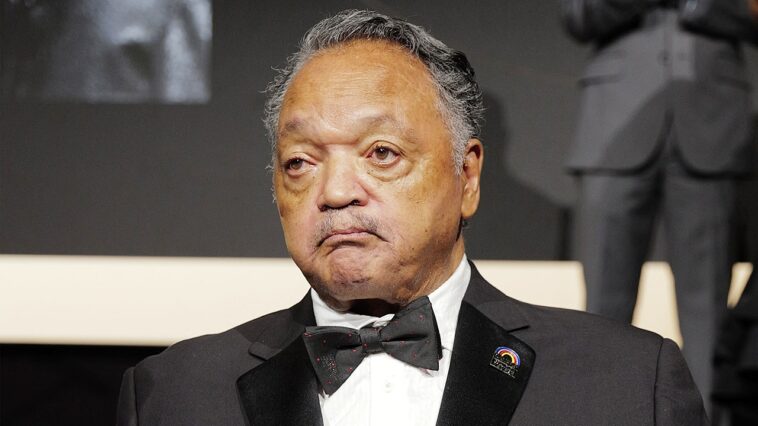
I once ran into Rev. Jesse Jackson. Literally.
It was either 2003 or 2004 at the NAACP Fort Lauderdale Freedom Fund Dinner. I was a high school student and a member of the NAACP Youth Council, running late — moving too fast across the parking lot, out of breath and worried about missing the start.
Then I collided with him.
I looked up, and there he was: the Rev. Jesse Louis Jackson Sr.
REV JESSE JACKSON, CIVIL RIGHTS LEADER AND RAINBOW PUSH FOUNDER, DIES AT 84
When you’re a teenager and you unexpectedly bump into someone whose voice has shaped American public life for decades, it recalibrates your sense of scale.
For many Americans, Jackson was a political figure — debated, dissected, sometimes polarizing. But in foreign capitals and in parts of America often overlooked or mischaracterized by the mainstream media, he occupied a different role. He was a bridge.
Abroad, when American hostages were detained and formal diplomacy stalled, Jackson stepped into rooms the U.S. State Department couldn’t enter. He helped secure the release of Americans in Syria, Cuba and elsewhere when official channels had reached their limits. Governments that distrusted Washington still engaged him. He wasn’t viewed merely as a partisan emissary but as a moral interlocutor.
At home, through Operation Breadbasket and later the Rainbow PUSH Coalition, Jackson built campaigns that used shareholder pressure and economic leverage to move corporate America. With disciplined strategy and an unflinching voice, he pushed Fortune 500 companies to hire Black executives, expand minority contracting and invest in some of the nation’s most diverse communities — opening economic doors that had long been closed. He understood that protest without leverage rarely changes systems.
When family farmers faced foreclosure in the 1980s, Jackson showed up in rural America, forging alliances that cut across race, ethnicity and region. In his view, economic justice wasn’t confined to one community — it was a shared national interest.
His presidential campaigns in 1984 and 1988 reshaped the Democratic Party’s coalition and the nation’s political system. He energized young voters, working-class voters and Black voters who had long felt peripheral to power.
FROM SELMA TO CHICAGO, MLK’S LEGACY IS BEING BETRAYED BY GRIEVANCE POLITICS
At the 1988 Democratic National Convention, Jackson framed the broader vision plainly, saying, “Our flag is red, white and blue, but our nation is a rainbow — red, yellow, brown, Black and White — and we are all precious in God’s sight.”
For many Americans, Jackson was a political figure — debated, dissected, sometimes polarizing. But in foreign capitals and in parts of America often overlooked or mischaracterized by the mainstream media, he occupied a different role. He was a bridge.
That wasn’t just rhetoric. He laid out a plan steeped in electoral math. Jackson articulated what he called a Rainbow Coalition, a multiracial, multi-class governing majority. When Black voters turned out in large numbers, Hispanics gained influence. When Black, Hispanic and progressive White voters showed up together, women gained ground. And when women gained ground, children and workers benefited, Jackson said in that same 1988 address.
That coalition model would later become a winning strategy for Bill Clinton’s victories in the 1990s, Barack Obama’s wins in 2008 and 2012, and Joe Biden’s coalition in 2020.
Often remembered for the tears he shed on that cold November night in Grant Park as Barack Obama became the nation’s first Black president-elect, few know what was running through Jesse Jackson’s mind. But it is not hard to imagine that it included a memory of April 4, 1968 — the balcony of the Lorraine Motel, where Martin Luther King Jr. was assassinated.
CLICK HERE FOR MORE FOX NEWS OPINION
Without Jackson’s courage, his electoral roadmap and his push to open American politics to those long excluded, there may not have been a President Obama or the tangible fulfillment of King’s unfinished dream. Jackson spent much of his life trying to bend the country — and in many ways the world — toward what King called the Beloved Community, a democracy expansive enough to include everyone, even when inclusion was unpopular.
That is why he was among the first national leaders to confer dignity on those confronting HIV/AIDS at a time when stigma silenced too many. It is why he insisted LGBTQ Americans were part of the democratic project, not outside of it, as that project now approaches its 250th year.
And whether it was the striking American Federation of State, County and Municipal Employees sanitation workers in Memphis in 1968 or educators, healthcare workers and public servants on modern picket lines, Jackson stood with them — not only in speeches but in the places where dignity and livelihood were on the line.
Some will debate his tactics. Some will critique his politics. But none can deny his reach.
As the son of immigrants, I’ve long believed America works best when it expands the circle of belonging rather than shrinking it. Out of many, one. Jackson lived that tension — imperfectly, loudly but persistently.
CLICK HERE TO DOWNLOAD THE FOX NEWS APP
That afternoon in Fort Lauderdale, I was a high school kid trying not to be late. He was composed, steady, unhurried. I thought I was rushing into history. In reality, I had just run into a man who had already helped shape it — in neighborhoods, in rural towns and in diplomatic spaces most Americans never see.
And whether you agreed with him or not, Jesse Jackson spent his life insisting that America could be larger than its divisions — at home and abroad. And for that, we thank him by simply saying, “Keep Hope Alive.”
Richard Fowler is a contributor to FOX News Media and an adjunct professor of journalism at Georgetown University. Since 2016, he has provided political and cultural analysis across Fox’s daytime and primetime programming as well the network’s Sunday morning public affairs line-up. This includes Fox News Sunday with Shannon Bream and Media Buzz with Howard Kurtz. He also appears as a guest co-host on The Five (weekdays, 5-6 PM ET).