I was living in Moscow when John F. Kennedy Jr. called for the first time.
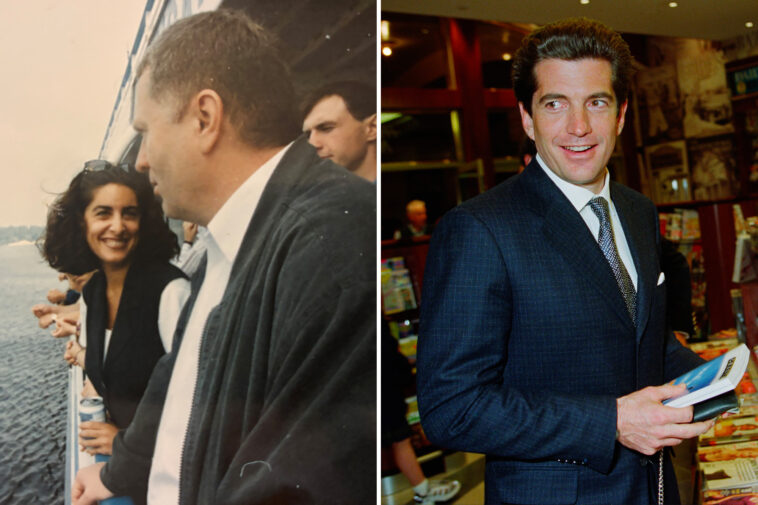
It was the mid 1990s. I had just written a 15,000-word piece for Playboy on Vladimir Zhirinovsky, who was running for president of Russia. He was famously difficult to interview. So I jumped on a boat going down the Volga River and snagged the sitdown.
This was long before #MeToo. At first, Zhirinovsky said he would only agree if I took off my shirt and interviewed him topless.

Then he said he wanted to watch me and my translator have sex with his bodyguards — young fascist thugs in T-shirts who sat at his feet.
I could have been scared, or yelled, or jumped off the boat. Instead I turned it around: How could he talk like that, and wasn’t his seeking control the very essence of fascism?
I got it all on tape. The interview was even mentioned in some of Zhirinovsky’s obits.
My Playboy editor, Bruce Kluger, was then working for the famed Kennedy scion at his upstart magazine George and kindly recommended me. And that’s how John came to call.
His messages, much to my roommate’s delight in Moscow and my mom’s surprise in Toronto, were always, “Please tell her John called.”

I flew in to NYC to meet him, and he offered me a job on the spot. He wanted me to move to Washington, DC, and to write a “Sex in the City” style column.
I may be the only journalist to have turned him down. Ever.
He was very charming and persuasive but I was way too idealistic and only wanted to write a Hunter S. Thompson-style investigative column.
John and I stayed in touch. We talked about many things, including an interview I had done with Marina Oswald, the widow of the assassin who killed John’s father.

It was the only time I saw John withdraw into radio silence. He simply did not want to know what that woman had to say. It made me think he had his own ideas about who killed his dad, and for whatever reason, he was going to carry those thoughts with him to the grave.
I had also been to Minsk in Belarus, after it had opened up to the West. I met many people there connected to Lee Harvey Oswald, including his former girlfriend. Apparently, an American man had been to see them a few days before me, asking the very same questions. That man turned out to be Norman Mailer, one of my political journalist/novelist heroes at the time. Again, John didn’t want to hear it.
After I turned him down for the columnist job, John gave me a freelance assignment: profile Lamar Alexander, who was then running for the GOP presidential nomination.
I traveled to Nashville and New Hampshire, and met people who are still at the top of the political game. In between John’s travels we’d talk about the developing narrative. But Alexander dropped out of the race early in 1996 and the story never ran.

That same year John married Carolyn Bessette. I never met her, but she showed that style was not about flash. It was subtle, quiet confidence, and it came from within. The vulgar excess of the Insta culture was still decades away.
While some accused John of being a dilettante, he was never a narcissist. He made mistakes (the biggest of which was his poor judgment in flying a plane that terrible night of July 16, 1999) and he owned them. The tabloids covered in excruciating detail how many times it took the NYU Law grad to pass the New York bar exam (three.) They gleefully covered his dating life. Photos of him biking down Manhattan streets were commonplace.
Still, John had the courage and sway to launch a magazine and to participate in civil society. Perhaps George was his runway for a future career in politics.
JFK Jr. was more than what the tabloids made him out to be. He was deeper, but with the same blinding Kennedy charisma and promise. Who knows how this country, and the world, would have turned out today with him still in it.