
NEWYou can now listen to Fox News articles!
Just before my final, 2001 shuttle mission to help build the International Space Station, I asked the NASA chief of human spaceflight when he thought we’d return to the moon. “Oh, probably not until 2010,” he answered. I was floored — how could it possibly take that long to jump from the shuttle and ISS to the moon? After all, we’d landed there six times between 1969 and 1972.
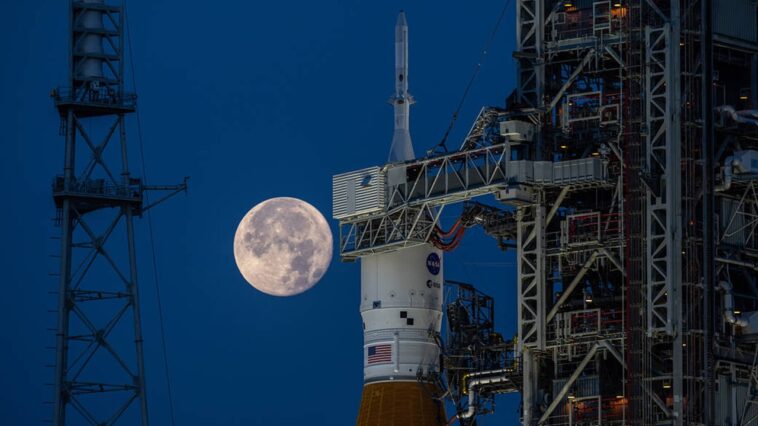
NASA’s efforts to return to the moon, home to valuable space resources, have been repeatedly stalled by shifting space policies and failures in leadership. Finally, 25 years after my question, NASA is ready to make that giant leap. It rolled its giant Space Launch System booster to the launch pad and is poised to send the Artemis II crew of four astronauts on a looping path nearly 5,000 miles beyond our celestial neighbor.
President Donald Trump’s first administration directed NASA to lead an international return to the moon with the Artemis program, but progress has been delayed by halting technical progress and anemic funding. Artemis II will launch the first Orion spacecraft crew on a key, 10-day test flight to wring out their ship’s systems, and test astronauts and mission controllers in the harsh environment 240,000 miles from Earth. A successful flight — the first piloted moon journey since 1972’s Apollo 17, will pave the way for the next Artemis crew to try a harrowing touchdown on the lunar surface.
NASA SAYS AMERICA WILL WIN ‘THE SECOND SPACE RACE’ AGAINST CHINA
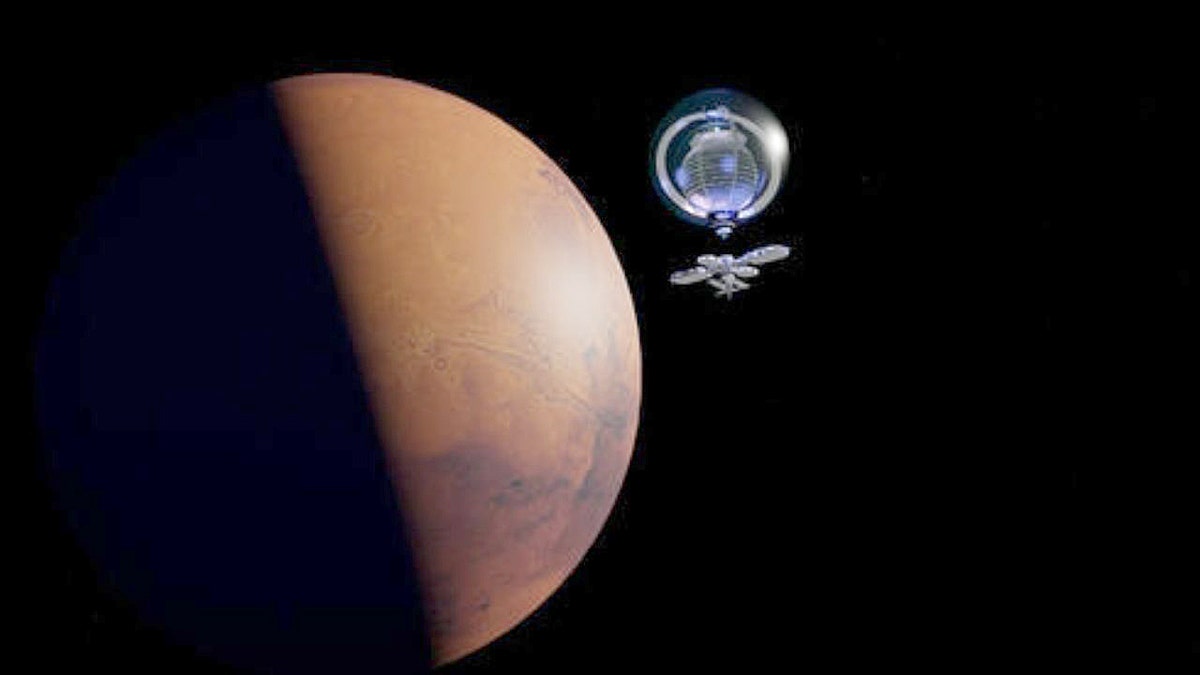
NASA’s Innovative Advanced Concepts program supports this research as part of its push to prepare for long-term human life on the moon under the Artemis mission. (Skyeports)
Though Artemis II won’t try to land, it’s still a risky and challenging flight. Their Orion, “Integrity,” will venture into the extreme environment of cislunar space, a thousand times farther from Earth than the space station’s orbiting astronauts. Orion’s four astronauts will rely on its new life support system for 10 days, and if there’s a problem, an emergency abort to Earth might take as long as three or four days. Crew and mission control must navigate precisely around the moon to safely target their Earth return, where Orion’s heat shield must survive a searing, 5,000˚ F plunge through the atmosphere to splashdown.
BLUE ORIGIN LAUNCHES NEW GLENN ROCKET TO MARS AFTER DELAYS
During Artemis I’s uncrewed reentry in 2022, Orion’s heat shield, instead of charring and eroding smoothly away, shed palm-sized chunks of its resin-like Avcoat ablator material. That worrisome cracking behavior, caused by trapped, superheated gas within the heat shield, has taken three years to analyze and understand. To minimize gas generation and spalling of the heat shield, mission planners have altered Artemis II’s reentry path. NASA’s new administrator, Jared Isaacman, praised the heat shield plan after a review, and cleared Artemis II to fly.
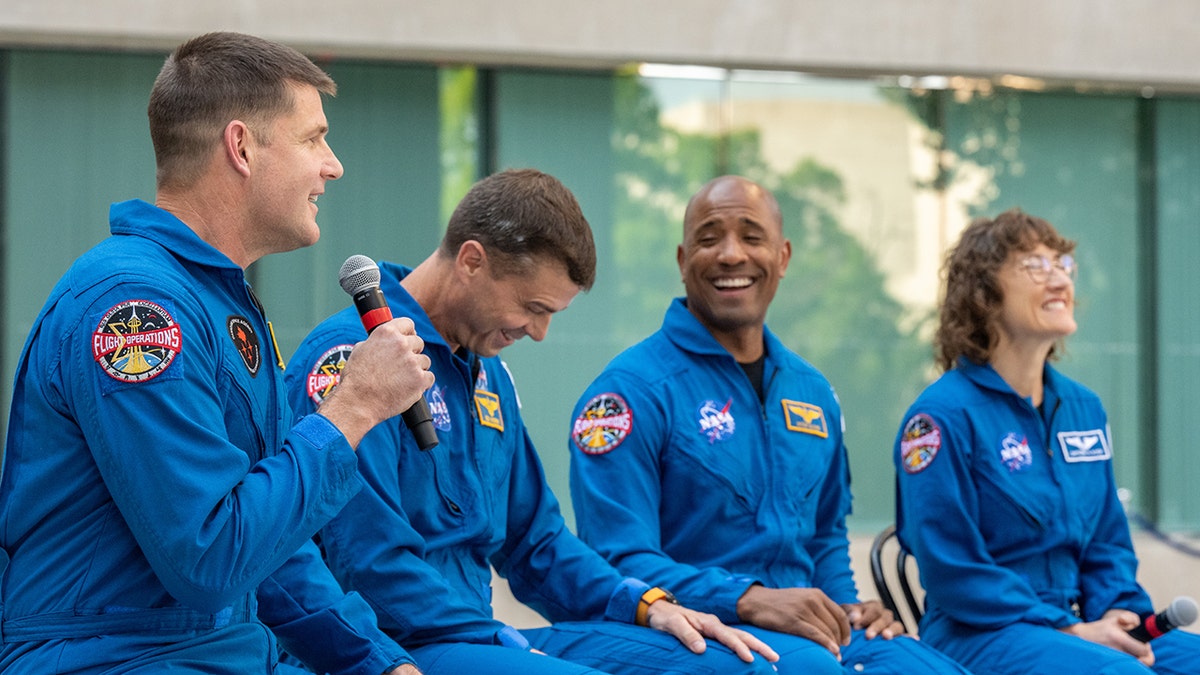
From left to right, Canadian Space Agency astronaut Jeremy Hansen, NASA astronauts Reid Wiseman, Victor Glover and Christina Hammock Koch participate in a media gather, Wednesday, May 17, 2023, outside of the Canadian Embassy in Washington. Wiseman, Glover, Koch and Hansen, who will fly around the moon on NASA’s Artemis II flight test, visited Washington to discuss their upcoming mission with members of Congress and others. (NASA/Keegan Barber)
A solid Artemis II success is vital for NASA; proving technical competence is vital to maintaining congressional and presidential funding for the lunar landing challenge to come. Isaacman and his mission managers must not only ensure the success and safety of Artemis II, but make a critical decision in the weeks ahead: how best to field a lander that can get future Artemis crews down to the moon’s rocky terrain.
SpaceX’s Starship rocket was chosen by NASA to serve as Artemis III’s lander, but Starship has progressed slowly in test launches, suffering several major setbacks. Each Starship lander launch from Earth will require 15 or more other Starship launches to fuel it for its lunar mission, and SpaceX is nowhere near attempting its promised robotic demo mission to the moon.
Isaacman has re-opened the lander design to other concepts, perhaps from Blue Origin or other industry partnerships; one workable approach was outlined before Congress last year by former administrator Mike Griffin. But time is running out for NASA to decide on a lander that will do the job within two or three years — China is forging ahead with its own plans to send its taikonauts to the moon by 2030.
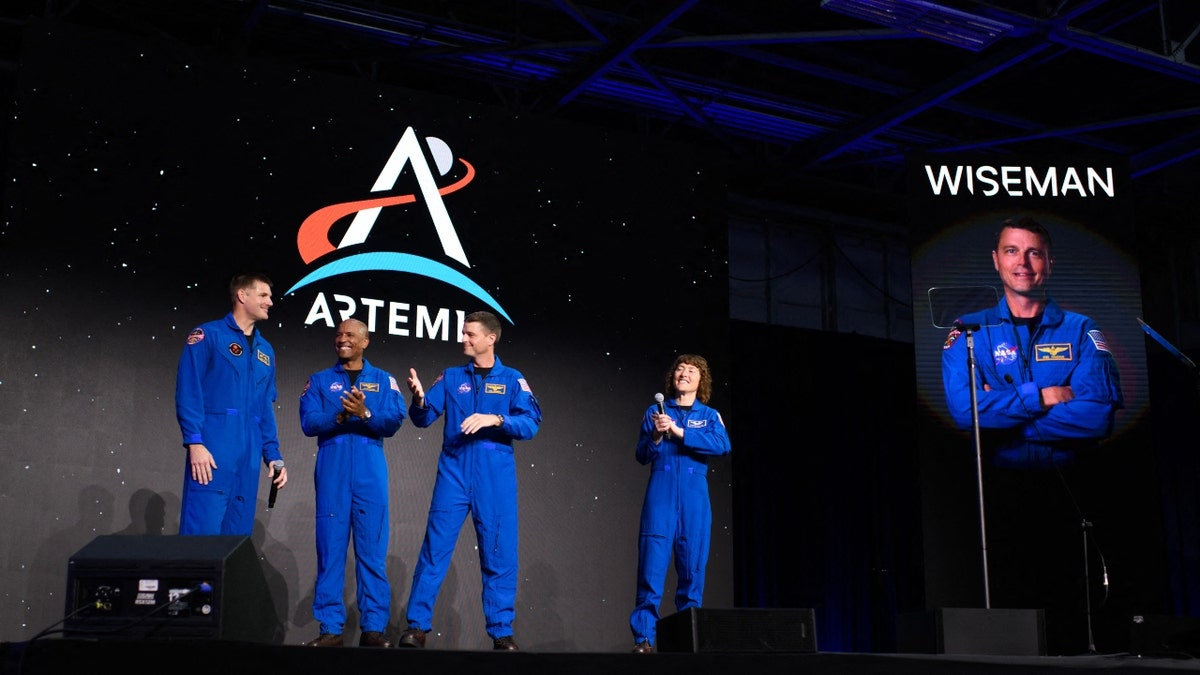
(L-R) Astronauts Jeremy Hansen, Victor Glover, Reid Wiseman and Christina Hammock Koch stand onstage after being selected for the Artemis II mission that will venture around the moon during a news conference held by NASA and CSA at Ellington airport in Houston, Texas, on April 3, 2023. – Traveling aboard NASAs Orion spacecraft during Artemis II, the mission is the first crewed flight test on the agency’s path to establishing a long-term scientific and human presence on the lunar surface. ((Photo by MARK FELIX/AFP via Getty Images))
CLICK HERE FOR MORE FOX NEWS OPINION
China won’t take that long. The CCP is far along in testing its own heavy-lift moon rocket, command ship and lander. Merely by repeating our Apollo 11 moon feat — something NASA can’t do today — China will celebrate a deep space propaganda victory and lay claim to the Moon’s polar ice — hundreds of millions of tons of water and potential rocket fuel.
CLICK HERE TO DOWNLOAD THE FOX NEWS APP
Competing for those resources calls for bold NASA leadership, lately in short supply. To lead its partners back to the moon, that probably means putting SpaceX on the back burner while choosing a more practical lander design in the near term.
Artemis II will take three Americans and a Canadian around the moon for the first time in 54 years. Establishing a permanent human presence on the moon will be even more challenging. Building on Artemis II’s bold leap moonward, NASA must direct a new, workable plan for the Artemis III lander. Only then will NASA prove it has the “Right Stuff” to lead to the moon and beyond.
Tom Jones is a PhD planetary scientist, pilot. author, and veteran NASA astronaut who flew four space shuttle missions. His latest book is “Space Shuttle Stories.” Learn more at www.AstronautTomJones.com