The Trump administration’s arrest of Venezuelan leader Nicolás Maduro could lead to higher defense spending over the long-term as the U.S. takes a more active role in regional security, according to a research note from Bernstein.
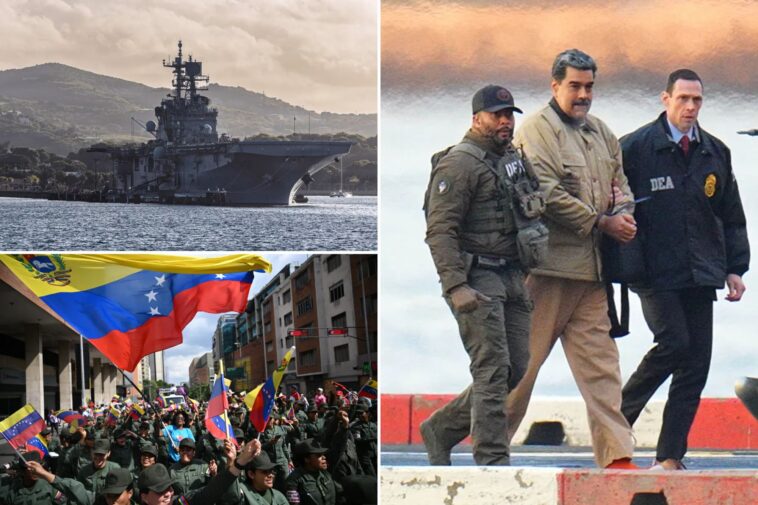
Maduro was taken into custody following a special operations raid over the weekend and is facing charges related to the trafficking of drugs and weapons in federal court in New York City.
President Donald Trump said Sunday that the U.S. is “in charge” of Venezuela following Maduro’s removal, while Secretary of State Marco Rubio said that the U.S. is pursuing policy changes in the country to support the administration’s goals and benefit the Venezuelan people.
Douglas Harned, managing director and senior analyst for aerospace and defense at Bernstein, wrote in a research note that it’s “unclear how U.S. control of Venezuela will play out,” as the Trump administration hasn’t yet detailed its plans for overseeing the transition of power in the country.

Harned added that the “path to success looks narrow, risky and must navigate regime infrastructure, opposition involvement and U.S. goals.”
Here’s the latest on Nicolás Maduro’s capture:
- Toppled Venezuelan despot Nicolas Maduro declares himself ‘a decent man,’ claims he was ‘kidnapped’ by US forces as he pleads not guilty in NYC
- European country freezes assets linked to Maduro, associates following Venezuelan leader’s capture
- Pulling back the curtain on Nicolás Maduro’s ‘Latin Lady Macbeth’ wife Cilia Flores — a ‘fundamental figure in corruption’
- Ex-Venezuela spy chief, ‘The Chicken,’ could be star witness at Maduro’s trial: experts
- CIA concluded Maduro’s lackeys more likely to maintain order in Venezuela than opposition leader: report
He drew comparisons to regime change in other countries, such as Iraq, which the U.S. expected could be transitioned with a relatively small U.S. military force with funds from Iraqi oil financing the transition from Saddam Hussein’s regime.

In reality, the cost rose well above $1 trillion and required the deployment of as many as 170,000 American troops on the ground.
Harned said that while Bernstein is aware that U.S. defense and engineering consulting firms are developing proposals related to Venezuela’s future.
However, it isn’t clear what U.S. agencies will be making decisions following the move to close USAID last year and merge its operations with the State Department.

He also noted that the Trump administration has threatened Colombia and Cuba, while also warning Iran’s regime against killing protesters.
“Almost always, when threats of military action increase, defense budgets move higher, leading to positive trends for defense stocks,” Harned wrote, adding that the higher stress around defense could build momentum for the Trump administration’s budget reconciliation strategy that leads to increased defense spending.
Start your day with all you need to know
Morning Report delivers the latest news, videos, photos and more.
Thanks for signing up!
“This strategy, while unusual, could well mean increases for the 2027 budget,” he wrote. “If money is needed for Venezuela or other active combat situations, we expect it will be additive.
“We see little likelihood that the administration would back off of its key priorities (e.g., Golden Dome, space, shipbuilding, autonomy, ramping munitions production).”