
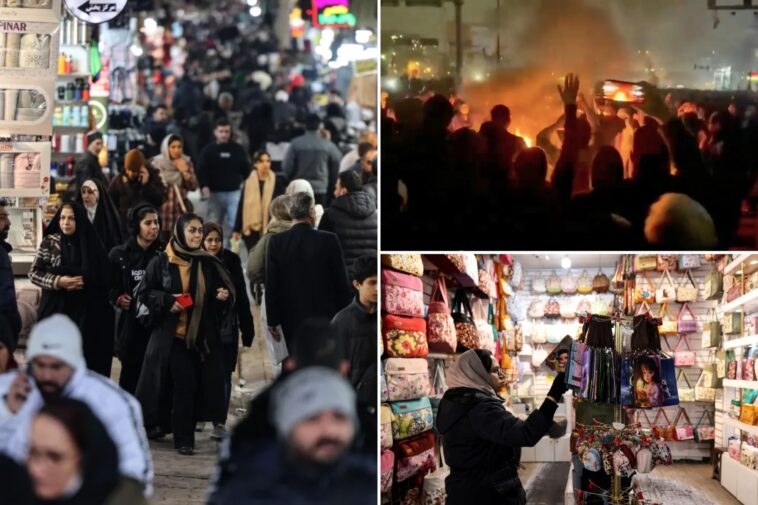
Iran’s already ailing economy is suffering another blow amid the most comprehensive internet shutdown in its history, with officials warning Tuesday that it is costing the country $2.8 million to $4.3 million each day.
Ehsan Chitsaz, a deputy minister of communications and information technology, said that since the internet shutdown began on Jan. 8, the country was losing millions-a-day in lost commerce revenue.
NetBlocks, an internet monitoring group analyzing the effects of the shutdown, warned that the cost could actually be as high as $37 million a day.

The Islamic Republic launched a nationwide communications shutdown on Jan. 8 as a means to suppress the anti-government protests that gripped the country.
There remains to be no official word on when access to the internet will return to the masses, with commerce plummeting at a time when inflation is high and the value of the national currency is low.
The value of the Iranian rial crashed last month, with the currency falling to over 1.4 million to the US dollar.
The low value of the rial pushed up inflation and increased the cost of everyday goods and necessities in the country.

The economic woes were then compounded by changes in gasoline prices, leading to public outrage against the regime that resulted in the mass protests starting on Dec. 28.
In the face of such widespread dissent, the regime shut off access to the internet, a tactic that leaves a major blow on the national economy.

During the last widespread protests in 2022 over the murder of Mahsa Amini in police custody, the internet outage ended up costing Iran $1.6 billion, according to Dara Conduit, a lecturer at the University of Melbourne in Australia who studied the event.
Businesses in Tehran said they were already feeling the blow of the internet outage, with one pet shop owner saying business has already dropped by 90%.
Without access to the internet the business owner, who spoke under anonymity for fear of reprisal, said she lost a valuable tool to sell and promote her products.
“Those who pass by our shops don’t show any appetite for shopping,” the owner of an upscale tailor shop in Tehran added. “We are just paying our regular expenses, electricity and staff … but in return, we don’t have anything.”