Pro-Maduro thugs were called to the streets to hunt down Venezuelans who supported the US attack to oust the despotic president, according to a state of emergency order issued across the South American Nation over the weekend.
Venezuelan police were ordered to “immediately begin the national search and capture of everyone involved in the promotion or support for the armed attack by the United States,” according to the Saturday decree obtained by Reuters, which was published in full on Monday.
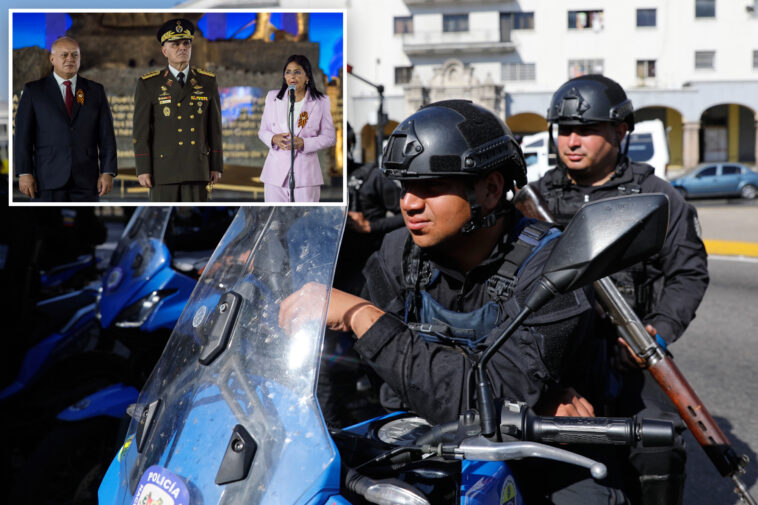
It remains unclear whether police had begun following that order — or if the Maduro regime’s notorious paramilitary enforcers had been dispatched — but photos began emerging across social media Monday that appeared to show heavily armed and masked civilians patrolling city streets and highways.

Venezuela’s citizen paramilitary groups, known as colectivos, have used terror to crush dissent since Hugo Chávez consolidated his power over the country in 1999, and the sight of the armed gangs patrolling the streets on the backs of scooters and motorbikes has been commonplace across Venezuela during times of unrest since.
Some units have been confirmed on the streets since Maduro was arrested in Saturday’s pre-dawn raid in Caracas, but their numbers have been notably fewer than past conflicts, the New York Times reported.
Armed civilians were seen guarding some of the military bases struck by the US after the attacks, while about 300 were seen at a pro-Maduro rally that afternoon.
“I have to imagine colectivos have been given the order to lay low,” New York University associate professor of Latin American history Alejandro Velasco told the Times, explaining the remaining members of the regime are likely trying to stay in power by showing President Trump they can maintain order.

The colectivos numbers are unknown but are believed to reach into the thousands across the country.
They are also typically on governmental payroll through public jobs, which are generally placeholder positions until they are called on to do the regime’s bidding, Velasco told the outlet.
The last time the colectivos turned out in force was the summer of 2024 after Maduro claimed victory in the presidential election, and the paramilitaries were called out to crush widespread protests.
It remains unclear to what extent the colectivos may play a part in the current conflict, as Maduro’s successor — Vice President Delcy Rodríguez, who was sworn in Monday — has indicated she will play ball with Trump’s control over the country, despite openly denouncing the US’s actions.
Here’s the latest on Nicolás Maduro’s capture:
- Ex-Venezuela spy chief, ‘The Chicken,’ could be star witness at Maduro’s trial: experts
- Maduro declares himself ‘prisoner of war,’ claims he was ‘kidnapped’ by US forces as he pleads not guilty in NYC
- Cops forced to separate pro-Maduro protesters from joyous Venezuelans in wild NYC scene: ‘They don’t speak Spanish!’
- Nicolas Maduro could face death penalty if fallen Venezuelan dictator convicted
Her top lieutenants and the overseers of the colectivos — Interior Minister Diosdado Cabello and Defense Minister Vladimir Padrino, who control Venezuela’s police and military — also appear to be falling in line for now, the Wall Street Journal reported.
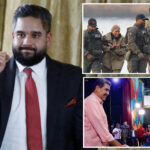
But President Maduro’s son, Nicolás Maduro Guerra, echoed the state of emergency’s call for retribution against his father’s opponents in fiery audio released Sunday.
“History will tell who the traitors were, that will be known in time,” Guerra said in the audio message, where he also called on Venezuelans to defy US plans to run the country over the foreseeable future, El Pais reported.
Guerra — who is also wanted for the same drug trafficking allegations his father was charged with Monday — even emerged Monday at the Venezuelan parliament, where he demanded the return of his father and said the regime would carry on until he was back.

With Post wires