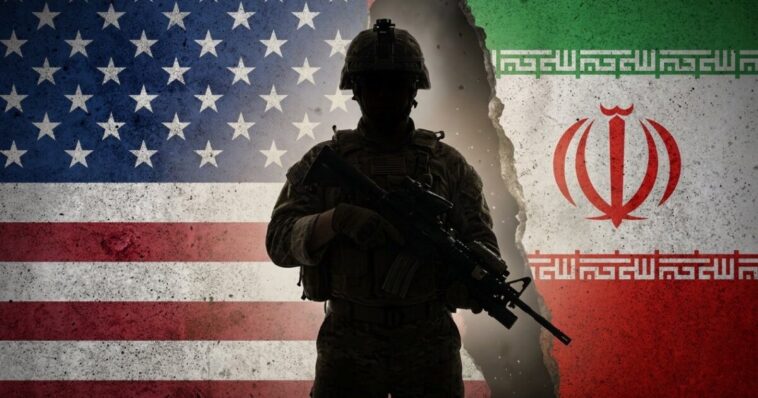
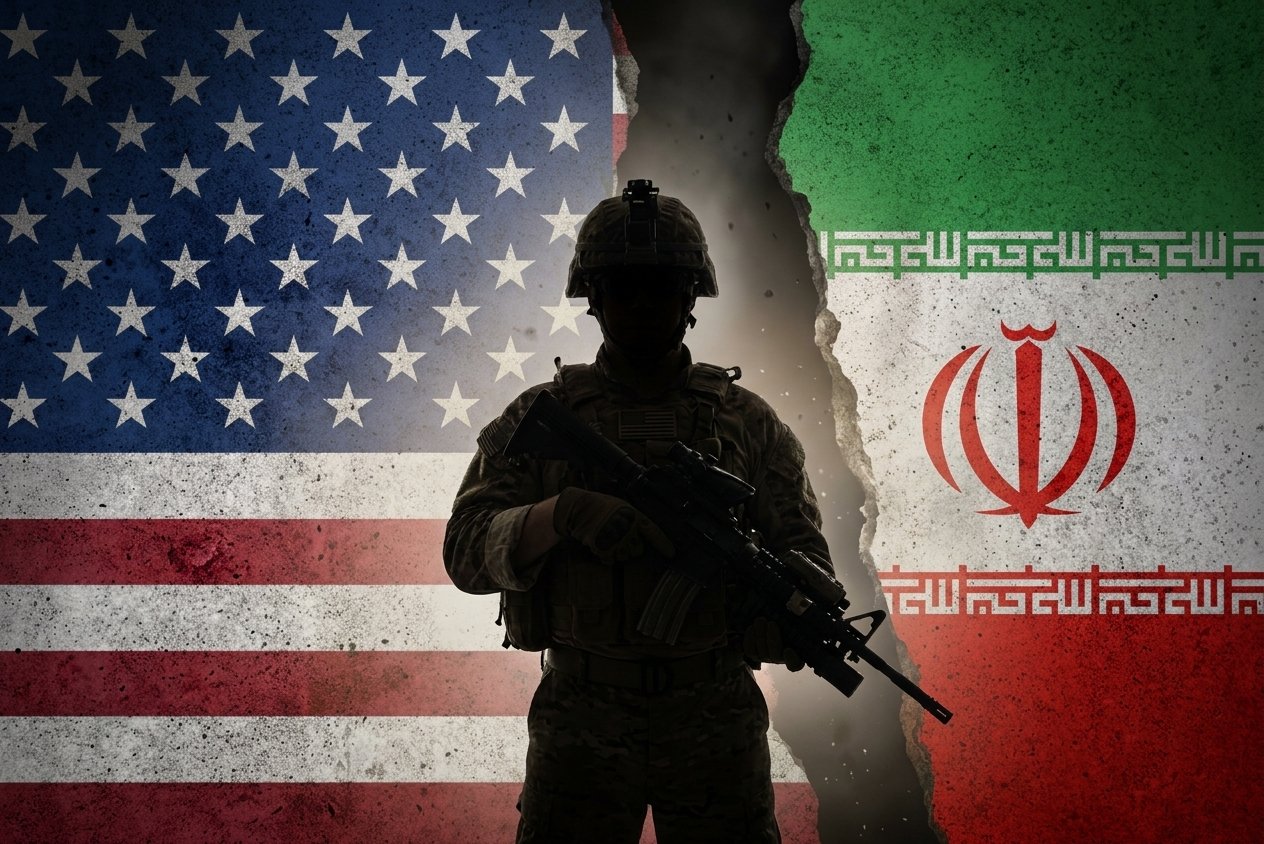
The military conflict between the United States and Iran, now in its seventh month, escalated sharply this week after a period of relative quiet. The fighting, which began on February 28, has centered throughout on control of the Strait of Hormuz, the narrow waterway through which roughly a fifth of the world’s oil once passed daily before Iran began contesting it.
The current round began on Sunday, August 30, when the U.S. struck two IRGC rocket launchers on Larak Island, positioned at the entrance to the Strait of Hormuz. CENTCOM said it struck the launchers because they were preparing to fire rockets carrying sea mines into the strait. The strike came two days after Adm. Brad Cooper announced on August 28 that U.S. forces had cleared the strait’s shipping lanes of mines Iran had laid months earlier.
Iran has relied mainly on small boats, helicopters, and dedicated mine-laying vessels to deploy naval mines throughout the conflict. After U.S. forces destroyed 16 mine-laying vessels in a single day on March 10, shore-based, rocket-delivered mining became a logical workaround for Tehran. Iran’s IRGC said the Larak strike killed and wounded several of its soldiers and civilians without providing a precise toll, a claim that has not been independently verified.
Hours later, Iran retaliated with a combined missile and drone operation against the U.S.-linked King Hussein and Al Azraq air bases in Jordan, which the IRGC said “destroyed” technical infrastructure. Iran separately claimed a drone strike on the UAE’s Al Minhad air base targeting U.S. helicopters and personnel stationed there. Authorities in both Jordan and the UAE disputed Iran’s damage claims, saying the incoming weapons were intercepted or fell without causing damage.
This was the first direct U.S.-Iran exchange since late July. The intervening lull had coincided with Washington’s “Economic D-Day” sanctions campaign, launched by Treasury Secretary Scott Bessent in late August.
Two days later, on Tuesday, September 1, U.S. Central Command said its forces began a new wave of strikes against Iranian military targets at 12:00 p.m. Eastern time and completed the operation the same day. CENTCOM said the strikes hit IRGC air defense sites, radar systems, maritime assets, mine-laying capabilities, and communications sites following attempted IRGC attacks on commercial shipping and American service members. Iranian state media reported explosions on Qeshm Island, Konarak, and Chabahar.
Hostilities escalated further within hours. Early Wednesday, September 2, local time, a U.S. strike hit a residential home where a wedding celebration was underway in Kuhestak, Sirik County, in Iran’s southern Hormozgan province near the strait. Iranian authorities, including the Hormozgan governor’s office, put the death toll at five, with estimates of the number wounded ranging from roughly 50 to 68.
Iran’s Ministry of Foreign Affairs called the strike a war crime, and the Iranian Red Crescent Society said it had asked the International Criminal Court to investigate. CENTCOM spokesman Capt. Tim Hawkins said the command was aware of reported civilian casualties originating from Iranian state media and that U.S. forces do not target civilians.
Iran responded with its broadest wave of retaliatory strikes in weeks, claiming attacks on U.S.-linked targets in Bahrain, Jordan, Kuwait, and Iraq’s Kurdish region. Iran said it struck Sheik Isa Airbase in Bahrain, Prince Hassan Airbase and a Marine base in Jordan, Ali Al Salem Airbase in Kuwait, and U.S. facilities in Erbil, northern Iraq.
Iran claimed that the targets in Kuwait included the headquarters and residence of the American base commander. Jordan’s military said it intercepted 10 of 13 incoming Iranian missiles, with the remaining three landing in remote areas and no casualties reported. No U.S. casualties have been confirmed by U.S. officials cited by Reuters.
President Trump warned on Tuesday that Iran would be “totally wiped out” if it retaliated further and that any Iranian response would be “hit much harder.” Iran’s Supreme Leader Mojtaba Khamenei separately said the recent exchanges had delivered “unforgettable lessons” to the United States.
So far, Iran’s threats have rung hollow. A recent conflict assessment finds that Iran’s conventional military has suffered extensive damage: its air defenses, naval assets, and command structures have been severely degraded. Iran’s missile production was badly damaged but not eliminated, and Tehran retains enough capability to rebuild.
The nuclear picture is murkier still. The IAEA could not verify the location of roughly 440 kilograms of uranium enriched to 60 percent, meaning that the underlying capability, not just the physical infrastructure, remains an open question. Iran’s regional proxy network has been weakened by lost funding and destroyed infrastructure but has not collapsed, as many affiliated groups retain independent local support.
Politically, Trump’s broader ambitions remain further from being met. The killing of Supreme Leader Ali Khamenei did not collapse the Iranian government; the political system absorbed the shock and produced new leadership. Trump’s demand for Iran’s “unconditional surrender” was rejected outright, and Foreign Minister Abbas Araghchi has said Tehran will not resume negotiations while it considers the U.S. to be violating the June interim agreement.
The U.S. campaign has expanded from a strategy of military force toward one of economic pressure, with Iranian foreign trade down by nearly 35 percent, the rial at a record low of two million to the U.S. dollar, and year-over-year inflation reportedly reaching 84 percent, while food inflation surged to 128 percent.
Ad block users: Some site features may not work correctly while an ad blocker is enabled, because they break scripts and content this website depends on. If you can’t see comments below, for example, please disable your ad blocker.